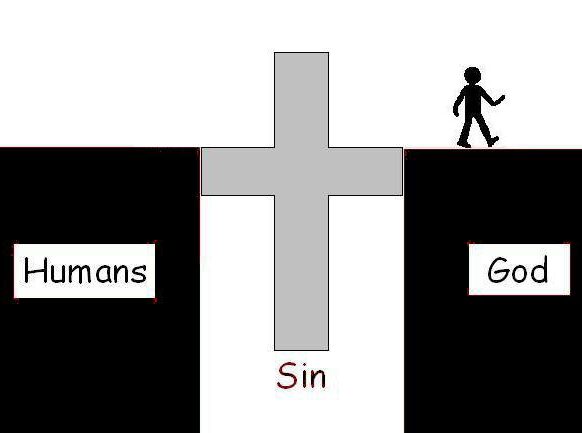

We are not always aware of it, but humans have a limited lifespan, and we don’t know how limited it is for a particular person. Someone once said that death is like an arrow that’s fired on the day you are born. It follows you through life, and sooner or later it hits you. When you attend a funeral, you know that you too will have to make the same journey. One day it will be you in the box—or rather, your body. But you are more than your body. The Bible teaches that if we die before the end of the world, there is a temporary separation between body and soul. Therefore, Jesus could say to the thief on the cross “I tell you the truth, today you will be with me in paradise.” (Luke 23:43) The apostle Paul also knew that he would be with Christ as soon as he died:
2 Corinthians 5:6-8
“Therefore we are always confident and know that as long as we are at home in the body we are away from the Lord. We live by faith, not by sight. We are confident, I say, and would prefer to be away from the body and at home with the Lord.“
Philippians 1:23
I am torn between the two: I desire to depart and be with Christ, which is better by far; but it is more necessary for you that I remain in the body.“
Of course, God created us with a body, and the Bible teaches that our bodies will be raised at the end of the world.
John 5:29
“.. those who have done good will rise to live, and those who have done evil will rise to be condemned.“
1 Corinthians 15:52
“… For the trumpet will sound, the dead will be raised imperishable, and we will be changed.”
Where Will You Spend Eternity?
Christians often argue about the details of the end times and the afterlife. You could probably spend the rest of your life reading different Christian views on the precise details. As has been pointed out elsewhere on this site, it’s better to live with different views than have some sect impose their own particular outlook on you. What is more important is where you will spend eternity. The answer to that isn’t complicated at all. Firstly, there is no reincarnation. The Bible says that “man is destined to die once, and after that to face judgment” (Hebrews 9:27). Furthermore, there are no such places as purgatory and limbo. These are the inventions of theologians, and I’m not even sure if many Catholics believe in them anymore. There is only heaven, which is more wonderful than you can imagine, and hell, which is more terrible than you can imagine.

But the good news is that God has provided a guaranteed way of escaping hell. Have you ever gone to the Cliffs of Moher in County Clare? Is it a dangerous place? Not if you obey the signs.
God has provided his Son to save sinners. If we believe, then we are safe. Many verses in the Bible are disturbing—especially for those who are inclined to be conscientious. When we look at Jesus turning people away on judgement day (Matthew 25) because they neglected to feed the hungry etc., we wonder if we have done enough. No, we haven’t!
But Jesus died to take away our sins. Once we believe, we might not be perfect, but we are going in the right direction.
“I am the vine; you are the branches. If a man remains in me and I in him, he will bear much fruit; apart from me you can do nothing.” (John 15:5)
If we refuse to believe, we are on our own. We will be turned away. It would be hard to be a human without doing some good to someone, but doing good apart from believing in Christ is a bit like a wife-beater taking pride in doing good in the community. He might be an angel in the street, but his wife knows that he is a devil in the house. We are called to love God before anything else and this means becoming a disciple of the Lord Jesus Christ.
Then they asked him, “What must we do to do the works God requires?” Jesus answered, “The work of God is this: to believe in the one he has sent.” (John 6:28-29)
The mathematician and philosopher, Blaise Pascal, spoke of the most important wager you could ever make.
“Let us weigh the gain and the loss in wagering that God is. Let us estimate these two chances. If you gain, you gain all; if you lose, you lose nothing. Wager, then, without hesitation that He is.”
“How can anyone lose who chooses to become a Christian? If, when he dies, there turns out to be no God and his faith was vain, he has lost nothing – in fact, he has been happier in life than his non-believing friends. If, however, there is a God and a heaven and hell, then he has gained heaven and his skeptical friends will have lost everything in hell”
What he is saying is that if you go through life and reject God, if God is there after all, you are in more serious trouble than you have ever been in—assuming that we are talking about the God of the Bible. On the other hand, if you are a Christian and you die and find that God did not exist—well—you lose nothing! You never even find out!
However, Pascal’s wager is not without its problems. Apart from anything else, Christians are saved by grace through faith—not by backing the right horse! But at the same time, if there are other reasons for accepting Christianity, it’s something to ponder. If God is dead and life is meaningless, the Christian loses nothing. He or she has just adopted another philosophy to get through life—just like everyone else has! In that case, no-one can know the truth—there is no truth. Our existence is entirely miserable and meaningless and one ‘truth’ or delusion is as good as any other.
You might argue that the Christian’s slightly restrictive life has made him lose out, but there are also benefits in leading a slightly restrictive life. Plenty of atheists know the rewards of a bit of self-discipline. But, on the other hand, let’s suppose that you reject Christ and you find that God is there, Jesus is risen and Christianity is true after all. You have rejected Christ—your only hope of salvation. There are no second chances.
At the present time, you might think that hell is only a tiny possibility. Because most people don’t seem to believe in it, you feel safe in the crowd. But what if the crowd is wrong?
Matthew 7:13-14
“Enter through the narrow gate. For wide is the gate and broad is the road that leads to destruction, and many enter through it. But small is the gate and narrow the road that leads to life, and only a few find it.“
If this life is just a drop in the ocean compared to eternity, it’s worth giving it a bit of thought. If Jesus hadn’t been raised from the dead, there would still be plenty of reason to believe in the afterlife. In fact, even people without the Bible deduce that it exists. There are many strange and exotic theories on the afterlife, but such beliefs seem to have been present from the dawn of civilization.
The New Testament places huge emphasis on the resurrection of Jesus. After that, the disciples knew that it was no longer a matter of speculation. Jesus went through death and came back again. On Mars Hill, in Athens, the apostle Paul debated with the Greek philosophers and mentioned the resurrection of Jesus.
Acts 17:31
“For he has set a day when he will judge the world with justice by the man he has appointed. He has given proof of this to all men by raising him from the dead.”
Many of the listeners laughed. The Greeks didn’t think that the physical body had any place in eternity. It would never come to life again. They didn’t even bother investigating the evidence—which was quite formidable. You can laugh as well, but a lot is at stake if you make the wrong decision. What I am going to do here is to list a selection of verses about heaven and hell. Bear in mind that because heaven and hell are outside our current experience, some of the language is inevitably figurative. Again, people argue about the details (e.g. is hell a literal ‘chemical reaction’ sort of a fire?), but one thing is clear. Hell is worse than anything we know, and heaven is better than anything we know.
Heaven
John 14:1-6
Do not let your hearts be troubled. Trust in God; trust also in me. In my Father’s house are many rooms; if it were not so, I would have told you. I am going there to prepare a place for you. And if I go and prepare a place for you, I will come back and take you to be with me that you also may be where I am. Thomas said to him, “Lord, we don’t know where you are going, so how can we know the way?” Jesus answered, “I am the way and the truth and the life. No-one comes to the Father except through me.”
Matthew 25:34
Then the King will say to those on his right, ‘Come, you who are blessed by my Father; take your inheritance, the kingdom prepared for you since the creation of the world.
Hebrews 11:16
Instead, they were longing for a better country–a heavenly one. Therefore God is not ashamed to be called their God, for he has prepared a city for them.
2 Corinthians 5:1
Now we know that if the earthly tent we live in is destroyed, we have a building from God, an eternal house in heaven, not built by human hands.
2 Timothy 4:7-8
I have fought the good fight, I have finished the race, I have kept the faith. Now there is in store for me the crown of righteousness, which the Lord, the righteous Judge, will award to me on that day–and not only to me, but also to all who have longed for his appearing.
1 Peter 1:2-9
Praise be to the God and Father of our Lord Jesus Christ! In his great mercy he has given us new birth into a living hope through the resurrection of Jesus Christ from the dead, and into an inheritance that can never perish, spoil or fade– kept in heaven for you, who through faith are shielded by God’s power until the coming of the salvation that is ready to be revealed in the last time. In this you greatly rejoice, though now for a little while you may have had to suffer grief in all kinds of trials. These have come so that your faith–of greater worth than gold, which perishes even though refined by fire– may be proved genuine and may result in praise, glory and honour when Jesus Christ is revealed. Though you have not seen him, you love him; and even though you do not see him now, you believe in him and are filled with an inexpressible and glorious joy, for you are receiving the goal of your faith, the salvation of your souls.
Revelation 21:1-6
Then I saw a new heaven and a new earth, for the first heaven and the first earth had passed away, and there was no longer any sea. I saw the Holy City, the new Jerusalem, coming down out of heaven from God, prepared as a bride beautifully dressed for her husband. And I heard a loud voice from the throne saying, “Now the dwelling of God is with men, and he will live with them. They will be his people, and God himself will be with them and be their God. He will wipe every tear from their eyes. There will be no more death or mourning or crying or pain, for the old order of things has passed away.” He who was seated on the throne said, “I am making everything new!” Then he said, “Write this down, for these words are trustworthy and true.” He said to me: “It is done. I am the Alpha and the Omega, the Beginning and the End. To him who is thirsty I will give to drink without cost from the spring of the water of life.
Hell
Matthew 25:41
Depart from me, you cursed, into the eternal fire which is prepared for the devil and his angels;
Mt 5:22
... But anyone who says, `You fool!’ will be in danger of the fire of hell.
Matthew 5:29
If your right eye causes you to sin, gouge it out and throw it away. It is better for you to lose one part of your body than for your whole body to be thrown into hell.
Mark 10:28
Do not be afraid of those who kill the body but cannot kill the soul. Rather, be afraid of the One who can destroy both soul and body in hell.
Matthew 23:33
You snakes! You brood of vipers! How will you escape being condemned to hell?
Matthew 13:40-42
The Son of Man will send out his angels, and they will weed out of his kingdom everything that causes sin and all who do evil. They will throw them into the fiery furnace, where there will be weeping and gnashing of teeth.
Luke 16:23 ff
In hell, where he was in torment, he looked up and saw Abraham far away, with Lazarus by his side. So he called to him, `Father Abraham, have pity on me and send Lazarus to dip the tip of his finger in water and cool my tongue, because I am in agony in this fire.’ “But Abraham replied, `Son, remember that in your lifetime you received your good things, while Lazarus received bad things, but now he is comforted here and you are in agony. And besides all this, between us and you a great chasm has been fixed, so that those who want to go from here to you cannot, nor can anyone cross over from there to us.’ “He answered, `Then I beg you, father, send Lazarus to my father’s house, for I have five brothers. Let him warn them, so that they will not also come to this place of torment.’ “Abraham replied, `They have Moses and the Prophets; let them listen to them.
2 Thessalonians 1:9
He will punish those who do not know God and do not obey the gospel of our Lord Jesus. They will be punished with everlasting destruction and shut out from the presence of the Lord and from the majesty of his power
Revelation 14:11
And the smoke of their torment rises for ever and ever. There is no rest day or night for those who worship the beast and his image, or for anyone who receives the mark of his name.
Revelation 20:10
And the devil, who deceived them, was thrown into the lake of burning sulphur, where the beast and the false prophet had been thrown. They will be tormented day and night for ever and ever.
Revelation 20:15
If anyone’s name was not found written in the book of life, he was thrown into the lake of fire.
Revelation 21:8
But the cowardly, the unbelieving, the vile, the murderers, the sexually immoral, those who practise magic arts, the idolaters and all liars–their place will be in the fiery lake of burning sulphur. This is the second death.
Is It Wise to Deny It?
You might be a bit shocked as you look at the verses about hell. Churches have got out of the habit of talking about hell. Such an idea seems utterly grotesque to the modern mind. Yet hell is there in the New Testament. More is spoken of it in the New Testament than in the Old Testament. In fact, Jesus himself spoke more about it than anyone. Various attempts have been made to airbrush it out or to reinterpret these verses, but if this world can be horrible for the innocent, it is not unreasonable to think that the next world is horrible for the guilty.
We can choose to reject the doctrine and deny the existence of hell. Doubtlessly, we will find plenty who will happily confirm our optimism. But is that a wise road to go down? If we start saying that Jesus is wrong or that the Bible misrepresents his views, we end up with a ‘pick and mix’ religion with us as ‘God‘ deciding what it should and should not teach. We can do that, but why not leave Christ out of it altogether? Why even call it Christianity? Why not give it a more appropriate name – perhaps based on our own name? Surely it is a wicked thing to downplay the warnings of Scripture. What would you think if they took down the warning signs on the Cliffs of Moher for fear of putting off tourists? A good parent, teacher or employer will err on the side of caution.
Remember, a person doesn’t have to go through life being scared out of their wits. There are many verses that assure and reassure those who have repented that they are safe. A Christian can look forward to death just like the dying thief and the apostle Paul did. Here are a few verses that remind us that we are secure in Christ.
Philippians 1:6
“being confident of this, that he who began a good work in you will carry it on to completion until the day of Christ Jesus.”
Jn 5:24
“I tell you the truth, whoever hears my word and believes him who sent me has eternal life and will not be condemned; he has crossed over from death to life.
1 Jn 5:11-13
“God has given us eternal life, and this life is in his Son. He who has the Son has life; he who does not have the Son of God does not have life. I write these things to you who believe in the name of the Son of God so that you may know that you have eternal life.”
Don’t Forget About Heaven!
As well as looking at what the Bible teaches about hell, we should look at what it says about heaven. Many people are disappointed with life in this world. There is something in us that tells us that it should be better. Here are a few quotations by famous people that demonstrate this.
George Orwell – “Most people get a fair amount of fun out of their lives, but on balance life is suffering and only the very young or the very foolish imagine otherwise.”
Brian May (Queen) – “There’s no time for us, There’s no place for us, What is this thing that builds our dreams, yet slips away from us.…Who Wants to Live Forever
Alfred North Whitehead – “Human life is a flash of occasional enjoyments lighting up a mass of pain and misery.”
Not everyone is so pessimistic, but even for the happier people, much of our days, weeks, months and years are spent struggling. We have our moments when we say, to quote Van Morrison, “Wouldn’t it be great if it was like this all the time?” but it’s not like this all the time. Then, we never know what horrors are around the corner. And often, we need to choose between doing the thing that gives us pleasure and doing the sensible thing, the boring thing, the right thing. Furthermore, pleasure usually comes with a price. What tastes nice is often bad for us. Even making up your mind to disregard morals and live for pleasure isn’t a guaranteed way to happiness. There are countless stories of famous people, with lots of money, coming to sticky ends.
But in heaven all that is behind us. We can truly be what God originally meant us to be. We won’t be sitting on clouds playing harps. We will be happier than we’ve ever been in this world. Suffering, and even the prospect of suffering, will be gone. We cannot imagine how good it will be, but we can get some idea by reflecting on all the best that God has created in this world. And we will truly love God himself. It won’t be difficult for us to love God and others because we will be free of sin.
People sometimes joke about hell being a place of pleasure and heaven being boring. It is important to realize that the very opposite is true. Even the sinful pleasures of this world, such as the misuse of sex and drugs etc., are really distortions of legitimate pleasures that God has given. The human body, with all its beauty, and the human mind, with all its capacity, were created by God. Satan never created anything except misery—by tempting people to abuse legitimate things.
If someone gives you a Ferrari, you can take care of it and use it for pleasure or neglect and abuse it. You can even die in it if you don’t follow sensible guidelines. The great thing about heaven is that we will be able to enjoy creation without the prospect of messing it up, and so we won’t have to remember all the ‘do’s’ and ‘don’ts’ that are necessary but can often spoil our present pleasures. I remember the first beautiful day of one summer and immediately being warned on the radio of the dangers of skin cancer. That is the nature of the world since the fall of humankind. In heaven, we will be holy and happy. We won’t feel restricted. We won’t wish we were somewhere else.
Spread the Word
The Christian’s main objective, having believed in Christ, is to persuade others to repent and believe in order to escape hell and join us in heaven. You can see this in the sermons of the early church and in the minds of the apostles.
Matthew 28:19
“Therefore go and make disciples of all nations, baptising them in the name of the Father and of the Son and of the Holy Spirit”
Acts 1:8
“But you will receive power when the Holy Spirit comes on you; and you will be my witnesses in Jerusalem, and in all Judea and Samaria, and to the ends of the earth.”
Acts 3:19
“Repent, then, and turn to God, so that your sins may be wiped out, that times of refreshing may come from the Lord,”
Acts 17:30
“In the past God overlooked such ignorance, but now he commands all people everywhere to repent.”
Romans 1:16
“I am not ashamed of the gospel, because it is the power of God for the salvation of everyone who believes: first for the Jew, then for the Gentile.”
Romans 10:12-15
“For there is no difference between Jew and Gentile–the same Lord is Lord of all and richly blesses all who call on him, for, “Everyone who calls on the name of the Lord will be saved.” How, then, can they call on the one they have not believed in? And how can they believe in the one of whom they have not heard? And how can they hear without someone preaching to them? And how can they preach unless they are sent? As it is written, “How beautiful are the feet of those who bring good news!”
Hebrews 2:3
“how shall we escape if we ignore such a great salvation?”
Should We Keep Silent?
It has become unfashionable to want to spread the gospel. Why should we impose our views on people who already have their own religion? Well, we shouldn’t impose our views on anyone. And if they were merely our views or our speculations it would hardly be worth spreading them. But people should have the opportunity to at least hear the gospel of the Lord Jesus Christ. What they do with it is between them and God. Of course, it would be wrong to do missionary work in ways that are insensitive to people’s culture. Mistakes were made in the past. Humans always make mistakes. Mistakes were made in medical treatment, but that doesn’t mean that we shouldn’t try to do things properly. Jesus has commanded his disciples to spread the word. This is in no way at odds with mutual respect between world religions.
Paul spoke kindly to the Greeks on Mars Hill (Acts 17) and even quoted their own poets, but there was nothing wrong with Paul wanting to tell them about the Saviour. We celebrate his coming into the world at Christmas. “Joyful all ye nations rise, join the triumph of the skies“. Should Herod have killed him off? Should Jesus have minded his own business and stuck to carpentry? Should the early disciples have obeyed the authorities and kept silent about the gospel?

Christianity is for the whole world. It isn’t, and was never meant to be, a Western tribal religion. In fact, for much of history it wasn’t. Christianity took hold in Turkey, Syria, Africa, and in many other nations, in New Testament times. One of the very early converts was an Ethiopian (Acts 8). Britain and Ireland were mission fields, and the USA got the gospel a thousand years later. It is very likely that the focus will shift again during this century.
The world has to be reached again in every generation. This is because individuals need to be convinced within their own minds and hearts. And to even weigh things up, they need to hear the gospel presented.
What is the point in the Saviour coming into the world if no-one spreads the good news? That’s what the word ‘gospel’ means – good news! All of us desire a tolerant world. The early Christians knew what intolerance was. Church history is full of examples of intolerance and any Christian worth his salt would rather be persecuted than persecute. People should be able to hear any message from any religion or philosophy and make up their own minds without someone wanting to murder them or throw them out of the family home if they change their religion. Any religion or philosophy that has to make its way by bribing or bullying people into submission isn’t much of a religion.
People sometimes look at primitive tribes and feel that they should be protected from missionaries. How would you feel if someone looked at Ireland in the 1960s and decided that we should be protected from outside influences? We are not animals in zoos. Every person of every race is entitled to hear the gospel, and any other message, for that matter. The challenge for the missionary is to encourage people to believe while retaining the best of their own culture. But even here, people make their own choices. It is annoying seeing the worst of Western culture finding its way into the most unlikely places, but that is the way the world is. I don’t imagine that a lot of missionaries are happy with this situation but, our purpose is to spread the gospel and not to tell people what they can and can’t wear.
Another question people ask is how God deals with people who never had the opportunity to hear the gospel We are not told explicitly. We know that all have sinned and that God punishes sin. All need the Saviour. It would be hard to see how a person who never heard of Jesus would be punished as much as someone who heard and rejected. We know that God is fair, but it’s not our place to advise God on the matter. Our duty is to get the gospel to them. Asking what happens to the unevangelised is a bit like wondering what will happen to people who are trapped in a burning building if we don’t attempt to save them. It’s much better to attempt to save them than to speculate. That is why we should support the work of mission by praying, giving and going. That is our bit. We can rely on God to do his bit


I’m surprised you would like anything on my blog. I have schizoaffective disorder, so there is a strong mood component with my illness. And 3% of the time, I have fundamentalist Orthodox opinions, so I am only popular with my friends because I can fabricate the virtue of humility.
Thank you for being a nice person to me :)
LikeLike
[…] And the New Testament covers the afterlife extensively. I have a long post about it – Afterlife. […]
LikeLike
[…] I cover a lot of this material in my Afterlife post. […]
LikeLike
I admired the preperation and work you put into this post. More importantly, the message it provides. Thanks!!!
LikeLiked by 1 person