
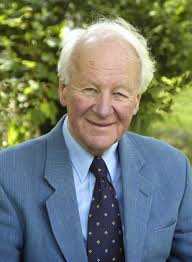
I remember meeting some well-known names when I worked with London City Mission for a year back in 82-83 as a voluntary evangelist. These included David Pawson, RT Kendall and John Stott. All three are famous in Christian circles, particularly in evangelical circles. But the most famous would probably be John Stott. He was the guest speaker at an event in All Souls Langham place, where he once ministered, in the autumn of 1982. I just had a brief chat with him at the end of the service.
At that stage I hadn’t read many of his books or heard him, but he was hugely influential. I already knew his name. He was part of the modern reformed movement, which was conservative but quite intellectual at the same time. This movement spanned all denominations. Being an Anglican, he was a little bit more sympathetic to views of other Anglicans, such as high church people and liberals than those of us in purely evangelical circles. But he was hugely influential.
Since then, I’ve read or listened to a good number of his books. And I still do.
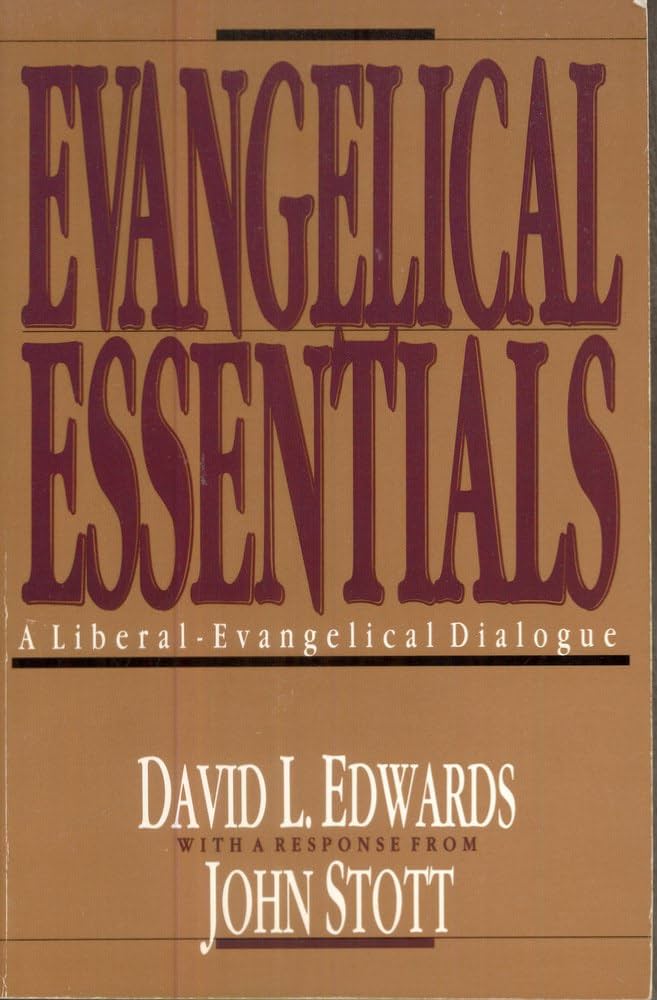
He became a bit controversial in the 1990’s because in Evangelical Essentials, a dialog with liberal, David L.Edwards, he appeared to favour the idea that God terminates the existence of those bound for hell rather than having them experience eternity in hell. I was uneasy with this because the whole reason that I like evangelicalism is that it adheres to Scripture. It doesn’t try to reinvent Christianity to suit the modern mind.
Stott only held to it tentatively. I can understand why someone might feel that way, but for me, there are just too many verses in the New Testament that indicate that you don’t get off that lightly. It’s true that much teaching about the future regarding both heaven and hell is presented in symbolic terms. But even if you don’t take everything strictly literally, most believe that heaven is better than anything we’ll experience in this life. And why shouldn’t hell be worse than anything that we experience in this life?
I see no harm in hoping that I’m wrong, but we shouldn’t base our doctrine on what we’d like to happen. For example, if I’m faced with two historians who take different views on the holocaust, surely, I should favour the more accurate one. If someone denies that six million Jewish people were murdered, do I favour that view simply because I can’t believe that God would allow it to happen? I don’t understand why God allowed it to happen, but I’d rather live with the question rather than deny it. And if God allows innocent people to suffer in this life, why shouldn’t we believe that he’ll punish guilty people in the next life?
And God provides a guaranteed way to get to heaven in any case. If I need to get to Dublin, and the last train is 6 PM, should I jump on the train or should I sit around wondering if the timetable is wrong and hoping that there might be another train?
John 5:24
“Very truly I tell you, whoever hears my word and believes him who sent me has eternal life and will not be judged but has crossed over from death to life.”
I cover a lot of this material in my Afterlife post.
Having said that, for the most part, I find John Stott’s material excellent. I listen to and read a wide range of evangelical perspectives. Stott would be at the liberal end of the evangelical spectrum, but he wouldn’t be a liberal/modernist. He had a great love for God’s word and inspired so many others to cherish it.
Here’s a list of some of his publications:
- Basic Christianity – 1958
- Men Made New: An Exposition of Romans 5–8 – 1966
- Christ the Controversialist – 1970
- The Preacher’s Portrait – 1970
- The Message of 2 Timothy – 1973
- Baptism and Fullness – 1975
- Christian Mission in the Modern World – 1975
- The Message of Galatians – 1968 (Bible Speaks Today series)
- The Message of the Sermon on the Mount (Matthew 5–7: Christian Counter-Culture) – 1978
- The Message of Ephesians – 1979
- The Message of Romans – 1994
- The Cross of Christ – 1986
- Issues Facing Christians Today – 1984 (updated editions later)
- Your Mind Matters – 1972
- Understanding the Bible – 1972
- The Contemporary Christian – 1992
- The Incomparable Christ – 2001
- The Message of Acts – 1990
- The Message of 1 & 2 Thessalonians – 1991
- The Message of 1 Timothy & Titus – 1991
- Evangelical Truth – 1999
- Why I Am a Christian – 2003
- The Living Church – 2007
- The Radical Disciple – 2010
- Holiness: Food for the Journey – 2022 (posthumous devotional release)
And here are some other resources

