

Well, as you go through the stages of life, you worry about different things – whether girls find me attractive, what find of a career I’ll end up with, and day-to-day stresses at work and so on. Now that I’m retired, my chief worry is probably health issues. I don’t have any major health issues, but you never know what’s around the corner. And I’ve had minor health annoyances since my 30s. Oh to be young again 😀. But I was probably more of a worrier in my younger days.
The big thing that I used to worry about in my teens is where I’d go when I die. I grew up a Roman Catholic. I was taught that really saintly people went straight to heaven. But if you died with a mortal sin on your soul, you went straight to hell. Mortal sin could be anything from murder to deliberately missing Mass on a Sunday – but there were many more sins considered mortal too. For example, placing something above God is a mortal sin. Surely, we do that a lot. People might take different views on it, but I wasn’t keen on going through life wondering where I’d end up.
And dying with venial (less serious) sins meant you probably went to purgatory. I was taught that purgatory was as bad as hell, but you eventually got out after you served your time. And you’d get out quicker if people prayed for you, which is why masses are said for people when they die.
My impression was that most Roman Catholic people around me gave lip service to the church, but were a little agnostic or open to different ideas, such as reincarnation or the notion that Jesus was a spaceman from another planet etc. But I took Jesus Himself and the Bible seriously, even if I was a little puzzled or sceptical about some Roman Catholic traditions.
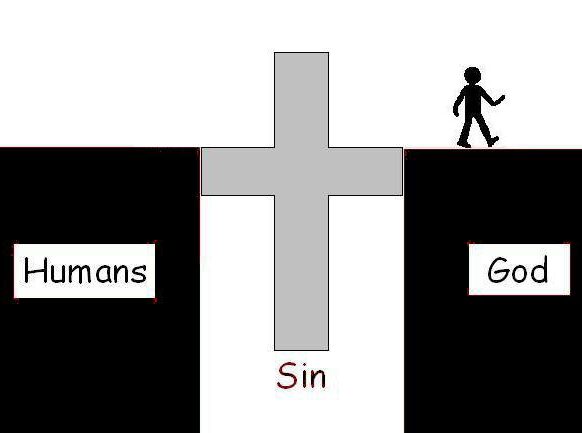
When I heard about Martin Luther in school, I was intrigued by his understanding of Scripture. He believed that we are saved by faith alone. When we believe, we can be sure of heaven. We don’t need to depend on our works or the complex sacremental system of the church for salvation. If it’s a true faith, it will lead to greater love for God and others. But, of course, we’ll never be perfect. In fact, even the best of people fall far short of perfection. So you don’t need to earn a place in heaven. Jesus died to get you there. And He calls us to trust in Him.
Then, I met evangelical Christians, who pointed me to Scripture. And I found many New Testament verses that brought me assurance.
Here’s as example:
John 5:24
Very truly I tell you, whoever hears my word and believes him who sent me has eternal life and will not be judged but has crossed over from death to life.
And here are links to some other verses that teach assurance:
I became an evangelical Christian in August 1980. But more importantly, that’s when I committed my life to Christ. Perhaps I was a believer before then, but I was thinking things through for about 5 years. From the moment that I committed my life to Christ, I stopped worrying about hell and purgatory.
When I look up the Roman Catholic teaching on purgatory and hell these days, things seem much more ambiguous than when I was young. And whenever I look at a Roman Catholic funeral or condolences website, it’s generally assumed that anyone who dies goes to heaven – although they still pray for their soul. And in evangelical circles, some are uneasy about granting assurance to people who say a simple prayer rather than truly commit themselves to Christ. They way I see it, is that we all fall short of truly committing ourselves to Christ. But He wants us to commit ourselves and to aim for perfection – even if we will always fall short. I compare it to my guitar playing 😀. I’m not great, but I keep learning. And if we commit ourselves to trust in Christ and aim to obey Him, we can be sure of heaven.
You do get some Bible verses that threaten those who seem like they might drift into heresy or a totally careless lifestyle. But generally speaking, when we genuinely believe, we can look forward to heaven. We don’t have to go through life under the threat of hell. A good parent wouldn’t adopt a child and constantly threaten to dump them back to the orphanage if they were displeased with them. And a good teacher would work hard to motivate and help their students. They might scare people from time to time by speaking of the looming exam, but if they’re really good, all their students will pass with flying colours. And who is better than Jesus at ensuring that His disciples are saved and safe?
Purgatory doesn’t exist in Scripture. It arose through speculation. It kinda makes sense in some ways. For example, if two twins were true believers and one lived a much holier life and the other was a little careless, shouldn’t the second guy spend a little time in purgatory? But that’s not taught in Scripture. In fact, the Labourers in the Vineyard parable shows that God is entitled to be gracious to anyone He chooses to be gracious too. And He is more gracious to some than to others. He doesn’t want us looking down or noses at people who aren’t as holy as us – as is illustrated in the parable of the Pharisee and Tax Collector.
Nowadays, some Roman Catholics believe purgatory as an instantanious purging of sin. That’s not far from what we believe as evangelicals. When I die, I expect to be rid of my tendency to sin, so I will be different. But sin doesn’t exist as a set of stains in some entity like a “soul”. It’s more like a record of crimes in a book, though that’s an analogy too. But the whole point of a Saviour is to have someone save us from being condemned for our sin. And when that happens, our names are written in the Book of Life – which is like a list of people who’ll be in heaven. So, if we’re on that list, we don’t need to worry about the record of our sins. See Revelation 20:11-15. Revelation used a lot of symbolic language, but there’s truth behind the symbols.
As for hell, it is in Scripture. You do get people who choose not to take it literally. But one way or another, it’s clear that heaven is better than anything on earth and hell is the opposite. We might not know all the precise details of either, but I know where I want to go when I die.
So, anyway, from the moment that I commited my life to Christ, I becameconfident that I’ll be in heaven – not because of any good that I’ve done, do, or will do, but because Jesus died for me. If I lost my faith, or if my faith diminished, my assurance would also be lost or diminished. But it’s not difficult to engage with God through prayer, Bible reading, fellowship, and being ready to given reason for the hope you have. And whenever I do tend to drift, he swiftly draws me back.
 Hibernia Gospel
interesting perspective
LikeLiked by 2 people