

The ones that I use most are the laughing one and the guy with a monocle, which I use if I’m pretending to be dopey. Well I don’t need to pretend. I’m quite dopey anyway 😀. Why else would I have just got World Religion for Dummies on Audible? I love all these “for dummies” and “for idiots” books. They suit me down to the ground.
Well, it’s good value – 7 books in one for the price of 1 monthly credit, which is about 10 euro. It doesn’t have every religion, but it has the major ones and Mormons. I didn’t know that Mormonism was considered a major religion. There isn’t a specific one for evangelicals, but maybe Christianity covers that one.

As evangelicals, we generally say that we follow to Jesus rather than religion, but from a secular point of view, Christianity is a religion, and evangelicalism is a movement within it, which emphasizes specific doctrines and practices – namely, personal faith, Scripture, the Cross and spreading the faith. And even if I believe that other religions are speculation rather than revelation, if people are seeking God, that’s a positive thing.
In the New Testament, heretics receive much criticism, but such criticism was directed to Christians who had access to the truth but departed from it or who didn’t accept the authority of the Apostles. When Paul met people of other faiths, he was generally more diplomatic, such as incidents in Acts 14 and 17 in what is now Turkey and Greece. But the key point is that Jesus is presented as the Saviour of all the world rather than just another holy man or prophet. And the next big event is His return. The book of Revelation is the final book of the Bible. We won’t expect any further revelation until the return of Jesus.
Nowadays, it sounds a bit harsh to say that some people are right and others are wrong. Some believe that all faiths contain truth. And I agree that even if God hasn’t revealed Himself through other prophets, people instinctively know about God, right and wrong, and the fact that we fall short and need God’s mercy. There’s much in other faiths that I don’t agree with, but what’s wrong with disagreement? Even within evangelical churches, we can disagree on things and love one another.
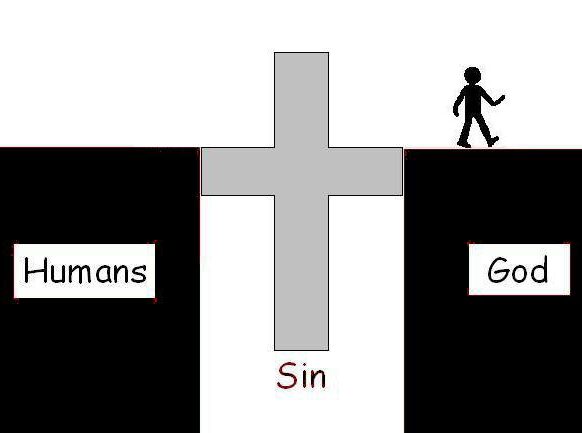
I don’t know who wrote these books. I’ve read evangelical books about other religions, but I assume that this is a more neutral book written from a sociological perspective. But anyway, I believe that it’s vital to spread the message of Christ around the world – it’s His command.
Matthew 28:19-20
19 Therefore go and make disciples of all nations, baptizing them in the name of the Father and of the Son and of the Holy Spirit, 20 and teaching them to obey everything I have commanded you. And surely I am with you always, to the very end of the age.”
Acts 4:12
12 Salvation is found in no one else, for there is no other name under heaven given to mankind by which we must be saved.”
I’ve listened to many debates over the years on podcasts, such as Unbelievable. Some were between people of different faiths, and some were between evangelicals. Some liberal evangelicals tend to believe that you might not need to explicitly believe in Jesus to end up in heaven. I can understand this hope. You could get someone of another faith who loves God as they know Him, loves others, acknowledges their sin, and relies on God’s mercy for salvation. They might hear of Jesus as a Saviour, but if they’ve only just heard of Him, it might be like us hearing a tribesman from another part of the world speaking of “baba bongo” or whoever being the Saviour. But I think it’s best not to turn your hopes into doctrines. For example, if U2 were to play their final tour with one last concert in Ireland, U2 fans would scramble for tickets. Some might not bother in the hope that they might come again. But real fans wouldn’t take the risk. And perhaps some early Christian might not have bothered evangelizing, thinking that the world was OK without Jesus. But most followed His instructions, and so should I.
But that doesn’t stop me from loving and respecting people of other faiths, even if they have no interest in my faith. And if I expect others to investigate what Christians believe, why shouldn’t I investigate what they believe. And the interesting thing is, people of other faiths can actually end up pointing people to Jesus. For example, when I heard about the Beatles visit to India and their interest in Hinduism, it was one of the things that started me on my spiritual journey. And I know more than one evangelical Christian who were encouraged to begin their spiritual search when they met Jehovah’s Witnesses, which are regarded as a heretical sect by evangelical Christians. But they do encourage people to read the Bible.
Here are some missionary hymns:
Rescue the Perishing reminds me of an illustration which I sometimes use regarding missionary work. Let’s suppose that I was on the beach and a lady ran towards us telling us that her kids went in swimming and she doesn’t know where they are. The people around me rush to the water to search. I sit there and tell her not to worry. I’m sure they’re OK. Maybe they’ve even already come out. Would she thank me for my optimism, or would she prefer me to assume the worst and go and search for them? I see so many modern vicars on TV being so optimistic about everyone ending up in heaven. They’re really nice guys, but wouldn’t it be nicer to call people to repent and believe and encourage them to spread the word throughout the world?

