

I grew up here in the Republic of Ireland, where Roman Catholicism is the main religion. From childhood, we were taught that Jesus died and rose again. I just believed it because everyone else believed it. Back then, you’d never meet an atheist. You might hear about Protestants or some of the cults, but they all generally believed that Jesus died and rose again too.
Then, when I got into my teens, I started asking questions. I was interested in the differences between Roman Catholicism and Protestantism. And soon, I rejected some doctrines held by Roman Catholics because I could find no Scriptural basis for them. Most of these related to the Blessed Virgin Mary. For example, the Bible says nothing about her being assumed into heaven, body and soul, but that’s all covered elsewhere on my site. The last mention of Mary is in Acts 1 just after the ascension of Jesus.
Acts 1:12-14
12 Then the apostles returned to Jerusalem from the hill called the Mount of Olives, a Sabbath day’s walk from the city. 13 When they arrived, they went upstairs to the room where they were staying. Those present were Peter, John, James and Andrew; Philip and Thomas, Bartholomew and Matthew; James son of Alphaeus and Simon the Zealot, and Judas son of James. 14 They all joined together constantly in prayer, along with the women and Mary the mother of Jesus, and with his brothers.
I wasn’t fascinated by the resurrection. I initially believed it because everyone else seemed to believe it. Then, when I came to personal faith in Jesus, I believed it because the Bible teaches it. But at some stage, I started studying it more closely. One question I asked is why was it needed at all? Why didn’t Jesus just die and go back to heaven? Why did he need to rise and hang around for a few weeks? I also wondered why any of the rest of us need to rise. Why don’t we all just go to heaven when we die (or hell as the case may be)?
Some religions teach that we leave all the physical world behind when we die. Some even say that we’re absorbed into God or into nothingness. But the Bible teaches that God created a physical universe. And in the future, he will create a new heaven and a new earth. And much of the focus in the New Testament is on a physical resurrection. I am prone to see my body as something I’d be happy to escape from. But in heaven everything will be much better and very different. I’ll be really handsome 😀. But everyone else will be too 😩. Anyway, joking aside, I’m happy to leave it to God to decide what the future world will be like. But the resurrection is a key part of it.
Nowadays, you meet many more atheists, and often, the resurrection is an interesting starting point and debating point. This is one of the things that makes Christianity unique. In facts, Paul mentioned the resurrection when he spoke to the philosophers in Athens:
Acts 17:31-32
31 For he has set a day when he will judge the world with justice by the man he has appointed. He has given proof of this to everyone by raising him from the dead.” 32 When they heard about the resurrection of the dead, some of them sneered, but others said, “We want to hear you again on this subject.”
It’s often the case that religions are founded by philosophers or maybe someone making a claim that they met an angel or found a golden book somewhere or maybe had a special dream or time of inspiration. And sometimes religions grow through military conquest or some “carrot”, such as trade etc. But with Christ, though he was an impressive teacher, two key reasons for the growth of Christianity were the resurrection and the coming of the Holy Spirit.
Jesus predicted his own death and resurrection on several occasions. For example:
Matthew 16:21:
“From that time on Jesus began to explain to his disciples that he must go to Jerusalem and suffer many things… and that he must be killed and on the third day be raised to life.”
It’s not difficult to say this, but it is difficult to fulfil it – unless you happen to have the power to do it.
When Jesus died, the disciples were demoralized. If he hadn’t risen, his movement could very well have died with him. Or, at best, people might have spoken about his moral teaching. But they didn’t do that. They proclaimed his resurrection. Here Peter addresses the crowd on the day of Pentecost, just weeks after he denied Christ out of fear. What changed Peter? It was the resurrection and the coming of the Holy Spirit.
Acts 2:22-25
22 “Fellow Israelites, listen to this: Jesus of Nazareth was a man accredited by God to you by miracles, wonders and signs, which God did among you through him, as you yourselves know. 23 This man was handed over to you by God’s deliberate plan and foreknowledge; and you, with the help of wicked men, put him to death by nailing him to the cross. 24 But God raised him from the dead, freeing him from the agony of death, because it was impossible for death to keep its hold on him.
It wasn’t just one person who saw the risen Christ – it was hundreds. And it wasn’t some distant vision, like the Ballinspittle Moving Statue in Ireland in 1985. He spent time with them after the resurrection and ate with them. You can read reports of the resurrection at the close of all four gospels and in Acts 1.
The precise sequence of events can be confusing or even seem contradictory. I often think of reports of the sinking of the Titanic. Some witnesses saw it split into two and others said it didn’t. But it might have depended on where you were and precisely when it split. John Wenhem does a good job of presenting a solution to the confusion in the sequence of events in his book, The Easter Enigma. It’s well worth the read. I also found it helpful for giving insight into the various characters mentioned in the gospels and how they related to each other.

Some early Greek Christians, who were under the influence of Greek philosophy were doubting whether Jesus physically rose, but the Apostle Paul listed all the people who saw him.
1 Cor 15:3
3 For what I received I passed on to you as of first importance: that Christ died for our sins according to the Scriptures, 4 that he was buried, that he was raised on the third day according to the Scriptures, 5 and that he appeared to Cephas, and then to the Twelve. 6 After that, he appeared to more than five hundred of the brothers and sisters at the same time, most of whom are still living, though some have fallen asleep. 7 Then he appeared to James, then to all the apostles, 8 and last of all he appeared to me also, as to one abnormally born.
Now some sceptics might argue that the stories of Christ rising from the dead are only stories. But if you were going to make up a story, wouldn’t it make more sense for just one person to claim to have seen him? As it stands, most of the Christians in the first century were in a position to meet people who had seen the risen Christ. And why would all these people conspire to lie? Why would they need to lie?
I sometimes use the following illustration. Back in 1979, when the Roman Catholic Church was much more influential in Ireland, Pope John Paul II visited Ireland. I remember going to see him in Limerick with my parents and sisters. I was drifting away from Catholicism by then, but I still wanted to see him simply because he was famous 😀. Anyway, let’s suppose a zealous present-day Catholic said that in 1979, the Pope visited the Limerick hospital and cured hundreds of people and raised some from the dead. Would anyone make such a claim? If they did, not only skeptics, but good Roman Catholics would quickly contradict the story and show it to be fake news. What would be the point in making up stories? Surely there are better ways to promote your faith. And let’s remember that most of the apostles died for their faith. Someone might die for something that they believe to be true. but how many people would die for something that they know to be a lie?
So, all these great early Christians who were willing to die for the faith would surely have exposed the resurrection to have been false if it didn’t happen and if it was just a legend that arose in the early years of Christianity. They could have still carried on and said Jesus will come again to raise the living and the dead.
Numerous resources are available on the web on the resurrection. I always like to promote the works of my favourite theologian, Wayne Grudem. He has two lectures on this online:
Chapter 28: Doctrine of the Resurrection – (Pt. 1 of 2)
Chapter 28: Doctrine of the Resurrection – (Pt. 2 of 2)
And there’s a whole load of YouTube videos and articles – like this one:
A Scientist Looks at the Resurrection
You’ll also get lots of debates and YouTube videos against the resurrection. I must admit too that if someone told me that someone out in Africa or wherever rose from the dead, my first response would be to deny it. I mightn’t even bother to investigate it. But the fact that Jesus has divided history into BC and AD and that he has had such an impact (even on YouTube😀) should at least motivate people to briefly look at the evidence.
I enjoyed watching the Risen film, released in 2016. It’s a mixture of fact and fiction, but it gives insight into what the disciples might have felt at the time. I’m not sure if everyone would approve of it.
Three popular books on the resurrection are the following:
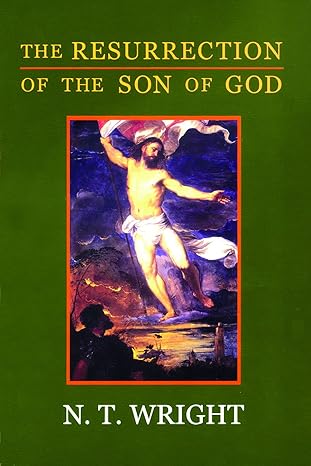
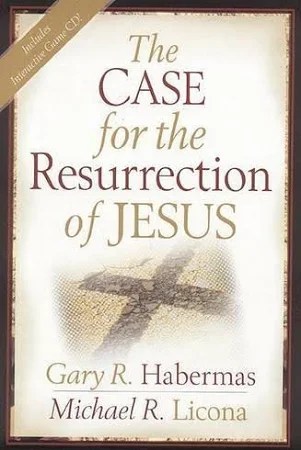
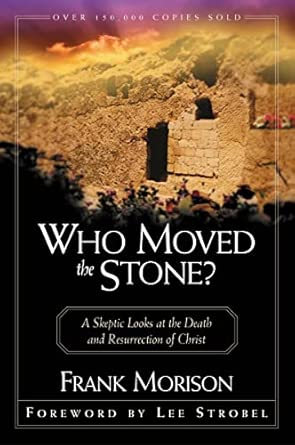
The first one is very long and scholarly so it won’t be to everyone’s taste, but N.T.Wright wrote a simpler one too – Surprised by Hope. Who Moved the Stone is interesting because Frank Morison wrote it to debunk the story of the resurrection but became convinced of its truth when he explored the evidence. It’s an old book, so you’ll find free copies on the web. I just noticed a free Audiobook of it too. Or if you’re very rich, it costs $1.28 on Kindle 😀.
I also remember hearing about a book written by a Jewish scholar who believed in the resurrection of Jesus, but did not become a Christian – The Resurrection of Jesus: A Jewish Perspective by Pinchas Lapide. I must check it out sometime 😀.
At the beginning of this post, I did mention that another factor in the growth of the New Testament church was the coming of the Holy Spirit. So, there’s the historical evidence, but the Holy Spirit also opens the minds and hearts of people to explore the evidence and to believe. When I think of the work of the Holy Spirit, I often relate it to music, which is more about feelings than facts, but you need both.
Sometimes people criticize the final line of the song “I Serve a Risen Saviour”. “You ask me how I know he lives, he lives within my heart.” We shouldn’t dismiss the objective evidence, yet in our daily lives, our spiritual experience probably matters more than winning debates about the historicity of the resurrection. 😀
 Hibernia Gospel
I am mostly Jewish (with Wiccan thrown in). I don’t associate with my maternal family which is mostly from Cork, and Tyrone among others, and Scottish. Um… but my paternal family is an odd mix of German Jew and Irish (all over the place really. Pretty much every damn county. ^^
But as they say in Latin: Varietas in vita est omnia et omnia.
LikeLiked by 1 person
I liked this book a lot. It helped me increase my faith in the historical Jesus and the actual historical event of the resurrection. “The Case For Christ: A Journalist’s Personal Investigation Of The Evidence For Jesus”, by Lee Strobel
LikeLiked by 1 person
Catholicism remains the predominant religion in most nations, particularly in Latin America.
LikeLike