


At an earthly level, I think of goals in terms of things such as aiming to get first-class honours at university and reaching goals that we set at work. It was hard getting first-class honours at university, but I did achieve it when I did a Graduate Diploma in Computing back in 1999. But maybe standards had dropped since I did my original degree in 1986. I did get an honours degree, but back then, only one guy on our course got a first-class degree. And it wasn’t me 😀.
As for work goals, I’m not sure if anyone took them all that seriously. It’s just something everyone had to do every year – create a list of goals. We generally forgot what they were 😀. And maybe they weren’t particularly hard.
Spiritually, I’ve set quite a tough goal – being perfect.
Matthew 5:48
“Be perfect, therefore, as your heavenly Father is perfect.”
2 Corinthians 7:1
“Let us purify ourselves from everything that contaminates body and spirit, perfecting holiness out of reverence for God.”
Phil 3:10-14
10 I want to know Christ—yes, to know the power of his resurrection and participation in his sufferings, becoming like him in his death, 11 and so, somehow, attaining to the resurrection from the dead. 12 Not that I have already obtained all this, or have already arrived at my goal, but I press on to take hold of that for which Christ Jesus took hold of me. 13 Brothers and sisters, I do not consider myself yet to have taken hold of it. But one thing I do: Forgetting what is behind and straining toward what is ahead, 14 I press on toward the goal to win the prize for which God has called me heavenward in Christ Jesus.
Will I achieve it? If I could, I wouldn’t need a Saviour. The reason that I need a Saviour is that I cannot save myself. And, as I often point out on this blog, when we repent and trust in Jesus, we cross from death to life. Our salvation is secured. We are treated as if we were perfect. But that shouldn’t stop us from aiming for perfection. We’ll always fall short, but we will want to be heading in that direction.
In the Book of Romans, the Apostle Paul emphasizes the grace of God and that salvation is a gift. Maybe knowing that their salvation is secure might lead some to complacency. Paul anticipates this in Romans 6 “What shall we say, then? Shall we go on sinning so that grace may increase? 2 By no means! We are those who have died to sin; how can we live in it any longer? “
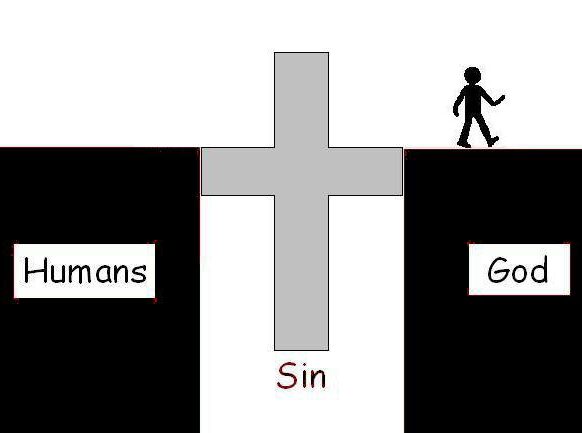
When he says that we died to sin, he doesn’t mean that we no longer sin. But when we repent, we should think of sin as part of the past. So, we should have a greater motivation to be holy. I sometimes think of two illustrations to emphasize this.
An Angel Telling You That You’ll Go to Heaven
Let’s say an angel appears to you one night and assures you that you’ll be in heaven and there’s no possibility that you’ll end up in hell. How would you live the next day? I would think that you’d want to be more heavenly minded and more holy. But you don’t need an angel to tell you that you’ll go to heaven. When you believe, the Holy Spirit gives you assurance and you can also read the promises of Jesus to all who believe. For example:
John 10:27-28
27 My sheep listen to my voice; I know them, and they follow me. 28 I give them eternal life, and they shall never perish; no one will snatch them out of my hand.
And if we do grow careless, if we are genuine Christians, the Holy Spirit will awaken us and motivate us towards holiness.
A First Class Degree in Cambridge University
I remember visiting Oxford and Cambridge for the first time in 1983. I’ve often thought how wonderful it would be to be so academically brilliant that I could go and get a first-class degree in Mathematics at Cambridge, go on to become a professor and become a big name in the field of science. What are my chances? Zero 😀. But let’s say that I was 16 again and an angel appeared and said that I’ll be as famous as Stephen Hawking some day and that God will give me amazing intelligence, so I should apply to Cambridge as soon as the opportunity arises
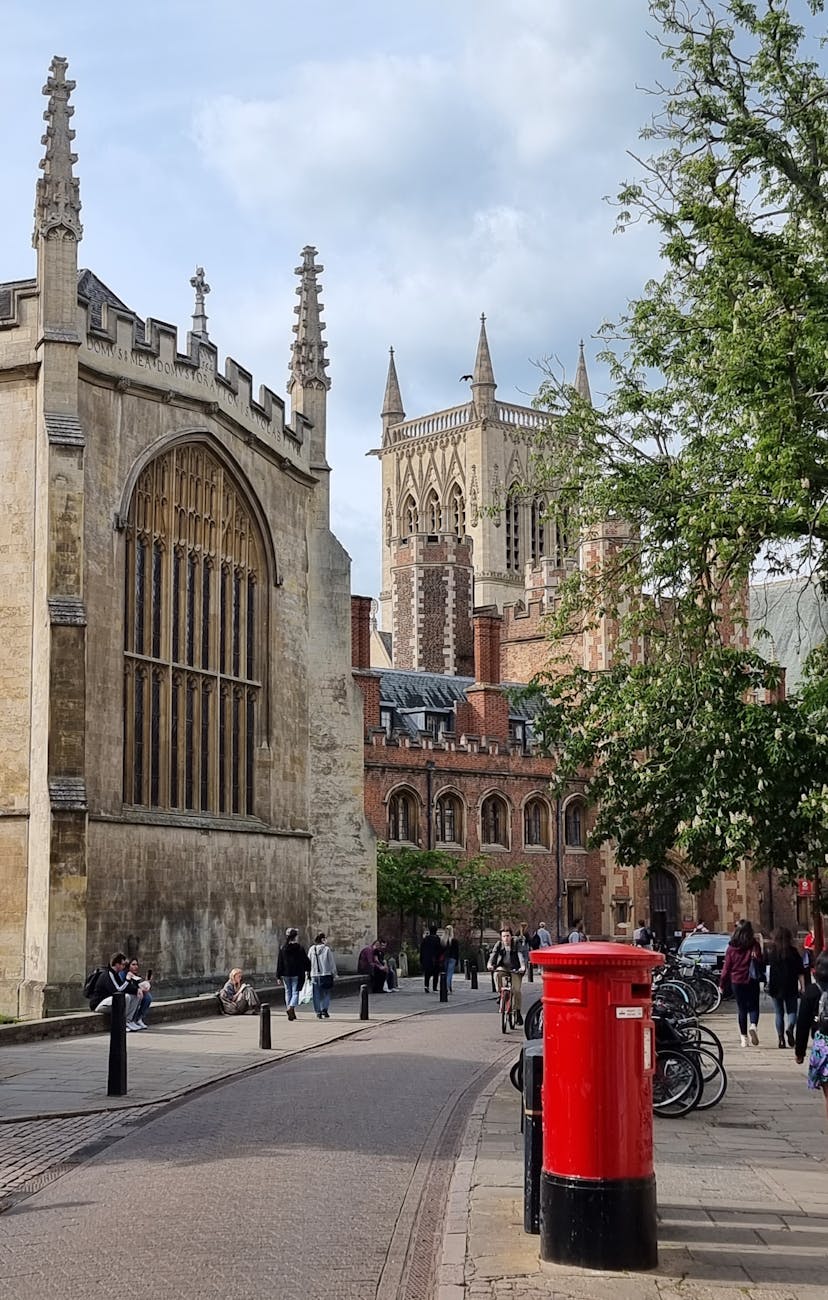
Now, when I got to Cambridge, would I spend my time partying and not bothering to study because I know everything is sorted for the future? Surely, instead, it would motivate me to apply myself. I would embrace my new life as a brilliant mathematician and scientist.
So, knowing that I’m going to heaven causes me to aim for holiness and aim for perfection. Is it an odd thing to aim for perfection? Well, if you’re learning the piano, wouldn’t you like to aim to play perfectly? One thing to be careful of is thinking that you’re already nearly perfect or better than everyone else. The parable of the pharisee and the tax collector warns you against that. But what do you think the tax collector would do after he prays “God, be merciful to me a sinner?” He mightn’t be completely transformed overnight, but surely he would want to live to please God, if his repentence is genuine. He would go on praying the same prayer throughout his life, but he wouldn’t want to wallow in sinfulness.
So, we won’t be perfect on this side of heaven, but can approach God boldly because we are in Christ. It’s a little like being in a relay team with a brilliant runner. You’ll win the race because of him, but that shouldn’t stop you from running to the best of your capabilities.
Getting back to university, here’s a clever Irish chap, a professor from Oxford University – John Lennox. He got all the breaks that I never got 😀. I remember listening to him debating with Richard Dawkins and Peter Atkins some years ago.
And here are two hymns that emphasize that our salvation is based on Christ’s sacrifice, not on our own efforts:
Titus 3:4-6
4 But when the kindness and love of God our Savior appeared, 5 he saved us, not because of righteous things we had done, but because of his mercy. He saved us through the washing of rebirth and renewal by the Holy Spirit, 6 whom he poured out on us generously through Jesus Christ our Savior,
Appendix
Here are some books by John Lennox, the Irish mathematician who I mentioned earlier:
God’s Undertaker: Has Science Buried God? Explores the relationship between science and belief in God.
Can Science Explain Everything? A concise defense of faith in an age dominated by scientific reasoning.
2084: Artificial Intelligence and the Future of Humanity Examines the ethical and spiritual implications of AI.
Seven Days That Divide the World Discusses the Genesis creation account in light of modern science.
God and Stephen Hawking: Whose Design Is It Anyway? Responds to Hawking’s claims about the origins of the universe.
Gunning for God: A Critique of the New Atheism Challenges the arguments of prominent atheists like Dawkins and Hitchens.
God and Stephen Hawking: Whose Design Is It Anyway? Responds to Hawking’s claims about the origins of the universe.
Where Is God in a Coronavirus World? Offers spiritual insight during times of crisis and uncertainty.
Against the Flow: The Inspiration of Daniel in an Age of Relativism Applies the story of Daniel to modern cultural challenges.
Determined to Believe? Tackles questions of divine sovereignty, human freedom, and responsibility.
Cosmic Chemistry: Do God and Science Mix? Investigates whether science and faith are compatible.
 Hibernia Gospel
Your observations are both incisive and thought-provoking, reflecting a remarkable command of analytical reasoning. This post stimulates reflection and intellectual
LikeLiked by 1 person