I make much mention of my background and experiences at various points in this blog, so I thought it might be useful to present a brief outline of the years coming up to my conversion. As I mention elsewhere, I grew up a Roman Catholic in Cork, Ireland. I don’t remember a lot before my confirmation, but Catholicism is a mixture of biblical truth, traditions and theological speculation added over the centuries, and pious belief. Pious belief would be things like Holy Mary appearing at Lourdes, Fatima, and Knock. The church itself might be sceptical, but they’re happy to tolerate it if it helps people be more devout. Mary was always a very big part of Irish religion in my childhood.
Then there’s modernism, which began in Protestantism but was very much a part of modern Catholicism, even back in the 1970s. People were prone to reexamine Bible stories. It started with questioning things like Adam and Eve and whether the Red Sea really opened, but then you’d hear opinions like the feeding of the 5,000 being just a matter of Jesus encouraging people to share their sandwiches. At the more radical end, people might believe that Jesus was just a godly man, or even that God was just a human concept that evolved over the centuries. And of course, the Bible wasn’t seen as the word of God. It was just a human book, inspired in the way that a poem is inspired, if at all.
People were a bit more open to things like reincarnation, astrology, spacemen visiting earth, UFOs and so on. And people wondered might all religions be true, with God sending different prophets to different regions. The church wouldn’t teach such things, but in practice, Catholics would believe all sorts of things.
I used to like Bible-based films, such as King of Kings, The Robe, and films like Ben Hur, that might feature aspects of the gospel story. And in 1972, I remember being very impressed when the Ten Commandments came to the Pavilion in Cork. And of course, there was the Jesus of Nazareth film, but that came later. I do have some good memories of learning about the Bible in school. I found the Mass quite boring, although I did like communion. I do honestly wonder if anyone really believed that the bread was transformed into the body of Christ, but it was a time when you would draw close to God. And the bread made it all feel more tangible. Anyway, here are 8 years that outline the leadup to my conversion.
1973
This was the year of my confirmation. One of the purposes of confirmation is to empower individuals to be active witnesses of Christ in the world. It encourages them to share their faith with others and to live according to the teachings of Jesus. But in Ireland, most just see it as a chance to get a nice suit and get money from relatives 😀.As I point out elsewhere in this blog, confirmation isn’t a biblical ordinance, so we don’t have it in evangelical churches. An exception would be evangelical Anglicans. Yet, for me, it was significant because we studied the gospels and Acts of the Apostles in school in the run-up to it. Even now, when I read the gospels, I can remember our discussions in class. And at 11 or 12, you’re starting to ask questions and decide what is and isn’t true. I was just puzzled that no-one (including me) seemed to have much of a desire to be active witnesses for Christ in the world.
1974
I think that this was the year when I first went into a children’s meeting in the Good News Caravan. The caravan went around Cork to teach children about Jesus and the Bible. I remember hearing that they were Protestants. And I remember a song they taught us:S.a.v.i.o.u.r, we want you all to know,
He's the one, the only one, who frees from sin (repeat)
It was on Calvary, he was nailed to the tree,
And salvation was purchased that day,
S.a.v.i.o.u.r, we want you all to know,
He's the one, the only one, who frees from sinI was curious about the reference to a tree. I thought that maybe that was some sort of a Protestant heresy and asked them about it. Wasn’t Jesus nailed to a cross? But of course, it was just used for rhyme. I later discovered that the word tree is sometimes used for cross in Scripture, especially in older translations.
Later that year, in secondary school, I wrote an essay on why the Catholic church is the one true church. I made the point that Protestantism was fragmented. Of course, looking at it now, the reformation was a little like the breakup of the Soviet bloc. When all the countries went their separate ways, all sorts of new approaches and conflicts arose. But I don’t think that dictatorship or imposed uniformity is the answer.
I’d like all churches to be evangelical Baptist churches. They’re not, but evangelical churches are close enough. And I don’t see the point in being in a Protestant denomination with modernists, who mightn’t believe the Bible, the resurrection, or in some cases, the existence of God. So, if we define Protestantism as all Christian churches who aren’t Roman Catholic or Eastern Orthodox, then it’s never going to be one big single church. And there was never a point where all Christians were part of a single human organization, apart perhaps from the New Testament era, but even then, connections were quite loose.
1975
This was when I started getting interested in Eastern religion, particularly the Hare Krishna thing, which the Beatles were into. Eastern religion can seem very exotic, but over in these countries, you’ll largely see the same sort of thing that you see here. You go with the religion of those around you, but most don’t really believe it, or maybe they sort of half believe it at times. They just follow the crowd around them. I think of these verses:Matt 7:13-15
‘Enter through the narrow gate. For wide is the gate and broad is the road that leads to destruction, and many enter through it. But small is the gate and narrow the road that leads to life, and only a few find it.Jesus is saying here that we need to be careful not to mindlessly follow the crowd. If you’re going to a hurling match, you might get off the bus and follow the crowd of fans. But let’s say that you have a medical appointment near Croke Park on the day of the match. Well then, even if the crowd are going the same broad direction, you’ll need to think it through for yourself. When your eternal destiny is at stake, don’t just look around and go with what everyone else believes.
People used to say, “how can so many millions of Catholics be wrong”. But these millions didn’t sit down and decide for themselves. If you were born in Iraq, someone might say how can 1.8 billion Muslims be wrong. And of course, nowadays, Irish beliefs are shaped by all sorts of other secular movements. So, following the crowd might mean being anti-church.
Around that time too, the Catholic charismatic movement was big in Ireland. There was a man on TV talking about speaking in tongues. He even demonstrated it, but I didn’t find it very convincing. It just felt like the transcendental meditation movement, where some people might see meditation as something magical, or you’d hear that people could fly if they did it enough. And then, you’d see nuns with guitars singing songs like Happiness, Happiness, the Greatest Gift that I Possess. It seemed a bit like Up With People. Not my kind of thing 😀.
1976
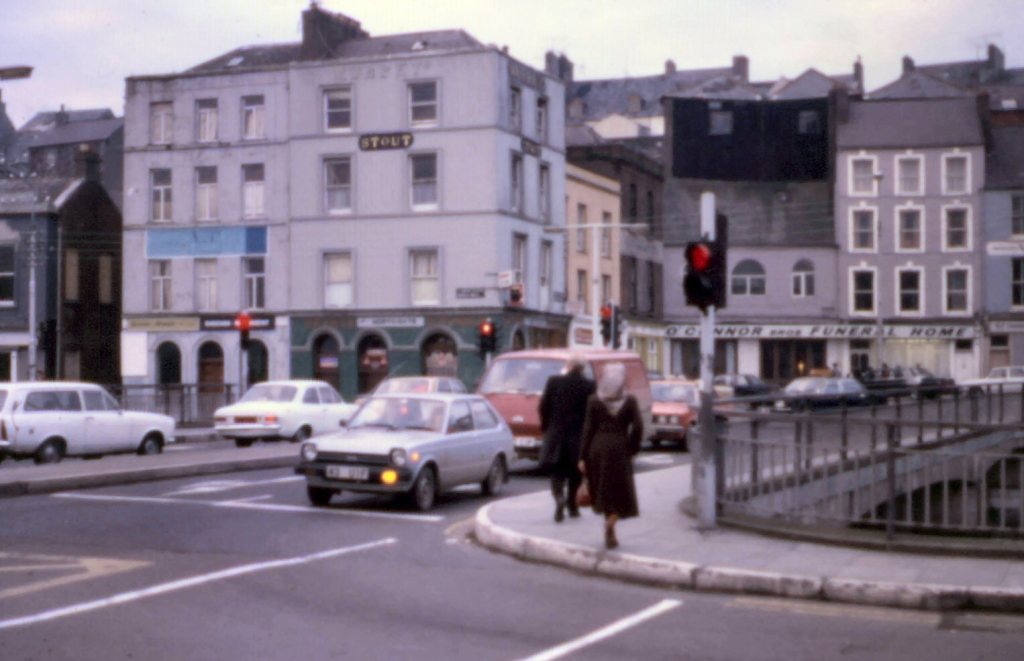
Early that year, a couple of us saw the Good News caravan again near the Lough in Cork. Now we were in our mid-teens, and we went in and started asking questions. I probably came across as cynical and sceptical, but I was at the stage where I was open to new opinions. Evangelicals generally don’t like to speak in terms of churches, but he did mention, when pressed, that he was a Baptist. In the course of the conversation, someone gave me a little Gideon New Testament. I asked the usual questions about Mary and the Mass, and I found his answers convincing. So much so, that we discussed it in religion class a few days later.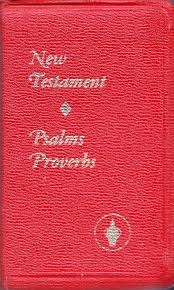
Around that time, I started reading the New Testament and Psalms a bit more. We also got little Gideon New Testaments in school. As I became more familiar with the New Testament, I started wondering if it would be better to be part of a group that would be closer to the Bible in its thinking.
I didn’t really contemplate leaving the Catholic church though. In the Republic of Ireland, we did respect Protestants, but we saw them as a different tribe. I thought of them as posh English people who still lived in Ireland. So, if you switched, Catholics might see you as a turncoat 😀. Protestants might wonder who let you into their church. And people didn’t really distinguish between smaller Christian groups and heretical sects and cults. Anything that wasn’t Catholic or mainstream Protestant was deemed sinister. And perhaps, some of the more radical evangelical groups were a little sinister at times, as were some Catholic groups, such as Opus Dei and Legionaries of Christ.
Later, in the ’80s, I read a Catholic book on cults, which covered all this. It had a chapter on some new evangelical groups, but also said something like “this is a million miles from traditional evangelical groups such as Baptist churches, who have maintained a quiet witness over the years.” As a Baptist, I didn’t know whether to take that as a compliment or an insult. Did he like us because we weren’t cult-like or was it because we weren’t doing as much evangelism? Nowadays, you don’t hear as much about cults. If you want to insult a group, you can just call them fundamentalists 😀.
As a teen, I’d often try to tune into Radio Luxembourg 208 to hear pop music. That time, there was only one radio station in Ireland, with perhaps a couple of hours of pop music each week. Pirate radio didn’t arrive until 1978, and 2FM (whatever it was called back then) arrived in 1979. I’m beginning to sound like Grandpa Simpson 😀. Anyway, to get to the point, it was hard to find 208, so sometimes, I’d mistakenly tune into Trans World Radio (TWR) Monte Carlo, which was a Christian station. And I’d listen away to the preaching. Sometimes, they would encourage you to give your life to Jesus. I wondered about that. Am I not already a Christian? Well, not a very strong one. And if I gave my life to Jesus, would I really be transformed? Would it work at all? In Catholicism, you associated radical changes or conversion with significant historical people like St. Francis of Assisi. Ordinary people didn’t have such experiences. I might have even prayed along with them when they suggested a prayer to receive Jesus as Saviour. But until 1980, all sorts of ideas would bounce around my mind. I mean, I used to enjoy listening to Radio Moscow too 😀.1977
That summer, someone lent me Living in a Material World by George Harrison. I still warmed to Eastern religion. I wondered if God might have sent different prophets to different regions, so each of us could just choose whichever one suited us most. But of course, the Bible teaches that Jesus is God the Son, and he sent his disciples to preach the gospel to all nations. And he said:“I am the way and the truth and the life. No one comes to the Father except through me.” John 14:6
I had no knowledge of Christian pop music at this stage. There was Cliff Richard, but he was the kind of guy you’d see in the Eurovision or in your mother’s Womans Way magazine. Rock stars were my heroes at that time. That year, the Stranglers had a song called No More Heroes, but they were my heroes.
That summer, an evangelical team were giving out a little Christian evangelistic newspaper at the Lough in Cork. I had a chat with them. I was sceptical when they said that they were sure of heaven. And I asked them why are they giving us newspapers if all the truth we need is in the Bible.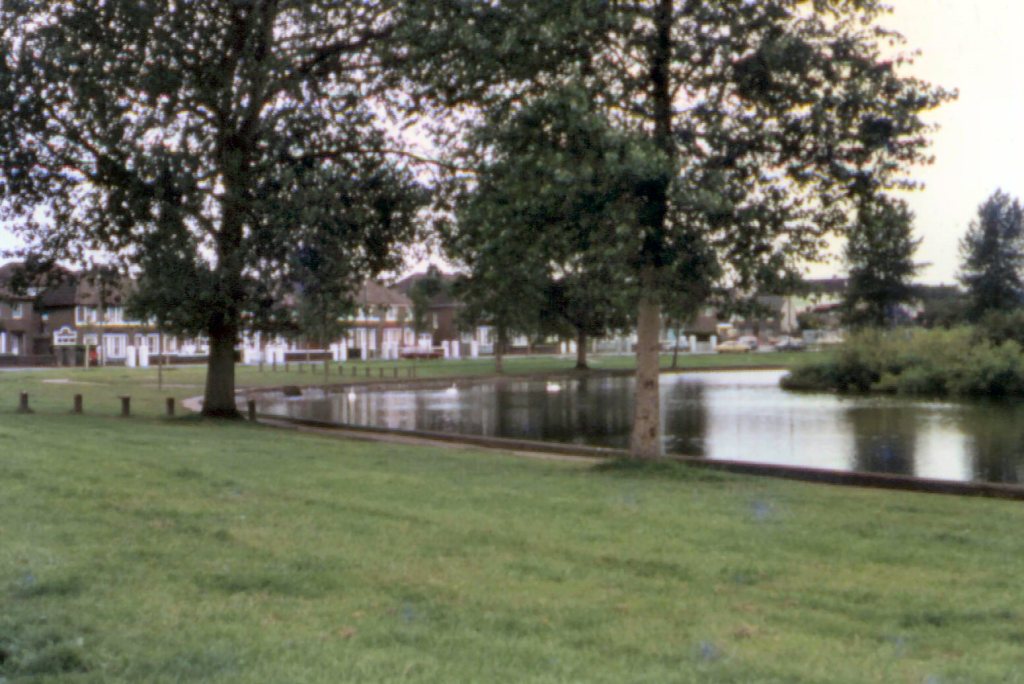
So, I gave it back to them, and my friends did the same. But I did secretly admire them. I had the sense that they belonged to Christ.
1978
That year, I met an evangelical Christian at work. I was an apprentice fitter/turner in AnCo in Donnybrook Douglas. This man was from Bandon, but originally from Scotland. Baker Street by Gerry Rafferty was out at the time. I remember him mentioning that he knew him in the folk scene back in Scotland. He himself was a musician. I do remember having conversations with him, though I don’t think I showed any signs of interest, though I was interested.At that time, I was big into the Stranglers, having seen them in Cork, the previous November. I thought of myself as a punk rocker. I especially liked the bassist, Jean-Jacques Burnel. At that age, you’d want to model yourself on tough guys, even if you weren’t particularly tough yourself. I sneakily liked a song called Mr. Blue Sky by ELO, but that was a “girly” song (nothing like punk). The funny thing is, a few years ago, Jean-Jacques Burnel was on Tracks of My Years on BBC Radio 2, and guess which song he chose from 1978? Mr. Blue Sky 😀.
That was also the year of Boney M’s Rivers of Babylon. It was unusual to have a Psalm in the charts. I learned many years later that singer, Liz Mitchell was an evangelical Christian.
1979
I had been contemplating becoming a Christian (as evangelicals understand the term) since I spoke to the Good News caravan man back in 1976. A Pentecostal fellowship in Cork, called the Full Gospel Christian Fellowship, but more generally known as The Upper Room, used to preach on Saturdays outside Murrays on Patrick Street. I went along to one of their meetings in April of that year.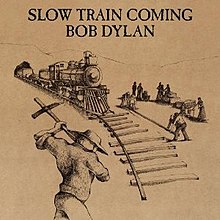
Then, later that year, I discovered that Bob Dylan had become a Christian. He released Slow Train Coming. I didn’t buy the album until 1980. I wasn’t really a Bob Dylan fan.
But the fact that someone, a little cynical, like him could become a Christian impressed me. I wasn’t a particularly bad guy, but at the same time, I could never see myself as a “goody two shoes” Ned Flanders type.
What I learnt subsequently, is that you don’t have to be a certain type of personality to be a Christian. Often, in evangelism, people are marketing something and, unbeknown to themselves, they’re probably putting on a bit of an act. And people are prone to exaggerate how much their lives have changed here and now. The big thing is that your sins are forgiven and you’re going to heaven. You might be the same misery guts that you always were, after you become a Christian. You shouldn’t be, but you might be 😀. Sometimes, progress can be slow.
Toward the end of the year, I went to see a lecture on Leon Trotsky in Connolly Hall Cork, maybe because he was mentioned in a Stranglers song. At that time, I was very inquisitive about everything. Trotsky was seen by some as a good communist. If he hadn’t been sidelined by Stalin and murdered, the Soviet Union and the world might have been very different. In the subsequent months, I hung around a good deal with the Militant Tendency folks, which were a Trotskyite wing of the Labour party.
One other thing worth mentioning is Poldark.
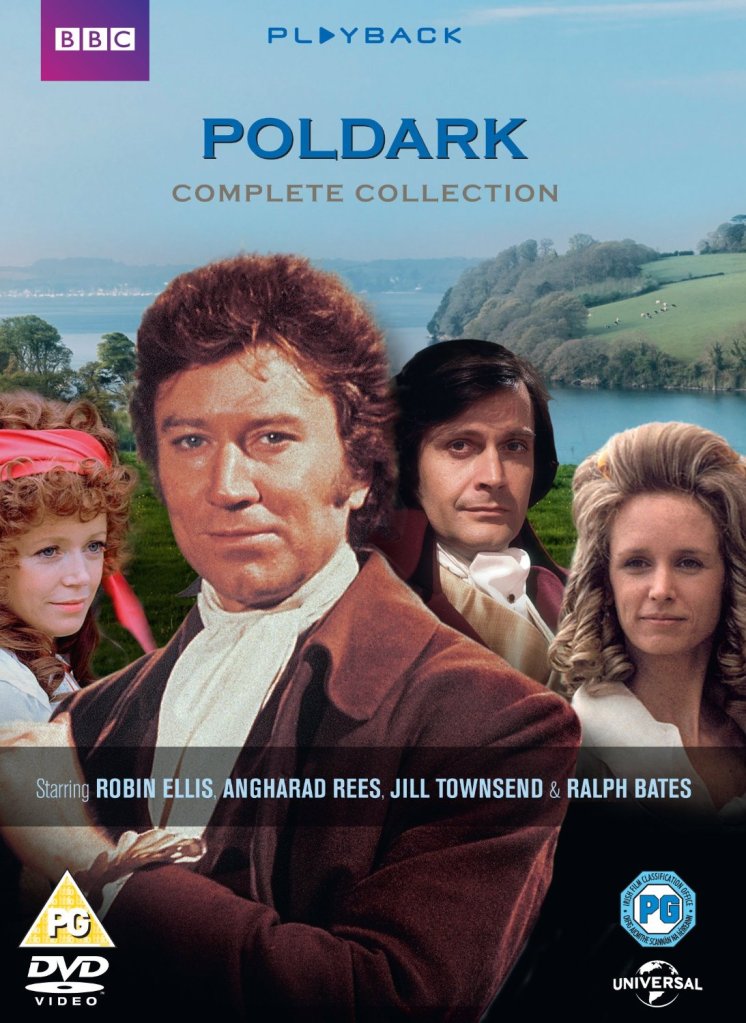
That series, historical fiction based in 18th Century Cornwall, was on RTE throughout the late 70’s. Towards the end, some methodists evangelists appeared for a few episodes. They struck a chord with me. God can use all sorts of things to draw you to himself.
1980
So, we finally get to 1980, the year of my conversion. Over the last five years, I had various Christian influences, street preachers, Trans World Radio Monte Carlo, the Gideons New Testament, Posters with Christian Texts, that man from AnCo etc. And then, there were other religious and political influences. I was big into pacifism and people like Gandhi and Martin Luther King. And of course, there were the bad influences, like the music scene. It wasn’t particularly bad, but you’d want to model yourself on all those cool guys, like the Stranglers, who had a bad boy image. And you’d be heavily influenced by what they said in interviews. And all the musical journalists were very cynical about anything deemed conservative.I remember being quite troubled by the Dana song, Totus Tuus, which was Number 1 in January. It seemed to come quite too close to viewing the Pope as one should view God.
At that time there was a lot of concern in Ireland about new religions and cults, but if one of those new religions sung a song like that about their leaders, you’d view it as quite sinister. During the previous year, during the papal visit to Galway, everyone was singing He’s Got the Whole World in His Hands, a song about God, but I got the impression that they were singing it about the Pope. Dana did feature in a lot of general evangelistic initiatives in later years. She was the first to win the Eurovision for Ireland, back in 1970, with All Kinds of Everything, and even ran for president at one stage.
I spent the early months of 1980 largely with the Militant Tendency people. In some respects, it was similar to my later life as an evangelical. The folks were very friendly. We’d have study groups, public meetings, weekends away and so on. I distributed communist literature to friends at work, and someone warned me that it could get me into trouble. The Militant Tendency were in no way violent, but any far-left group would be seen as sinister. One thing I didn’t like was their atheism. I wondered if I could be a Christian communist and pacifist. This persisted for a couple of years into my life as an evangelical. But once I got into adulthood, I started being more open to other points of view.
Anyway, I do remember going along to Cork Baptist Church in early 1980, around the time that I bought Bob Dylan’s Christian album, Slow Train Coming. They had a sign on the door saying All Welcome. I wondered if that meant everyone or just All Baptists Welcome. But I was welcomed.
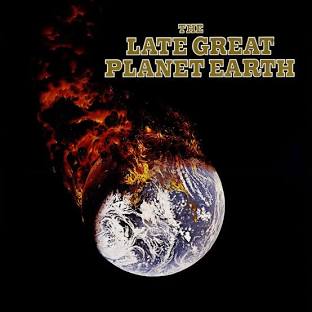
And around that time, I went to a film in the Palace Cinema called The Late Great Planet Earth, a film about the end times. In some evangelical circles, particularly in the US, there’s a lot of speculation about the end of the world.
The Upper Room were giving out leaflets outside. So, I had another good chat with one of them, raising all my usual objections. I don’t think the Upper Room were into the end times stuff, but they were taking advantage of the opportunity to evangelize. I enjoyed the film, but I wasn’t convinced. It’s one of the subjects that evangelicals often disagree among themselves about. Some see the book of Revelation as primarily symbolic, whereas others take a more literal view. And then you get people speculating on who the antichrist is and so on.
Many years later at Tipperary Christian Fellowship (now Tipperary Bible Church), a friend told me that he’d been giving out leaflets outside the cinema in Tipperary town for the same film in 1980. The security guy tried to chase him away, but soon after the security guy himself became a Christian and was a key member of the fellowship until he went to be with the Lord a couple of years ago.
Anyway, back in 1980, as an apprentice, I spent some time at the Regional Technical College (RTC) in Cork. The Christian Union there were showing a film about two Dublin men who became Christians, called Good and Proud. These were their actual surnames, I think. And one of them was at the Christian Union meeting to answer questions. And I remember having a good long chat with the Catholic chaplain, a priest who used to teach us, even though we were learning engineering by and large.
One day I was sitting around waiting for my night class when this bunch of guys walked by who looked vaguely familiar. Then I realized it was Horslips, an Irish group, who I was big into at the time. They played in the RTC that night.
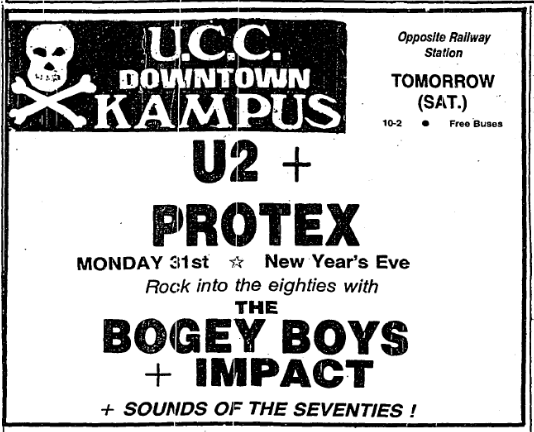
Advert for U2 at the Cork Arcadia 29th December 1979 And of course, there was U2 as well, who I saw several times at the Cork Arcadia in late 1979 and 1980. The last time I saw them in 1980 was at a Police concert at Leixlip. 11 O’clock Tick Tock was playing as we arrived in the coach from Cork.
The lead singer seemed to always have an unusually joyful demeanour, which wasn’t typical of the time. Most Irish new wave groups imitated the sulky mood of UK groups such as the Clash. I later discovered that a few U2 members had become Christians. Not sure if that had anything to do with their joyful mood. Maybe they just wanted to be unique 😀.
Anyway, in August of that year, I decided that I was tired of putting off the decision to commit my life to Christ. New Testament Christians believed in him. They weren’t just nominal. Even where faith was weak, they asked him to make it stronger (Mark 9:24). Was I going to settle into a life of agnosticism, nominal Christianity, or was I going to commit my life to Christ, however weak a Christian I might be?
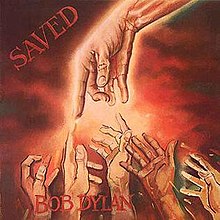
A few weeks earlier, I saw Bob Dylan’s Saved album in Pat Egan’s record store. It was one of the things that gave me the final nudge. A lot of Dylan fans don’t like it, but it’s always been my favourite album of his.
Another key influence was conversations with the man in Christian Publications Bookshop in Tuckey Street Cork, who became a close friend over my years in Cork. He had become a Christian at Maynooth, while training to be a priest. There was a bit of a revival there at the time. Some of the other Christians I had met were very zealous, but they might have come across as a bit intense, or naive. But this man came across as very gentle, solid and sensible. It’s just a reminder that God uses all types of people. Throughout my life, sometimes, I’ve been intense myself and other times I’ve been a quieter shy person. But whatever your personality, God can use you. You might be the exact type of person that an individual needs to speak to at a particular time.
So, on Sunday August 17th, 1980, I committed my life to Christ. And I committed to attend an evangelical church, which initially was the Upper Room. So that day was also my last day at Mass, apart from some funerals that I attended since.
I had been on a CIE bus tour to Cape Clear the day before. I was listening to a Johnny Cash gospel tape while strolling around the island.
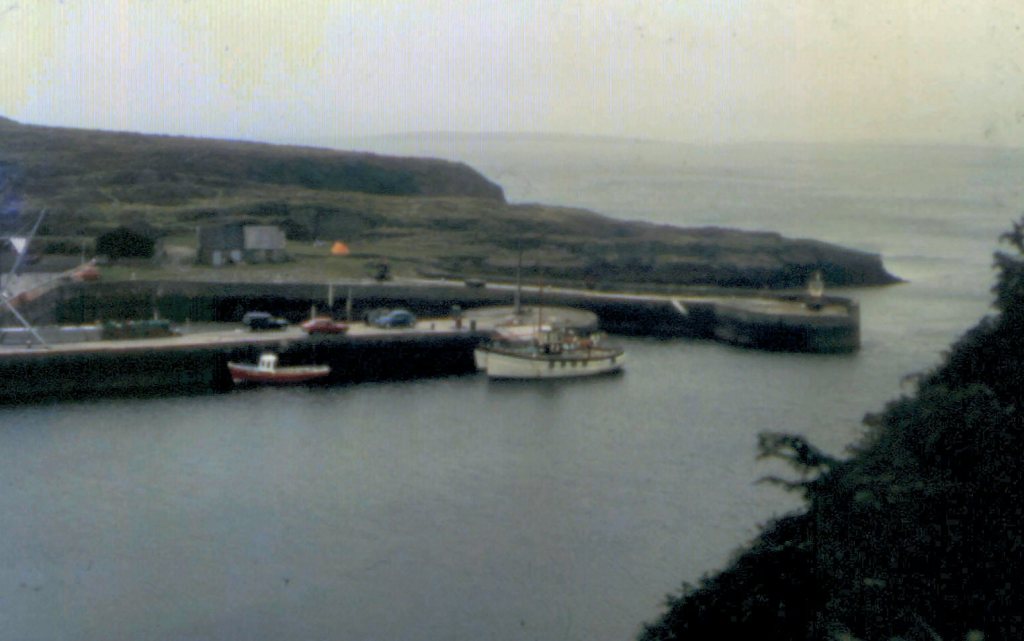
Cape Clear August 1980 Funny thing was, I shared my umbrella with a couple of tourists during a shower on the boat out. We had no conversation, but when I went to the Upper Room the next night, I saw them there.
Committing my life to Christ made a huge difference to me; the greatest being the assurance that I’m going to heaven. But the inner feelings are different for everyone. Sometimes the new birth is presented as some sort of wellness thing or a key to perfect happiness, and people try it to see if it works. That’s all wrong. It’s all about trusting and obeying and the Holy Spirit enabling you to do this. The perfect happiness comes later 😀. And it goes on for eternity.
And committing your life to Christ doesn’t mean that you’ll be perfect or near perfect in this world. You’re committing to discipleship, being willing to learn. I sometimes compare it to learning the guitar. You might spend your life on it and still not reach the skill level of Eric Clapton. But you still do it every day and slowly improve. As a teacher, you respect pupils who are committed to learning, even if they don’t gain high grades.
Matthew 11:28
“Come to me, all you who are weary and burdened, and I will give you rest. Take my yoke upon you and learn from me, for I am gentle and humble in heart, and you will find rest for your souls. For my yoke is easy and my burden is light.”I did visit the local priest with my parents. He was quite accepting of it all. He made some very valid points, which I remember to this day. He said that the Bible is a very complex book, which it is. But the answer to that is to study it deeply and to be willing to listen to other points of view. And when asked about whether I’d be allowed to get married in the Catholic church, he said I’d be likely to meet a girl from my new network, which is exactly what happened five years later. We got married in Cork Baptist Church in 1988. Then, we settled in Limerick.
Most evangelicals in the Pentecostal churches were quite strict about things like worldly entertainment, rock music and drinking alcohol. And initially, I thought it was a good thing for me to distance myself from these things, rock music in particular. I can listen to it now with a sense of nostalgia, but years ago, if I read an interview with someone like John Lennon, or Johnny Rotten, I’d be inclined to take everything they said as gospel. Now I had the real gospel 😀. Later, in Baptist circles, people weren’t as strict, though it all depended on who you were speaking to or the particular church. In practice, whatever church you go to, that becomes your social life. I never liked nightclubs and pubs much to start with. I think I got drunk about twice in the few years previously and it wasn’t a pleasant experience.
I had worried that after a few months, I might go back to my old ways again, but thankfully no. It wasn’t that I had an overtly sinful lifestyle, but I was prone to put God out of the picture for much of the time, which isn’t what should characterize a true Christian. If you join a golf club, you expect people to be interested in, or even passionate about, golf. And if you join a Christian church, you should find people who feel like that about Christ, which I found to be the case in evangelical churches. Of course, everyone is different. Even in evangelical churches, people might sometimes be shy about speaking about spiritual things for fear of parading their spirituality like the Scribes and Pharisees.
Matt 6:5
“And when you pray, do not be like the hypocrites, for they love to pray standing in the synagogues and on the street corners to be seen by others. Truly I tell you, they have received their reward in full.”But then again, it’s a sad state of affairs if all talk of spiritual things is absent. That shouldn’t happen in a church.
Col 3:16
Let the message of Christ dwell among you richly as you teach and admonish one another with all wisdom through psalms, hymns, and songs from the Spirit, singing to God with gratitude in your hearts.So it’s a matter of getting the balance right.
I was very shaken by John Lennon’s murder at the end of that year. Strangely, I remember dreaming that he was shot in New York some years before. But I was so big into John Lennon that it was no surprise that he’d be in my dream.
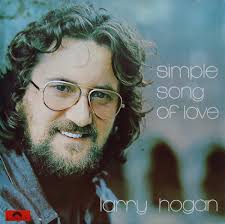
I used to listen to Larry Hogan’s show, Sounds Religious on RTE radio before going to church on Sunday mornings. Larry, who was originally from Limerick, was a charismatic Catholic. It was tough work trying to like Christian pop music, but I do love all the hymns, which are covered elsewhere on this blog.
 Hibernia Gospel
[…] can read the full story of my journey to faith in the Conversion Chronology […]
LikeLike
[…] and I do attend an evangelical church. I have a more structured account of my journey in my Conversion Chronology […]
LikeLike
[…] in 1980 and in the years following. I mention it in a few places in this blog, including in my Conversion Chronology post. It did last a long time, but it’s an old building and it had to close a few years […]
LikeLike
[…] I dithered over four or five years. I cover some of that in my Conversion Chronology […]
LikeLiked by 1 person
[…] of posts about my past. I have a post giving details of the years leading up to my conversion (Conversion Chronology). I have the Hymns Memories series, and I have the Music Memories […]
LikeLike
[…] outlines the sequence of events leading up to my conversion in my Conversion Chronology […]
LikeLike