

Salvation by The Cranberries was about salvation from drugs. It wasn’t a spiritual song. But because they’re from Limerick, which was where I often did street evangelism back in the 1980s and 1990s, I sometimes wonder might one of my leaflets or posters have inspired the song. Probably not 😀.
Anyway let’s go back to 1975. In Ireland, we call high school secondary school. In history class, the teacher mentioned that Martin Luther believed that we are saved by grace alone through faith alone. So, we do good because it’s good and right to do good and out of thanksgiving to God. But we don’t do good to earn a place in heaven.
This seemed wonderful and a little too good to be true. In Roman Catholicism back in 1975, my understanding was that you could end up in heaven, hell or purgatory, and it largely depended on how you lived your life. If you were a saint, or happened to die in a perfect state, you might go straight to heaven. If you died with mortal sin on your soul, you’d end up in hell. A mortal sin could be anything from murder to missing Mass without good reason. And we believed that most people probably ended up in purgatory. I was taught that people in purgatory suffered like those in hell, but you eventually got out. And if people prayed for you or had masses said for you, you’d get out earlier. I didn’t relish the thought of ending up in purgatory. And I just couldn’t see how I could ever be saintly enough to get to heaven. So, hearing Luther’s outlook made be curious.
Soon after, myself and a friend were walking around the Lough in Cork, and we met a man who gave us a New Testament and explained the evangelical perspective to us. What’s the difference between Protestants and evangelicals? Protestantism is a broader term. Protestantism went in many different directions after the Reformation. Evangelicalism, which probably spans all denominations to some extent, stuck to the basics, emphasizing the Bible, what Jesus accomplished on the cross, personal faith, and the need to spread the gospel, not only to faraway lands but to our own country. Everyone needs to hear and respond at a personal level. It isn’t enough to be “brought up Christian”. And when you do repent and believe, you can be sure of heaven. Salvation is a free gift. You don’t need to pay for it.
I was pretty convinced of the truth of the evangelical perspective back in late 1975 when I was 13. But I spent a few years thinking it all through.
So, is salvation really free? This was always a point of discussion and debate when I spoke to Roman Catholics in Cork. One of our evangelistic strategies was to ask the following question.
If you died and God asked you why He should let you into heaven, what would you say?
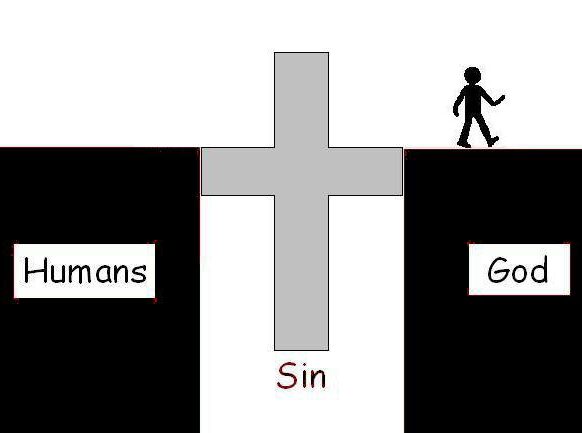
The correct answer was that you don’t deserve it, but Jesus died for your sins and to secure your salvation. So, you’re going to heaven because of God’s love and mercy. Maybe the one thing you could claim is that you responded by repenting and accepting the gift of salvation, but God gets the credit for that too, because He opened your heart and your eyes.
Many people didn’t give the right answer. It was common for people to say “I did my best”. Then we’d respond by reminding them that your can’t earn a place in heaven. Your best would never be good enough. And do we really do our best anyway?
Maybe the question itself was a bit of a leading question, but at least it got people thinking. Roman Catholics often argued that if you tell people that salvation is free and that they’re going to heaven once they repent and believe, it’ll make them careless. It’s a fair point.
But in my experience, in Ireland at least, most Roman Catholics that I knew were pretty careless anyway. The possibility of hell or purgatory didn’t scare them. And the evangelicals that I met seemed much more devout. They certainly weren’t perfect, but there was constant encouragement towards holiness. They said that we live holy lives out of love and thanksgiving, not to earn our place in heaven or to attempt to supplement what Jesus did on the cross.
Things have changed over the last 50 years. I hear different perspectives from both Roman Catholics and evangelicals. In Catholicism, both hell and purgatory are still official doctrines, but the understanding has changed so much that they barely exist anymore in popular minds. I asked Microsoft Copilot what the last four Popes believed about them. I got the impression that they departed from the traditional teaching. Hell is “sort of there” but maybe no-one will end up there. And purgatory is just what happens when you die to make you perfect. So, it might be just an instantaneous thing. If hell and purgatory are gone, I don’t understand how Roman Catholics can argue that we need Faith + Works to be saved. With the new liberal perspective, it almost sounds as if we need nothing. I remember asking a Roman Catholic lady if she believed in Hell. She said “No”. Then, I said “Do you believe that Hitler will go to Hell”, and she said “Yes” 😀. Everyone seems so confused nowadays.
Within evangelicalism, salvation is free, but a debate exists about people who claim to have personal faith but live careless lives. Some believe that if you genuinely repent and trust in Christ, you can be sure of heaven and you will get to heaven even if you live a careless life. Your reward won’t be as good as what devout people will get, but you’ll get there because it’s not up to you to earn it. You’re still a child of God. Just as a parent might be displeased with their adopted child, they’ve still adopted them. They won’t send them back to the orphanage if they don’t measure up to their expectations.
Others believe that you need to examine your life and if you aren’t bearing fruit, this means that your repentance and faith was never genuine in the first place.
So, what do I believe? I believe that we’re never going to be happy with our progress. I sometimes compare it to me learning the guitar. I bought a guitar back in 2002. I’m not happy with my progress, but I’ve made some progress, and I keep learning. So, if you repent and trust in Christ, you’ll get to heaven, but you’ll probably always be a little disappointed with your progress. But that shouldn’t affect your assurance of salvation.
Now suppose that you were talked into going through a ritual of “repenting and believing” by a zealous evangelist in the street. You want to swiftly escape, so you do what he says, and he assures you that you’re now “saved”. Then you never bother reading the Bible or praying or going to church and so on. And the evangelists goes back to his church and boasts that he converted you. Would that get you to heaven?
Some worry that evangelicals, by their clever evangelistic techniques, make many false converts. So, they react to that by saying that to be a true convert, you need to bear fruit. But sometimes the pendulum swings the other way and there’s too much emphasis on constantly scrutinizing yourself and wondering whether you’re saved. Wouldn’t it be strange if you got married, and sat down every night and discussed whether the marriage was in danger of failing. You’d imagine that it wouldn’t do the marriage much good. Surely it’s better to just get on with it unless you have some major crisis.
So, salvation is free. I base my assurance on the promises in the New Testament to all those who repent and believe, a direct sense of being a child of God, and the fact that I’m at least engaging with God. If I stopped engaging with God, I might begin to wonder if my personal faith was real.
Anyway, here are some New Testament verses about assurance. And to be balanced, I’ll include some that are designed to trouble those who might give nominal asset, but who might not be genuine:
Ephesian 2:8-9
8 For it is by grace you have been saved, through faith—and this is not from yourselves, it is the gift of God— 9 not by works, so that no one can boast.

Titus 3:5
5 he saved us, not because of righteous things we had done, but because of his mercy. He saved us through the washing of rebirth and renewal by the Holy Spirit,

John 5:24
24 “Very truly I tell you, whoever hears my word and believes him who sent me has eternal life and will not be judged but has crossed over from death to life.
1 John 2:3-4
3 We know that we have come to know him if we keep his commands. 4 Whoever says, “I know him,” but does not do what he commands is a liar, and the truth is not in that person.

Hebrews 12:14
14 Make every effort to live in peace with everyone and to be holy; without holiness no one will see the Lord.

Mathew 7:21
21 “Not everyone who says to me, ‘Lord, Lord,’ will enter the kingdom of heaven, but only the one who does the will of my Father who is in heaven.
So, traditional Roman Catholics might explain the first three verses by saying that God, by His grace, opens the way for us, but it’s down to us to make our way to heaven by faith, engaging with the churches sacramental system and good works. God gives us a “running chance”, but we ourselves need to earn our place in heaven.
And evangelicals might explain the second three verses by saying that we show our salvation by seeking to be holy. We’re never going to be perfect. It’s more about policy than perfection. We shouldn’t think that we are perfect, congratulate ourselves and look down on others, like in the Pharisee in the Parable of the Pharisee and the Tax Collector. Nor should we become demoralized by our lack of holiness, which might lead to less holiness. These verses encourage us to keep learning, and a good teacher will ensure that his class do learn. And what better teacher is there than God Himself?
 Hibernia Gospel