I’ve been exploring some of the very modern worship songs as an old guy 😀. But now, I’ve decided to alternate between very modern hymns, old hymns, and in-between hymns, namely the worship songs from the 60s to the 90s that feature in hymnbooks such as Mission Praise. Today it’s the turn of the old hymns.
Today’s song is Jesus Paid it All from 1865.
I thought that this one was a very modern one. I’ve only ever heard it sung by modern worship groups, but it goes all the way back to 1865. When I first heard it, I thought I had found a typo in the lyrics that someone displayed on PowerPoint. Should it not be the leopard’s spots rather than the leper’s spots?
2 Lord, now indeed I find
Thy pow'r and Thine alone,
Can change the leper's spots
And melt the heart of stone.
But everywhere that I’ve seen it ever since, I see “leper’s spots”. It’s true that Jesus healed lepers, but the Bible speaks of leopard’s spots, not leper’s spots.
Jeremiah 13:23
Can an Ethiopian change his skin
or a leopard its spots?
Neither can you do good
who are accustomed to doing evil.
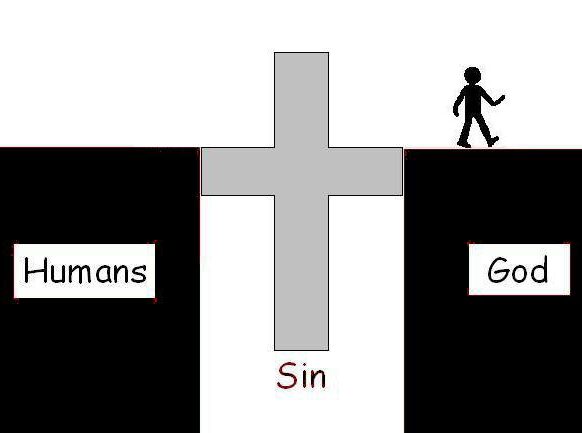
Whether it’s lepers or leopards, the key point is that God can accomplish the impossible. And it would be impossible for sinners to reach heaven without a Saviour. In the Bible, and even today, sometimes physical illness or disability is used as a metaphor for spiritual illness or disability. We all crave physical health, and Jesus did physical healing, but He emphasized that spiritual healing was more significant. If I repent and believe in Jesus, whatever trials and tribulations I have will be gone in heaven. And if I were perfectly healthy and didn’t bother repenting, I would face eternal suffering. The writer delights in the fact that Jesus has paid the price of sin for us.
1 I hear the Savior say,
"Thy strength indeed is small,
Child of weakness, watch and pray,
Find in Me thine all in all."

Refrain:
Jesus paid it all,
All to Him I owe;
Sin had left a crimson stain,
He washed it white as snow.

2 Lord, now indeed I find
Thy pow'r and Thine alone,
Can change the leper's spots
And melt the heart of stone. [Refrain]
3 For nothing good have I
Where-by Thy grace to claim;
I'll wash my garments white
In the blood of Calv'ry's Lamb. [Refrain]

4 And when, before the throne,
I stand in Him complete,
"Jesus died my soul to save,"
My lips shall still repeat. [Refrain]
The writer, Elvina M. Hall, is said to have written the poem (which became the hymn) during a long pastoral prayer, scribbling it on the flyleaf of her hymnal because she had no paper. So, she wasn’t listening to the pastor! Perhaps we should boycott the hymn because of that 😀. Joking aside, I was once advised against long pastoral prayers. Someone said, the congregation begin by praying with you. When you go on a bit long, they start praying for you (trying to be nice). And if you keeping going, they start praying against you 😀(Please Lord! Stop him!). Maybe the same could be said for long sermons.
Here are some other versions of the hymn:
 Hibernia Gospel