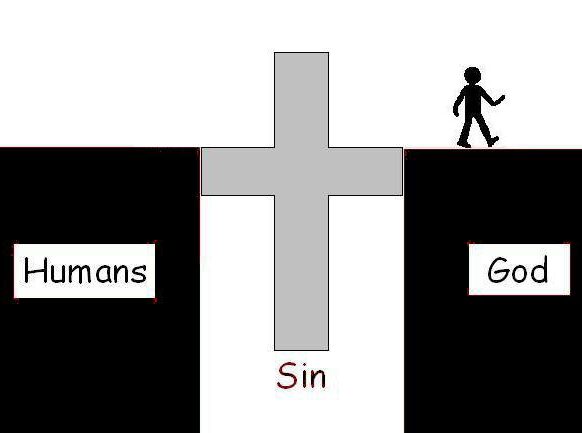


There are many things that most of us don’t understand. I just picked “salvation” because I spent much of my life trying to understand and explain it. Much of the varying opinions in Ireland were addressed in the debates surrounding the 16th Century Reformation. Are we saved by grace alone, through faith alone, or does our salvation depend on our religious duties, good works and so on? I touched on much of this in my Gospel in a Nutshell post.
Martin Luther, John Calvin and other reformers started as Roman Catholic theologians. But in their view, the church’s teaching had drifted away from the New Testament. The Roman Catholic church controlled Europe and also claimed to control aspects of the afterlife. You went through your life dependent on practicing church rituals, and, unless you were especially saintly, you’d end up suffering in purgatory, but your relatives and friends could shorten your sentence by praying for you, having masses said for you or paying money to the church.
The key event that provoked the reformation was Johann Tetzel the Dominican friar who aggressively sold indulgences that could free you or your relatives and friends from purgatory.
His message was famously summarized in the couplet attributed to him:
“As soon as the coin in the coffer rings, the soul from purgatory springs.”
I don’t imagine that many modern Roman Catholics are happy with their denomination as it was in the 16th Century. Perhaps they just see it as one stage in its development.
But I grew up a Roman Catholic, and I was always taught that you were likely to go to purgatory when you died, which was every bit as bad as Hell, except that you had a temporary sentence. And your whole salvation was made possible by the death of Jesus on the cross, but it was ultimately dependent on how well you did in terms of your religious duties and good works.
So, Jesus gave you a running chance – but it was down to you to run the race. Since my youth, Roman Catholicism has become much more like liberal Protestantism. I come across few people that emphasize purgatory or hell anymore. Maybe few believe in them anymore, though they are still part of official church teaching. Hell is certainly taught in Scripture. Purgatory is more a matter of theological speculation. And some now simply see it as a transformative encounter with God’s love that changes you when you die. That sounds better than the traditional view, but I don’t see why we should call that “Purgatory”. It’s hugely different from the traditional view. It’s more like what this text describes:
1 John 3:2
2 Dear friends, now we are children of God, and what we will be has not yet been made known. But we know that when Christ appears, we shall be like him, for we shall see him as he is.
I didn’t know much about general Protestantism when I was young. Protestants differed among themselves about how churches are structured. I was fascinated by all the different denominations. But the key differences are that some went in a modernist/liberal direction and downplayed the Bible completely. And others could be categorized as “evangelical”. Historically, people like John Wesley are seen as key figures in the evangelical movements. They loved the Bible and emphasized personal faith and assurance of salvation when you repented and trusted in Christ.
I started meeting evangelicals in Cork City about 50 years ago, when I was a teenager. Initially, I wasn’t sure what to make of them. You’d get what we classed as “cults” which would have radically departed from historic Christianity. I won’t be mean by naming them 😀. But evangelicals were very much aligned to historical Christianity, particularly the Protestant side. But they behaved a little like cults in that they’d give out leaflets or perhaps visit door to door spreading the message. And they didn’t embrace modernism and liberalism like other Protestants did. I spent about five years meeting and chatting with them from time to time. Many of them were part of newer churches that didn’t really see themselves as Protestants. They were more keen to align themselves with the New Testament church. And in August 1980, I committed my life to Christ and I moved to an evangelical church.
But even within evangelicalism, you do get some debate about salvation. Some in my circles were very critical of some aspects of evangelicalism when someone might walk forward at the end of a meeting and “commit their life to Christ”, having been emotionally charged up by a gifted preacher. Does that mean that they are saved forever because of that single decision? Some say it depends on how you live after you make your decision. If you don’t bear fruit, it shows that you never genuinely repented and believed. Others are a little uneasy with that mentality. Few Christians are totally happy with how they live. Why would Jesus include “Forgive us our sins” in the Lord’s prayer if we never sinned?
I’m not arrogant enough to claim that I understand salvation. I’ll give my opinion. I don’t necessarily believe that you can place a date and time on when you committed your life to Christ. I don’t believe that you’re a Christian by virtue of being born in a Christian country, being born in a Christian home, being baptised or whatever. You need personal faith. And when you do commit your life to Christ, you are saved, safe, and heaven bound. You’re not going to be perfect in this life, but as a disciple, you will be eager to learn and grow in your faith. So, there is a point when you do cross over from death to life:

And though I think that evangelical churches are more closely aligned to Scripture than other denominations, I don’t believe it’s right to say that we’re saved and others aren’t. People in other movements mightn’t be as clear about doctrine, but individuals can personally trust in Christ for salvation. And you could get people in evangelical churches who aren’t genuine Christians. Maybe they’re there for all the fun events or sense of community or whatever 😀. Ultimately, it’s Jesus himself that we’re trusting in, not churches, denominations, or movements.
In terms of assurance of salvation, we look primarily to what Jesus did on Calvary and what the Scripture says about those who believe. We also have a direct sense of assurance from the Holy Spirit. And bearing fruit also enhances our assurance. But we shouldn’t take too high a view of ourselves, like the Pharisee in the parable of the Pharisee and tax collector. And when we are disappointed with ourselves, Satan can very easily push us into despair, as he did with Judas. Peter let Jesus down badly at the time of the crucifixion and wept bitterly, but rather than sinking into despair, he repented and started afresh. And he became a crucial founding member of the church – even if he wasn’t the first Pope 😀.
So, salvation is a gift. When we repent and trust in Christ, we are saved. And it does make a difference, though I see little point in trying to quantify how much difference it needs to make to be sure that you are saved. I believe that you can be sure as soon as you repent and believe. And then you go on to live a life of discipleship with all the ups and downs that any learner will encounter. You’re never gonna feel perfect, though you might sometimes be pleased with your progress.
Here are a few verses and songs about salvation:
John 5:24
“Very truly I tell you, whoever hears my word and believes him who sent me has eternal life and will not be judged but has crossed over from death to life.
Ephesians 2:8-9
8 For it is by grace you have been saved, through faith—and this is not from yourselves, it is the gift of God— 9 not by works, so that no one can boast.
2 Timothy 1:9
He has saved us and called us to a holy life—not because of anything we have done but because of his own purpose and grace. This grace was given us in Christ Jesus before the beginning of time,
 Hibernia Gospel