

I’d like to thank Bob Dylan for today’s title. That’s from his 1975 album, Blood on the Tracks 😀. I knew little about Dylan until I heard that he’d become a born-again Christian in 1979.
I was on that path myself in 1979, and Dylan helped to give me the final nudge to commit my life to Christ. Maybe that was all in God’s plan. In fact, how could something not be in God’s plan. The final song on Dylan’s third Christian album, Shot of Love (Every Grain of Sand), refers to the following verses:
Matthew 10:29-31
Are not two sparrows sold for a penny? Yet not one of them will fall to the ground outside your Father’s care.30 And even the very hairs of your head are all numbered. 31 So don’t be afraid; you are worth more than many sparrows.
I think of fate as something that’s said to be fixed, unavoidable, or beyond your control. In fact, some think that it’s beyond anyone’s control. Some people think that God knows the future but that he can only do so much to shape the future. Some even think that He doesn’t know the future. So, like the rest of us, fate is outside his control. But I don’t believe that. I believe in destiny, but I believe that God ultimately shapes and decides our destiny.
This doesn’t mean that we’re all pre-programmed robots. It’s clear from Scripture that we are free agents. But how can we be free if God shapes everything? I’ve heard someone say that these are two parallel lines that meet in eternity. Even if we can’t reconcile them now, we’ll have a clearer understanding in heaven. Some Christians focus on human decisions. Other’s stress the fact that everything is ultimately shaped by God.
Theologically, the latter view was stressed by Augustine and Calvin. It’s often termed Calvinism. And Arminianism is the opposite theological view. Two famous 18th century evangelists took opposing views. Both were crucial in revivals in the UK and America. Because George Whitefield and JohmWesley had sharp theological disagreements, someone asked Whitefield if he thinks Wesley will be in heaven. Perhaps they wondered if he saw Wesley as such a heretic that he doubted whether he was even a Christian.
Here’s what Whitefield said in reply:
“I fear not, for he will be so near the eternal throne and we at such a distance, we shall hardly get sight of him.”
It’s a great example for those of us who have theological disagreements. We shouldn’t look down our noses at those with different points of view. They might be wrong, but they might also be much more effective than us, and might gain a greater reward in heaven.
And nowadays, I can think of many preachers and theologians who I would have theological disagreements with, but I have huge respect for them, and I enjoy listening to them just the same.
The first time that I heard the notion of predestination, it didn’t seem fair. I got quite argumentative in a church meeting where it was taught. I was prone to be quite opinionated back then. I’ve grown a little softer with age. But as I studied Scripture, I started to see that it seemed true. Nonetheless, I am willing to accept that here on earth, our understanding is limited. My policy is to believe in it, but only provisionally. I might be wrong. But it brings me much joy to think that God controls the future.
I understand that Mormons believe that humans can become gods. I don’t think that I’d like to be a god 😀. But if I were offered the opportunity to create a universe with billions of people, I’d want to make sure that it wasn’t gonna go out of my control. So, it comforts me to know that God is in control of my life and of destiny.
Someone might ask, what about those who end up in hell? Everything in Scripture suggests that people in hell are there because they happily rebel against God. They’re happy to be outside of God’s family. It’s strange that someone would choose to suffer. But we can even see in our own lives that sometimes we “cut off our nose to spite our faces.” And you get nasty people like Hitler, who clearly aren’t happy but settle down into evil and would resist any prompting of the Holy Spirit to change. Christians believe that the Holy Spirit prompted them to repent, but they give all the credit to God. They don’t boast about how good or clever or lucky they were. All the glory goes to God.
And just as we’ll be perfectly good when we get to heaven, I would think that all appearance of goodness will be removed from people in hell. Someone said “hell is locked from the inside” – meaning that people in hell prefer to suffer there because for them, being near God would be worse than hell. All these matters are often discussed in internal debates in evangelicalism. It can get complicated.
Anyway, here are some Scripture verses that emphasize that God controls our destiny.
Isaiah 45:7
I form the light and create darkness,
I bring prosperity and create disaster;
I, the Lord, do all these things.
John 15:16
“You did not choose me, but I chose you and appointed you so that you might go and bear fruit.”
Acts 4:28 (A reference to the crucifixion of Jesus, while praying to the Father after the church started to be persecuted – emphasizing that God has a plan and purpose even in the seemingly bad things that happen)
They did what your power and will had decided beforehand should happen.
Romans 8:28
And we know that in all things God works for the good of those who love him, who have been called according to his purpose.
Ephesians 1:4-5
For he chose us in him before the creation of the world to be holy and blameless in his sight. In love 5 he predestined us for adoption to sonship through Jesus Christ, in accordance with his pleasure and will
Ephesians 1:11
In him we were also chosen, having been predestined according to the plan of him who works out everything in conformity with the purpose of his will,
The predestination/free will debate probably features in most religions and in the secular world too. I remember hearing a scientist say that the whole idea of us choosing to do anything is an illusion. Our brains just follow a predetermined path in the same way that the moon goes around the earth.
In the evangelical world, there are various points of view. For most of my evangelical life, my “comfort zone” has been the modern reformed movement, which emphasizes God’s sovereignty rather than human free will. It emerged as a recovery of Puritan and Calvinist theology in the late 1940s and early 1950s. Prior to that, you had liberal theology which had drifted away from emphasizing or believing in Scripture and fundamentalism which did emphasize Scripture but tended to be anti-intellectual and adopted peculiar beliefs about this and that.
Here are 12 names associated with the modern reformed movement:
- Martyn Lloyd-Jones
- John Stott
- J.I. Packer
- John Piper
- Iain Murray
- Carl F.H. Henry
- R.C. Sproul
- J. Gresham Machen
- Albert Mohler
- D.A. Carson
- Mark Dever
I like listening to Welsh preachers. Examples include:
You can find loads more on the Evangelical Movement of Wales site.
And here are some other evangelical movements:
- Pentecostal/charismatic (Emphasis on spiritual gifts such as speaking in tongues and the source of many of the newer late 20th century hymns and choruses)
- Seeker sensitive/megachurches (Departure from evangelical traditions and “churchy” things, emphasis on community and the source of most of the new 21st Century music)
- Dispensationalists (Big emphasis on outlining events of the end times and the significance of Israel)
I would think that any specific evangelical church is generally influenced by a wide range of movements. My favourite theologian is Wayne Grudem. He’s both reformed and charismatic. He believes in a literal 1,000-year reign of Jesus on earth in the future, which he shares with dispensationalists. It’s good to be willing to listen to other movements rather than to regard them as rivals or enemies, but I still see myself as attached to the reformed movement. Every movement will have extremes and some silly and sinister elements, and they will have internal debates going on. So we should always examine our beliefs in the light of Scripture. And of course, it’s Jesus that we’re called to follow, not movements or factions, but these are made up of fellow believers who can encourage us in our faith. So, isolating myself from all movements would be a little like starting my own “me” movement. That would be fine if I were perfect 😀.
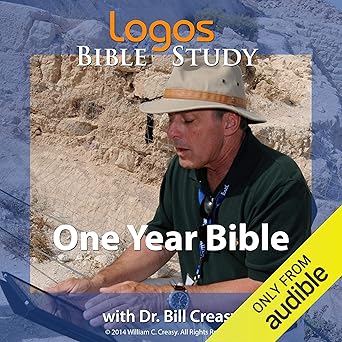
And sometimes it’s good to listen to someone from outside your own comfort zone. I found this guy, Bill Creasy, on Audible. I like to get long books because they’re better value. This is a 63-hour walk through the Bible. He’s actually a Roman Catholic, but he doesn’t promote Catholicism, it’s all about the Bible. I wish that there were more like him.
So, here are some hymns that emphasize that God controls our destiny:
 Hibernia Gospel