

I named yesterday’s post after a Radiohead Song – Creep. So, when I saw today’s prompt, another Radiohead song came to mind. I Might Be Wrong. Radiohead are an acquired taste, so you mightn’t want to bother listening to the song, especially if you’re not from around here. But I like them 😀.
When I was 18, I was interested in communism, pacificism, and Christianity. I committed my life to Christ in August of that year. I maintained my interest in communism and pacificism for a while, but I wouldn’t see myself as a communist or a pacifist nowadays. I would think that most people want a more equitable and peaceful world. The question is how to achieve it. It would be great if a radical approach worked, but you might end up with someone like Hitler or Pol Pot ruling the world. I much prefer to gradually work towards a better world until the Lord Jesus Christ returns.
In a broader sense on religious or political issues, as I get older, I’m probably less dogmatic. I’m less inclined to believe that I’m 100% right and that the other side is 100% wrong.

An example is salvation by faith alone rather than faith and works. I do believe in salvation by faith alone. But I used to think that in order to be saved someone had to be theologically correct about this. But nowadays, I believe that someone might be confused or wrong about it, yet in their heart of hearts, they really rely on Christ rather than on themselves. Some New Testament verses focus on the fact that we are saved by grace through faith, but others remind us that we demonstrate our faith by how we live. I don’t believe that this amounts to salvation by faith + works, but I can see how people might get confused.
I think of a question that we often used to ask people in evangelism.
If you were to stand before God on judgement day, and he asked you, “why should I allow you into heaven, what would you say?”
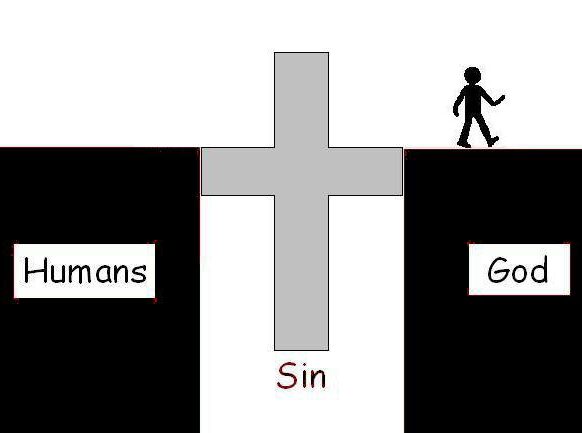
Correct Answer: I don’t deserve heaven, but by your grace, you’ve enabled me to repent and trust in Jesus as my Saviour. So, I can enter heaven because he died on the cross to pay for my sins.
Wrong Answer: Well, I did my best.
So, if someone gave the wrong answer, I’d rightly point out that we don’t get to heaven on our own merits. But I’d classify them as nominal Christians who weren’t true Christians. I might have been right, but I might have been wrong. The person who answered the question is answering a leading question. It would have been much better to begin by explaining how our best would never be good enough and that’s why we need a Saviour. And we get to heaven by trusting in him. I could then present the question.
Some might respond by saying that we are saved by faith, but we need to live godly lives too. And there you touch on a debate that has probably gone on for 2,000 years, particularly since the reformation. I happen to think that the Protestant side is more correct, but nowadays, I’m more inclined to believe that you don’t need to be precisely correct in your theology to be saved.
And maybe the same goes for other issues. At the same time, one would hope that people would take a greater interest in the Bible and in all the resources available nowadays. I think of the following verse from the book of Psalms:
Psalm 1:1-2
Blessed is the one
who does not walk in step with the wicked
or stand in the way that sinners take
or sit in the company of mockers,
2 but whose delight is in the law of the Lord,
and who meditates on his law day and night.
When we all read God’s word and meditate on his law day and night, I don’t necessary believe that we’ll all come to the same conclusions. We’ll always have debates and disagreements. Maybe that’s not a bad thing because it gets us thinking.
Sometimes, our tendency to see the other side as our enemy might stem from a misunderstanding of New Testament content. For example, at times Jesus was quite angry with the Scribes and Pharisees, and the Apostles were quite angry with false teachers.
John 8:42-44
42 Jesus said to them, “If God were your Father, you would love me, for I have come here from God. I have not come on my own; God sent me. 43 Why is my language not clear to you? Because you are unable to hear what I say. 44 You belong to your father, the devil, and you want to carry out your father’s desires. He was a murderer from the beginning, not holding to the truth, for there is no truth in him. When he lies, he speaks his native language, for he is a liar and the father of lies.
Jesus spoke to a particular group of pharisees who were looking for a way to murder him. Jesus clearly saw into their hearts and minds and had the authority to say such a thing. But that doesn’t give us the right to take the same attitude to those who might differ from us.
Likewise, the Apostle Paul had strong words for his opponents. But again, we must remember that Paul was appointed by the Lord Jesus Christ. These were people who rejected his authority and who went around the churches trying to lead them off in an entirely different direction.
2 Corinthians 11:13–15
“For such people are false apostles, deceitful workers, masquerading as apostles of Christ. And no wonder, for Satan himself masquerades as an angel of light. It is not surprising, then, if his servants also masquerade as servants of righteousness.”
Again, we mustn’t see ourselves as having the insight of the Lord Jesus Christ or the Apostle Paul. The sad thing about the reformation era is that people not only used strong language against their opponents, but they sometimes murdered them or went to war against them. Of course, at that time, Europe was a little more like some communist or Islamic countries today, such as North Korea and Afghanistan, where divergence from the state-sponsored outlook in a region is criminalized. I’m glad that I didn’t live in that era. I never liked the hateful literature that you get at the fundamentalist end of evangelicalism. Nor do I like the wishy/washy approach that avoids mention of any debates or disagreements. I used to enjoy listening to the Unbelievable podcast. I’d generally be on one side of the debate, but I liked how the opponents generally respected one another and sometimes showed a willingness to learn from each other. Some debates were between Christians and atheists, or Christians and those from other religions. Other debates were between Christians. In some cases I might not side with either. Some on the “Christian” side would hold what I would regard as dodgy or heretical views. But I think that I benefited from listening to arguments rather than just listening to people that I admired and agreed with. I might still not alter my own views, but I like to listen to the finest arguments of the opposing view rather than listening to someone on my side who might just focus on their weaker arguments.
I always like to close with a couple of hymns. I can’t think of any hymns about today’s subject. Maybe the closest ones are hymns about love and unity.
 Hibernia Gospel