Recently, I’ve been reading some Counterpoints books where different Christians debate controversial issues. I thought it might be fun to create a series of articles on issues that divided people in the circles that I moved in over the years.
I tended to align myself very firmly to one side or the other. But in recent years, I try to spend more time and effort understanding the other point of view.
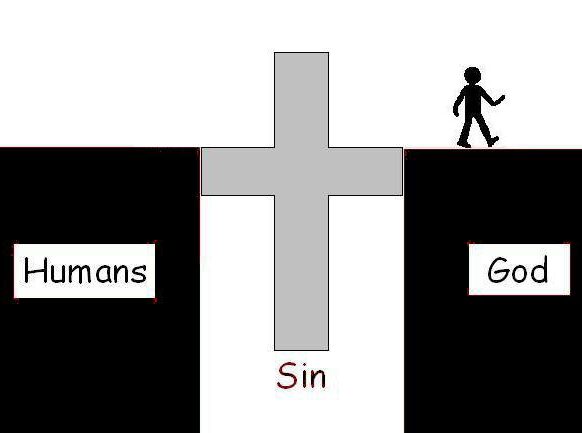
So, what is the sinner’s prayer? It’s a prayer that an evangelist might ask you to repeat if you’re at the stage where you are ready to commit your life to Christ. Here is an example:
Dear God, I know that I am a sinner and there is nothing that I can do to save myself. I confess my complete helplessness to forgive my own sin or to work my way to heaven. At this moment I trust Christ alone as the One who bore my sin when He died on the cross. I believe that He did all that will ever be necessary for me to stand in your holy presence. I thank you that Christ was raised from the dead as a guarantee of my own resurrection. As best as I can, I now transfer my trust to Him. I am grateful that He has promised to receive me despite my many sins and failures. Father, I take you at your word. I thank you that I can face death now that you are my Savior. Thank you for the assurance that you will walk with me through the deep valley. Thank you for hearing this prayer. In Jesus’ Name. Amen.
John Barnett
I first heard that kind of thing on Trans World Radio Monte Carlo, an evangelistic radio station that I’d accidentally find while searching for Radio Luxembourg 208 back in the 1970s. I did like the notion of giving my life to Jesus. People told me that I was already a Christian, but all my friends didn’t seem to be religious, and I’m sure I didn’t come across as particularly religious. It made a lot of sense to hear that you weren’t a Christian by being born in Ireland or being born and baptised into a particular religion.
At my confirmation (when I was 11), I was meant to have received the Holy Spirit and I was told the purpose was that I would now be empowered to stand up for Roman Catholicism. But I was more interested in New Testament Christianity than Catholicism. I might have followed along with the sinner’s prayer thinking that it would magically turn me into a true believer. But I didn’t notice any difference. I did commit my life to Christ when I was 18, but it wasn’t linked with a particular prayer. And although I did change to some degree, I was still the same old me. I didn’t instantly turn into my idealized picture of what I hoped I would be.
In subsequent years, many of the Christians that I met didn’t really like the sinner’s prayer. Here are some common objections:
- While the Bible emphasizes repentance and faith (e.g., Romans 10:9–10), there’s no specific prayer formula for salvation.
- In Catholicism, you’d hear of many steps you can take to gain a “plenary indulgence”, such as adoration of the blessed sacrament for at least 30 minutes. It’s feared that people would see the sinner’s prayer as something like this.
- People think that it might give people a false sense of security—believing they’re saved simply because they recited words, even if their lives show no transformation.
- The prayer is sometimes used in mass evangelism, where someone might be moved emotionally at some large event. Would an emotionally induced decision really be genuine in all cases?
Few of the people in my circles would have encouraged the use of the sinner’s prayer. When I think of my own conversion, I probably spent around five years thinking it through and dithering before I finally committed my life to Christ. If I heard of someone saying that they committed their life to Christ by attending a meeting and saying a sinner’s prayer, I might have wondered if their conversion was genuine. But why shouldn’t it be? Most of the conversions in the New Testament seemed quite sudden.
The closest thing that I can find in the New Testament to the sinner’s prayer are the parable of the Pharisee and the tax collector and the thief on the cross. Both are quite concise.
Luke 18:13
“But the tax collector stood at a distance. He would not even look up to heaven, but beat his breast and said, `God, have mercy on me, a sinner.’
And here’s what the thief on the cross said:
Luke 23:39-42
One of the criminals who hung there hurled insults at him: “Aren’t you the Christ? Save yourself and us!” But the other criminal rebuked him. “Don’t you fear God,” he said, “since you are under the same sentence? We are punished justly, for we are getting what our deeds deserve. But this man has done nothing wrong.” Then he said, “Jesus, remember me when you come into your kingdom
In both, you see real repentance and faith. Two things that concern me about those of us who oppose the sinner’s prayer is:
- We insist on deep repentance and genuine faith. We tend to disregard conversions related to evangelistic crusades and the sinner’s prayer and expect everyone to have a long, convoluted conversion. But that can lead to people becoming a bit too introspective and spending too much time wondering if they should become Christians. Then, when they are converted, they wonder if they are truly converted. Nothing you do is ever going to be perfect. Perhaps your repentance and faith mightn’t measure up to standards set by some others, but that doesn’t mean that it’s not real.
- People might want to commit their lives to Christ but might not be able to put their feelings into words. Perhaps a sinner’s prayer helps them to understand what they’re doing and what they’re committing themselves too. Perhaps a good compromise nowadays would be to encourage someone to have a look at various “sinner’s prayers” on the web and then compose their own prayer. You don’t need to use a sinner’s prayer, but perhaps it’s helpful to do so.
Another thing is that I don’t think that we can always identify when we were converted or when we crossed over from death to life. Maybe it’s a little like falling in love and getting married. People celebrate their wedding anniversaries, but there are also some other crucial points along the way, such as when you met, when you fell in love, when you started dating, and when you got engaged. For our conversion, the Bible speaks of crossing over from death to life.
John 5:24
“Very truly I tell you, whoever hears my word and believes him who sent me has eternal life and will not be judged but has crossed over from death to life.

I have a very precise date for my conversion in my mind. But when I get to heaven, I wouldn’t be at all surprised to hear that I was wrong about the date. I even think that I might have been converted as a very young child. But then, as you get older, you’re more inclined to question things and wonder could some other religion or philosophy be true. So, that’s why I like to say “I committed my life to Christ ” in August 1980 rather than “I became a Christian” in August 1980. Even the phrase “I committed by life to Christ” might be a little misleading. It might sound like I’m claiming to be particularly saintly. But it just means that I am repenting and trusting in Jesus and committing myself to being a disciple, which means learning from him.
Interestingly, though people in my circles didn’t encourage the use of sinner’s prayers, we did often have hymns at the close of evangelistic services that weren’t unlike sinner’s prayers. Here are some examples.
 Hibernia Gospel