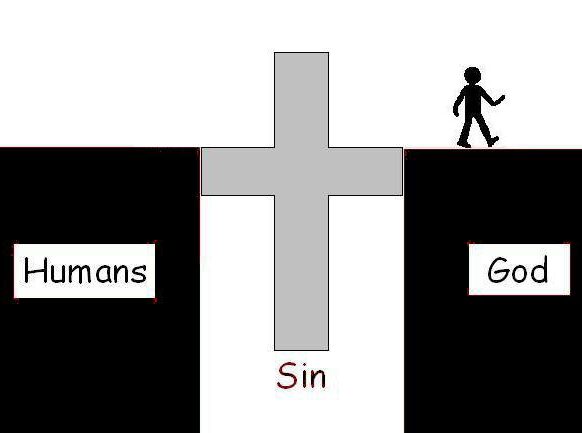


I used to be worried about my eternal future. I was brought up a Roman Catholic (RC). And I was taught that you could end up spending eternity in heaven, hell, or purgatory. And at that time, at least in my experience, purgatory was presented as being the same as hell, except that you eventually got to heaven.
St. Thomas Aquinas (13th century): “The least pain in Purgatory surpasses the greatest suffering in this life.”
You don’t hear the sufferings of purgatory being emphasized so much these days, but if I were still a Roman Catholic, I’d be a little suspicious of those who try to make it all more palatable. I would want to discover what the Bible says. And the Bible doesn’t really say anything about purgatory. A few texts are cited. but it’s a bit of a stretch to see these as advocating purgatory. The doctrine is more a result of theological speculation which became dogma. The Second Council of Lyon in 1274 was the first time the Catholic Church formally defined purgatory as doctrine. I suppose it began with prays for the dead, which goes back to Jewish practices. It’s a very natural thing to bring your concerns to God, but I don’t think you should create doctrines out of your hopes and speculations.
The Bible does teach about hell, and that we should fear going to hell.
Matthew 10:28
Do not be afraid of those who kill the body but cannot kill the soul. Rather, be afraid of the One who can destroy both soul and body in hell.
If it were just a matter of being annihilated, it mightn’t be as bad, but destruction doesn’t necessarily mean annihilation. A couple of verses in the Book of Revelation are particularly troubling in this respect:
Rev 14:11
And the smoke of their torment will rise for ever and ever. There will be no rest day or night for those who worship the beast and its image, or for anyone who receives the mark of its name.”
Rev 20:10
10 And the devil, who deceived them, was thrown into the lake of burning sulfur, where the beast and the false prophet had been thrown. They will be tormented day and night for ever and ever.
You get a lot of debates nowadays, where people argue that such verses are merely symbolic. Doubtless, the Scripture, particularly the Book of Revelation, has much symbolic language. But there is a reality behind the symbolism. There’s no room for complacency. Language surrounding heaven is also symbolic, but we don’t doubt its existence because of the symbolic language.
But my fears were eased when I learned that there was a clear and simple solution to my fear of going to hell. The New Testament has many verses that stress that Jesus is the Saviour and that those who repent and trust in him are saved and can look forward to heaven. My favourite three are the following:

John 5:24
24 “Very truly I tell you, whoever hears my word and believes him who sent me has eternal life and will not be judged but has crossed over from death to life.
Rom 8:1
Therefore, there is now no condemnation for those who are in Christ Jesus.
Eph 2:8-9
For it is by grace you have been saved, through faith—and this is not from yourselves, it is the gift of God— 9 not by works, so that no one can boast.
Many New Testament verses stress the need to love God and love others and not to be complacent. But fundamentally, we need not fear hell once we trust in Christ. When I first met evangelical Christians in Cork, Ireland, back in the 1970s, I was surprised to learn that they were sure of going to heaven. The RC church classifies this as the sin of presumption. But this assurance seemed to make them more godly and more enthusiastic about Christ than us Catholics who were constantly threatened with purgatory or hell. I became an evangelical Christian in August 1980, when I committed by life to Christ. I explore all this elsewhere on this site. I realize that there are many Catholics who have true and genuine faith too. They rely on Jesus rather than religion or good works for salvation, even if the church doctrine teaches that it’s a mix of faith, works, and religious practices that saves us.
Having said all that, I don’t relish the prospect of getting older, getting ill and dying. But most people need to face that, and why should I imagine that I’ll escape it. And I try to focus on what comes after death. Even if there were nothing, I would still be thankful to God for the gift of life in this world. But the Bible teaches that there’s much better to come if we trust in Jesus.
 Hibernia Gospel