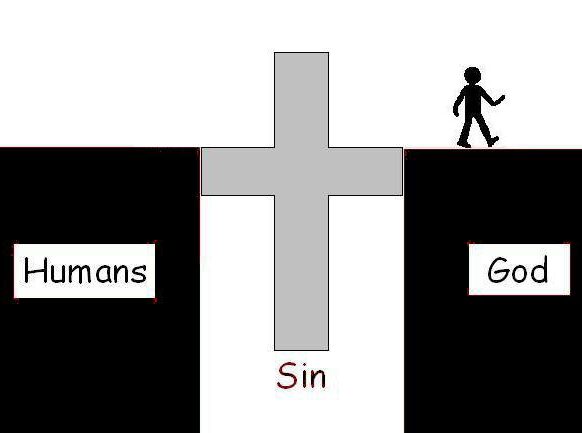


I could say Jesus, because he is a historical figure, but if I asked someone such a question, I’d learn little about them if I knew they were already Christians. I’d be more interested in who else they admire. And Jesus isn’t just another historical figure. He divides history into BC and AD.
But let’s consider other historical figures. I could really choose many. As a Christian, I think I would go for those who made huge sacrifices to spread the Christian faith and to make God’s word available to us. I think of William Tyndale, who was martyred by supposed Christians for translating the Bible into English.
However, if I am to choose, I’d go for Patrick, who brought the gospel to my own nation, Ireland. As a child, I was introduced to him through St Patrick’s Day. It was a very exciting day for me as a child, along with Christmas, Easter, and the day of the Eurovision Song Contest.

The best part was the parade. Looking back, it was quite a simple affair, with some marching bands are decorated lorries. And we got St Patrick’s Day badges. At Mass, we’d sing a hymn called Hail Glorious Saint Patrick. It seems quite idolatrous to me now, because it treats Patrick like he was God. In the New Testament, anyone who treated the apostles, or angels, like God were swiftly reprimanded (See Acts 10:26 Revelation 22:8-9). Of course, people did worship Jesus (See Matthew 2:11, Matthew 8:2, Matthew 14:33, Matthew 15:25, Matthew 28:9, Matthew 28:17, John 9:38, John 20:28, Philippians 2:9-11, Revelation 5:12-14), but then, he is God, the second person of the Trinity. So, He never took them to task for giving him such honour.
Anyway, in recent years, I’ve learned more about Patrick. I found Dan Snow’s documentary on How the Celts Saved Britain particularly insightful. Unfortunately, it’s not on YouTube, but you can read about it in the Sparks Commentary blog. And YouTube does have several documentaries on Patrick.
Here are 10 facts about him:
- Despite being the patron saint of Ireland, Patrick was born in Britain (sources suggest either Scotland or Wales) around 385 AD.
- His birth name was likely Maewyn Succat. He adopted the name Patrick (or Patricius) later, which means “nobleman” or “father figure.”
- At the age of 16, he was captured by Irish raiders and brought to Ireland, where he spent six years as a slave, working as a shepherd. During his enslavement, he turned to Christianity and prayed fervently, deepening his religious convictions
- After escaping slavery and returning to Britain, he had a dream that led him to study and then returned to Ireland as a missionary to convert the pagan Irish to Christianity.
- Legend has it that he used the three leaves of a shamrock to illustrate the Christian concept of the Father, Son, and Holy Spirit being one God.
- He was never formally canonized by the Church (in the modern sense): While recognized as a saint, the official process of canonization by the Catholic Church did not exist during his lifetime.
- The earliest recorded St. Patrick’s Day parade took place in a Spanish colony in what is now St. Augustine, Florida, in 1601. Parades in Ireland didn’t become a widespread tradition until much later.
- During his missionary work, it’s believed he converted and baptized hundreds of thousands of Irish people, laying the foundation for Christianity in Ireland. This was all done peacefully, as happened with the initial spread of Christianity.
- As he spread Christianity, Patrick undoubtedly encountered resistance from the existing pagan belief systems and their priests, the Druids, though accounts of direct confrontations are largely legendary.
- Two Latin works attributed to him survive: the Confessio (a spiritual autobiography) and his Letter to Coroticus (a protest against British mistreatment of Irish Christians). These are invaluable primary sources about his life and the early Church in Ireland.
I just think that it’s amazing that an individual should take on such a task. Some historians point out that Christianity would have reach Ireland before Patrick, which might be true. But he clearly made a huge impact that eventually resulted in the gospel radiating out from Ireland to evangelize much of Britain and Europe.
I Bind Unto Myself Today
I never remember singing this one in Ireland. The lyrics are based on the writings of Patrick, and the tune is a hybrid of two traditional Irish tunes, “St Patrick” and “Gartan”.
And you can read the Confession of Saint Patrick on various web sites.
 Hibernia Gospel