

When I think of collections, I think of the slogan for Pokémon back around 1999, when my kids were young – the notion of obsessively collecting them all:
Gotta Catch ‘Em All!
As a child, I remember collecting soccer cards, coins and stamps.
Then of course, I could say that I have book collections, CD and DVD collections, and all sorts of digital collections. But maybe it doesn’t count if you’re not obsessed with getting a complete set of something. Sometimes, at the start of the year, you’re offered a bargain magazine with a free gift; for example, a pocket watch. Then, you’re lured into paying the full price each month to complete your collection of pocket watches or whatever 😀.

I’m a little like that with new courses for Walkabout Mini Golf on my Oculus Quest. Every couple of months, a new course is released. They’re only around 4 euro, so I just buy them all. I’d hate not to have them all. I even bought the upside-down course 😀.
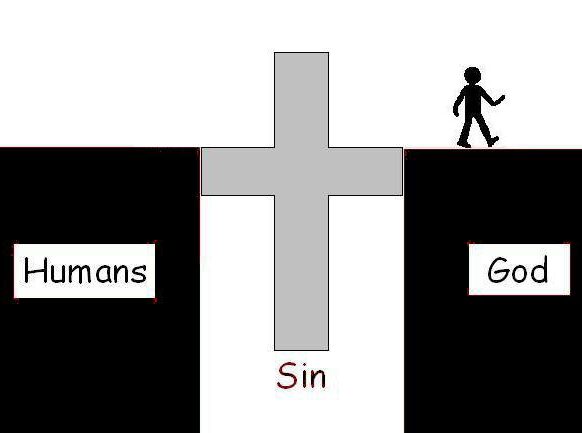
Now, as this is a Christian blog, we get to the evangelistic bit. Christians might or might not have collections, but they are in a collection. In Luke 15, we see three collections; sheep, coins, and sons. In each case, Jesus describes what happens when one is lost. He does this in response to the Pharisees, who didn’t like the fact that he was mixing and mingling with sinners. But evangelism is all about collecting people who will spend eternity with God in heaven. And you aren’t collecting good people. People might be good in a relative sense, but in God’s eyes, all are sinners. They are made for heaven because Jesus laid down his life for them at the cross of Calvary.
John 10:14-15
14 “I am the good shepherd; I know my sheep and my sheep know me— 15 just as the Father knows me and I know the Father—and I lay down my life for the sheep.
So, Jesus presented three parables in Luke 15.
The Lost Sheep

A shepherd leaves his flock of 99 sheep to search for one that has gone astray. When he finds the lost sheep, he rejoices greatly, showing that each individual is precious and worth seeking out.
The Lost Coin

A woman who has ten silver coins loses one. She diligently searches her house, lighting a lamp and sweeping every corner until she finds it. When she finally recovers the coin, she calls her friends and neighbors to rejoice with her.
The Lost (Prodigal Son)

The Parable of the Prodigal Son tells the story of a father and his two sons. The younger son demands his inheritance early and leaves home, wasting it on reckless living. When a famine strikes and he finds himself broke and starving, he decides to return to his father, hoping to be accepted as a servant.
Instead, the father welcomes him with open arms, rejoicing that his lost son has returned. Meanwhile, the older son feels resentful, believing his loyalty has been overlooked. The father reassures him that everything he has belongs to him, but it was right to celebrate the return of the one who was lost.
So, from God’s perspective, He knows the end from the beginning, and ultimately, all of history is in his control. People debate such matters. Some focus on free will and human responsibility here and now. Others like to focus on God’s perspective and his eternal plan. Ultimately, much of this is beyond our understanding, but it’s always a comfort to me to know that God is gathering his collection, the people who will occupy the new heaven and new earth. All people are invited, though not all will respond. And those who do respond will know that ultimately, it wasn’t based on any merit on their part but because God called his sheep to himself. In theology this is known as effective calling.
John 10:27-29
27 My sheep listen to my voice; I know them, and they follow me. 28 I give them eternal life, and they shall never perish; no one will snatch them out of my hand. 29 My Father, who has given them to me, is greater than all; no one can snatch them out of my Father’s hand. 30 I and the Father are one.”
Someone might object “It’s not fair! What if I’m not one of his sheep? Well, if you repent and trust in him, you will become one of his sheep. From your perspective you do that, but after you do it, you’ll realize that it was God who gave you the desire to do it. So all the credit goes to God. That’s why we sing Amazing Grace.
Amazing grace! how sweet the sound,
That saved a wretch; like me!
I once was lost, but now am found,
Was blind, but now I see.
Here are two hymns (one old and one new) broadly based on God gathering individuals into his collection:
 Hibernia Gospel