

I can’t think of any major sacrifice I’ve made, but we all make minor sacrifices all the time. To accomplish anything, you need to be disciplined and to be willing to say no to easier paths. For example, you make little sacrifices for good physical and mental health, for good relationships, for a good career, and for sound finances. And in so doing, you are indirectly helping others and making the world a better place. When I think of big sacrifices, I think of people laying down their lives or getting seriously injured to defend their own country or someone else’s freedom, or people who travelled long distances into dangerous environments to bring the gospel to those who never heard or to help those in need.
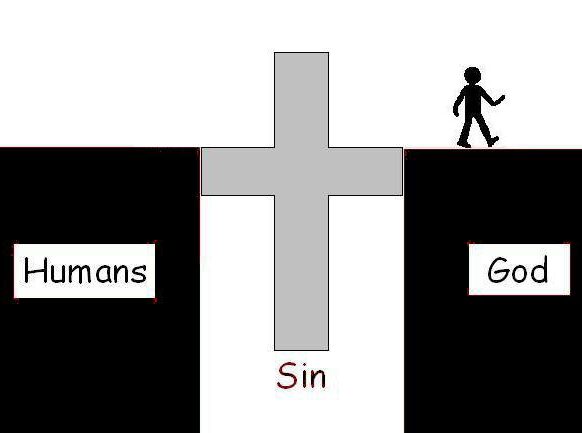
Many sacrifices can be ineffective and can do more harm than good. In some societies, people sacrificed humans, even their own children. Somehow or other, they thought it would appease the gods, as do so many suicide bombers and terrorists in modern times. And think of all the needless wars started to boost some awful leader’s ego. But there is something deep seated in us that make us want to sacrifice to God. We know that we owe him so much. We know we have sinned against him, and he must be appeased. The great thing about the cross of Calvary is that Jesus, God incarnate, was the one doing the sacrificing and He himself was the victim. And the sacrifice will result in the salvation of all those who trust in him. Nothing more is needed. That’s why he could promise the dying thief that he would be with him in paradise that very day (See Luke 23:43-44)
In the Old Testament, sacrifices didn’t really take away sin. They were more of a reminder of what we owe to God, and just as communion looks back to Calvary, you could say that Old Testament sacrifices pointed forward to Calvary. All those who repent and trust in Jesus can know that their sins have been forgiven because Jesus died for them. Here, the writer contrasts Old Testament priests with Jesus, our great high priest:
Hebrews 10:11-14
11 Day after day every priest stands and performs his religious duties; again and again he offers the same sacrifices, which can never take away sins. 12 But when this priest had offered for all time one sacrifice for sins, he sat down at the right hand of God, 13 and since that time he waits for his enemies to be made his footstool. 14 For by one sacrifice he has made perfect forever those who are being made holy.
1 John 4:9-11
9 This is how God showed his love among us: He sent his one and only Son into the world that we might live through him. 10 This is love: not that we loved God, but that he loved us and sent his Son as an atoning sacrifice for our sins. 11 Dear friends, since God so loved us, we also ought to love one another.
As Christians, we know that our sins have been forgiven. No further sacrifices are necessary to save us. That’s why evangelical churches don’t have priests or masses. But we are called to be thankful and holy, and at various points of the New Testament, the word sacrifice is used as a metaphor for this:
Rom 12:1-2
12 Therefore, I urge you, brothers and sisters, in view of God’s mercy, to offer your bodies as a living sacrifice, holy and pleasing to God—this is your true and proper worship. 2 Do not conform to the pattern of this world, but be transformed by the renewing of your mind. Then you will be able to test and approve what God’s will is—his good, pleasing and perfect will.
Hebrews 13:15-16
Through Jesus, therefore, let us continually offer to God a sacrifice of praise—the fruit of lips that openly profess his name. 16 And do not forget to do good and to share with others, for with such sacrifices God is pleased
So I try to make sacrifices in that sense. Committing my life to Christ all those years ago could be thought of as a bit of a sacrifice. Among younger Irish people, you were thought odd if you were in any way religious. And older Irish people saw non-Catholic churches as either Protestant, who were seen as outsiders but tolerated, or cults who were seen as dangerous. They didn’t really understand evangelical churches. There was huge pressure not to leave the Catholic church. But once, I did, after the initial shock and embarrassment, things were fine. But in other countries, and down the ages, people have often lost their lives for Christ. And it was often nominal Christians who killed them.
William Tyndale, the English scholar and Bible translator, was executed for heresy in October 1536 in Vilvoorde, near Brussels. He was strangled and then burned at the stake. His crime? Translating the Bible into English, which was seen as a direct challenge to the authority of the Catholic Church at the time.

And of course, almost all the apostles died martyr’s deaths, as did so many in the early church and down through the ages. So, I don’t like to make much of the little sacrifices I’ve made. I ask myself, is it sacrifice? Maybe in heaven, all those martyrs know what they’ve accomplished and how the gospel is flourishing today. They might even wish they had given him more.

My post title comes from a book; Is It Sacrifice by Bill & Shirley Lees. Without having read the book, the title impressed me. Someone mentioned it in a lecture back in my Evangelical Movement of Wales (EMW) Days. I recently obtained a copy, and the quote below explains it.
We look back and say that it seemed (and indeed was) real sacrifice at the time, in many different ways. But in retrospect, we have to say it was not, because we have learnt so much and benefited so much. “
 Hibernia Gospel