1. T.C. Hammond (1877-1961)
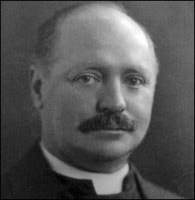
- Hammond was born in Cork. He was educated at Cork Model School, and at the age of 13 he went to work as a railway clerk with the Cork, Bandon and South Coast Railway. Later he moved to the Great Southern Railway.
- He was converted in his teens, and in his early years was big into open-air evangelism. He worked closely with the YMCA in Marlboro Street, Cork. US evangelist, DL Moody, came to Cork in 1892 to lay the foundation stone of that building. Hammond attended a lunch with him in the Victoria Hotel, Patrick Street, where Eason’s is now located. Moody was one of the most famous of the 19th century evangelists. Many years later, in 1959, the most famous 20th century evangelist, Billy Graham, consulted with Hammond during his Sydney Crusade.
- Hammond was married in Shandon church, Cork and ordained into the ministry of the Church of Ireland in 1903. Like today, the Church of Ireland consisted of Anglo-Catholics, modernists, and evangelicals. Hammond was a thorough evangelical.
- Hammond wrote several influential books, the most famous being In Understanding be Men, which sold over 100,000 copies and was translated into various languages.
- For around 20 years, he was Superintendent of the Irish Church Missions in Dublin.
- When he was almost 60, he moved to Sydney, Australia and became principal of Moore College.
- Read the full story in T.C.Hammond: Irish Christian by Warren Nelson or this Evangelical Times article.
At a personal level, I first heard of Hammond when my father-in-law, Warren Nelson, was writing his biography. But some years before, someone recommended Hammond’s In Understanding Be Men to me. Nowadays, much better introductions to Christian doctrine are available, but even in 1981, it was still well regarded. Looking at Hammond’s history, I spent much time in the Cork YMCA in the early 1980s when it still focused on evangelism. I preached my first sermon there, and some of us did outreach and were involved in various youth activities. I also helped in the open-air preaching in Cork at various points throughout the 1980s. It was nowhere near as difficult as it was for Hammond, who often needed armed protection. Shandon, where he got married, is Cork’s main landmark, but I never heard of anything happening in the church there apart from Hammond’s wedding. And I was always big into trains and the history of Cork railways, though I’m not sure if Hammond loved his job on the railways. And my father attended the Cork Model School, which was also Hammond’s school.
2. Gideon Ouseley (1762-1839)
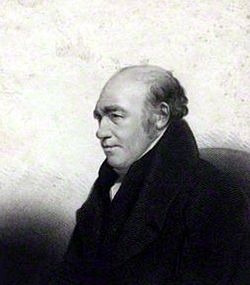
- Ouseley was born in Dunmore, County Galway. His father was an Anglican deist. Deism is a drift away from the God of the Bible towards a god invented by philosophers. But Gideon himself was converted in 1791 in a Methodist meeting. At that time, Methodists were evangelicals. Mainstream Protestants disliked them.
- When asked “Do you believe that the Lord has pardoned you?” “Yes,” Ouseley replied, “my soul doth magnify the Lord, and my spirit doth rejoice in God my Saviour.” Here he repeats the words of the blessed virgin Mary from Luke 1:46.
- He began as an independent evangelist, but following the 1798 rebellion, he joined an Irish Methodist team of Irish-speaking preachers. Methodist societies grew from 16,000 in 1799 to 36,527 in 1820.
- He is sometimes termed ‘apostle to the Irish’ or the Irish Wesley.
- He sometimes won listeners by singing hymns to old Irish tunes.
- Although he mainly preached in Ulster, he did travel as far South as Tipperary and Cork.
- Ouseley died following an attack and robbery in a Dublin street in 1839.
- For more information, see The Revival Library.
3. William Armstrong Russell (1821–1879)
- Russell was born in Littleton, Co Tipperary and educated at Midleton, County Cork and Trinity College, Dublin.
- He was converted under the ministry of evangelical Anglican, John Gregg, in Dublin, who later became Bishop of Cork and who is mainly remembered for overseeing the building of Saint Fin Barre’s Cathedral.
- Later Russell offered himself to the Hibernian Church Missionary Society for work in the Far East and sailed to China in 1847.
- He translated the New Testament into Chinese and operated as an evangelist, pastor and organiser. He also trained a good number of Chinese people for ministry.
- He was made the first bishop of North China.
- He clashed with British traders over the opium trade.
- For more information, see Comerford Way.
4. Amy Carmichael (1867-1951)
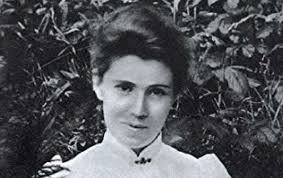
- Amy Carmichael grew up near Millisle County Down. Her father was a flour miller.
- With her family, she founded what is now called The Welcome Evangelical Church in Belfast.
- Despite suffering from neuralgia, after hearing Hudson Taylor speak at the Keswick Convention, she offered herself for missionary work.
- She initially attempted to serve in China and Japan, but health issues led her to settle in India, where she focused on rescuing young girls from forced temple prostitution.
- Despite suffering a serious injury in 1931, which left her bedridden for the rest of her life, she continued to write and lead her mission.
- For more information, see the Presbyterian Historical Society of Ireland website.
5. John Nelson Darby (1800-1882)
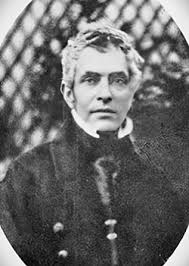
- Though born in London, Darby was a Church of Ireland clergyman in Dublin, but he later left to join the Brethren, a new movement that attempted to start from scratch and recreate the New Testament church. Though all this had mixed results, with various splits etc., it has been hugely influential on evangelicalism, particularly in encouraging lay participation and a focus on the end times, which characterizes evangelicalism in the US in particular.
- His middle name comes from his godfather, Admiral Lord Nelson.
- He held millenarian meetings in the drawing room of Powerscourt House in Wicklow and persuaded Lady Powerscourt and the uncle of Charles Stewart Parnell to join the Brethren movement. The uncle, John Parnell, later travelled to Baghdad on an evangelical mission with the brother of Cardinal John Henry Newman.
- Darby sided with the Exclusive Brethren when the movement split into Exclusive and Open Brethren. The Open Brethren allow greater interaction with other Christian groups and have a more flexible approach to fellowship. The largest Open Brethren assembly in Ireland was at Merrion Hall in Dublin, now closed. The Brethren still exist today, though some have become Baptist churches or modern independent Christian fellowships.
- For more information, see the Albert Mohler website.
6. William Edmonson (1627-1712)
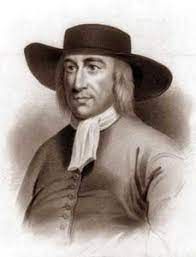
- Edmonson began as a soldier in Cromwell’s army but left the army and settled in Ireland as a shopkeeper.
- He is known as a pioneer of Quakerism in Ireland. Quakers are pacifists.
- At that time, Quakers were seen as more radical than early evangelical types, such as Baptists and Puritans, though they shared some characteristics with evangelicals. Nowadays, you do get evangelical Quakers as you do with other Protestants. But many Quakers aren’t evangelical.
- Edmonson was friendly with William Penn, who became a Quaker in Cork and later went on to become the founder of Pennsylvania. A 1950s US TV show on Penn, begins in Cork: The Splendid Dream.
- For more information, see the Quakers in the World website.
7. Thomas John Barnardo (1845-1905)
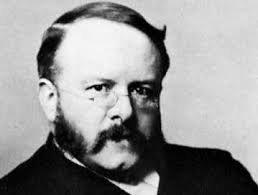
- Thomas John Barnardo founded Barnardo’s, a charity dedicated to helping vulnerable children.
- Barnardo was born in Dame Street, Dublin. His mother was from a Quaker background and his father of Jewish ancestry.
- As a two-year old child, he was critically ill and even thought to be dead at one point.
- As a teenager he was influenced by rationalistic ideas and declared himself an agnostic.
- His conversion came about through evangelistic meetings in Dublin, following the 1859 revival. He attended the Brethren meetings in Merion Hall and volunteered for missionary service to China after hearing Hudson Taylor. However, while studying medicine in London, he saw a great need to care for the poor and destitute.
- By the time he died in 1905, his 96 residential homes housed 8,000 children, with 4,000 more boarded out.
- For more information, see the Victorian Web.
8. Barbara Heck (1734–1804)
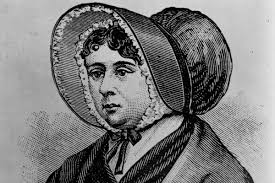
- Barbara Heck was an Irish-born Methodist leader known as the “Mother of American Methodism.”
- Heck was born in Ballingrane, County Limerick, Ireland, into a community of German Palatine immigrants who had settled in Ireland in the early 18th century.
- In 1760, she emigrated to New York with her husband and played a crucial role in establishing Methodism in America.
- She is credited with inspiring Philip Embury, a fellow Irish Palatine, to begin preaching again, leading to the formation of the first Methodist congregation in North America.
- During the American Revolution, the Hecks moved to Canada and continued to spread the gospel. At that time, Methodism was thoroughly evangelical. It was only later that modernism affected most Protestant denominations (and Catholicism), although even before Methodism, deism, another drift from Scripture affected Anglicanism. Modernism tends to downplay or deny the supernatural and focuses largely on the ethical teachings of Jesus.
- For more information, see Unsung Heroes of Methodism: Barbara Heck.
9. Henry Grattan Guinness (1835–1910)
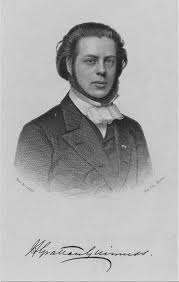
- Henry Grattan Guinness was an Irish evangelist, preacher, and missionary trainer.
- Guinness was a key figure in the Third Great Awakening and played a significant role in the Ulster Revival of 1859, drawing large crowds to hear his sermons.
- He was born in Dublin and was related to the Guinness brewing family.
- He initially trained for ministry but soon became an itinerant evangelist, traveling across Britain, Europe, and North America to preach.
- For more information, see Dictionary of National Biography, 1912 supplement/Guinness, Henry Grattan.
10. Hugh Dunlop Brown (1858–1918)
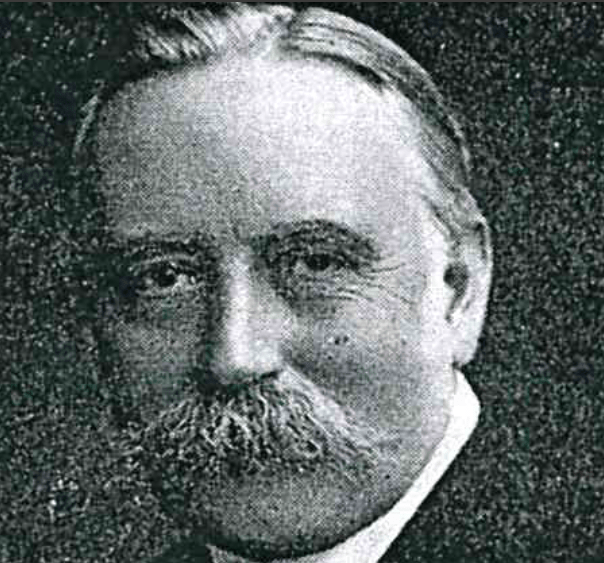
- Hugh Dunlop Brown was an Irish Baptist pastor, theologian, and author.
- He was friends with Charles Spurgeon and played a significant role in Baptist ministry in Ireland.
- Brown was the pastor-teacher of Harcourt Street Baptist Church in Dublin.
- In 1892 he founded the Irish Baptist Training Institute at 16 Harcourt Street in Dublin, which later became the Irish Baptist College, currently situated in Moira, County Down.
- His father had founded the department store now known as Brown Thomas with a James Thomas in 1848 on Grafton Street.
- Brown played a key role in establishing Limerick Baptist Church back in 1895.
- For more information, see Historia ecclesiastica: e-history with a Christian dye.
 Hibernia Gospel
[…] is a follow-on from Part 1 of this series. You should see this as a little like a child’s school project 😀. If you […]
LikeLike