
When I first met evangelicals, I used to take them to task on this issue. From a Catholic point of view, it just sounds too good to be true. In fact, I first heard this notion in history class in school. Martin Luther said that we’re saved by faith alone. If this is so, from the moment we believe, we know that we’re saved, and safe. As a Catholic, we were taught that few people go straight to heaven. The best you could hope for is to get to purgatory, rather than hell. And I was told that purgatory was very similar to hell.
The Manual of the Purgatorial Society, established in 1930 with the imprimatur of Cardinal Hayes, says:
“According to the Holy Fathers of the Church, the fire of purgatory does not differ from the fire of hell, except in point of duration. ‘It is the same fire,‘ says St. Thomas Aquinas, ‘that torments the reprobates in hell, and the just in purgatory. The least pain in purgatory,‘ he says, ‘surpasses the greatest sufferings in this life.‘ Nothing but the eternal duration makes the fire of hell more terrible than that of purgatory.
Nowadays, the Catholic church seems a bit vague about purgatory. In fact, whenever I see RC funerals, I always gain the impression that the person is assumed to be in heaven.
My impression as a child was that you needed to lead a good life to even get as far as purgatory. No-one could assume that they’ll go straight to heaven. In fact, that is known as the sin of presumption.
So why do evangelicals say that they’re sure of heaven? It’s mostly based on various promises in the New Testament. Here are six examples:
John 3:18
Whoever believes in him is not condemned, but whoever does not believe stands condemned already because they have not believed in the name of God’s one and only Son.
John 5:24
Very truly I tell you, whoever hears my word and believes him who sent me has eternal life and will not be judged but has crossed over from death to life.
John 10:27-28
My sheep listen to my voice; I know them, and they follow me. I give them eternal life, and they shall never perish; no one will snatch them out of my hand.
John 14:1-3
Do not let your hearts be troubled. You believe in God; believe also in me. My Father’s house has many rooms; if that were not so, would I have told you that I am going there to prepare a place for you? And if I go and prepare a place for you, I will come back and take you to be with me that you also may be where I am
Romans 8:1
Therefore, there is now no condemnation for those who are in Christ Jesus.
1 John 5:13
I write these things to you who believe in the name of the Son of God so that you may know that you have eternal life
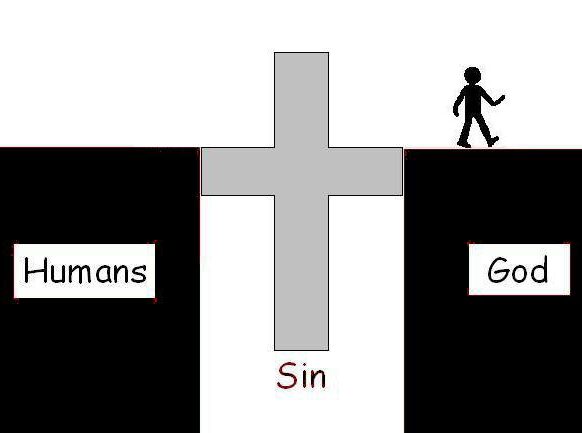
So, a person repents and believes in Jesus. The word gospel means good news. It wouldn’t be good news if Jesus simply died on the cross to give us a running chance of saving ourselves by working our way to heaven, or purgatory. It’s good news because he has completely saved us.
As well as various promises in the New Testament, when we believe, the Holy Spirit gives us a deep sense of assurance. We are not children of God by nature. We become children of God when we are born again, and we are also adopted into God’s family. Just as children bond with their parents, we bond with God.
So, as well as the intellectual dimension, there is the emotional dimension:
Romans 5:5
And hope does not put us to shame, because God’s love has been poured out into our hearts through the Holy Spirit, who has been given to us.
Romans 8:16-17
The Spirit himself testifies with our spirit that we are God’s children. Now if we are children, then we are heirs—heirs of God and co-heirs with Christ, if indeed we share in his sufferings in order that we may also share in his glory.
Galatians 4:6
Because you are his sons, God sent the Spirit of his Son into our hearts, the Spirit who calls out, “Abba, Father.
Ephesians 1:13-14
And you also were included in Christ when you heard the message of truth, the gospel of your salvation. When you believed, you were marked in him with a seal, the promised Holy Spirit, who is a deposit guaranteeing our inheritance until the redemption of those who are God’s possession—to the praise of his glory.
1 Peter 1:8
Though you have not seen him, you love him; and even though you do not see him now, you believe in him and are filled with an inexpressible and glorious joy,
In all honesty, despite all this, it is by no means uncommon for evangelicals to have doubts about their salvation. Sometimes, the Holy Spirit can give us so much assurance that we almost feel as if we’re already in heaven. But we can often feel down and depressed, and it can all seem very unreal. But the answer here is to persevere and draw near to God.
We also need to consider various verses in the New Testament that warn us not to be complacent. People can delude themselves into thinking that they’re true believers because they were brought up in Christian homes or made some sort of a superficial commitment. But does God want every Christian to be in a constant state of uncertainty? Surely these verses are more directed to people who are content to be mere nominal Christians, those considering departing from the Christian faith, those who have joined heretical groups, or those who are abusing God’s mercy by living grossly immoral lives. Generally, a Christian can take delight in the promises of salvation.
How can I be sure that I am a true believer? I can ask myself if I have repented and trusted in Christ. It’s not perfect faith that I need, but faith in a perfect Saviour. And I can look at my life and ask myself if I am wanting to make progress. Am I reading God’s Word? Am I praying? Am I happy to fellowship with, and encourage others?
There are two dangers in self-examination. One is to look at our lives, be too pleased with ourselves, and base our assurance on that. Think of the parable of the Pharisee and the Tax Collector:
Luke 18:9-14
To some who were confident of their own righteousness and looked down on everyone else, Jesus told this parable: “Two men went up to the temple to pray, one a Pharisee and the other a tax collector. The Pharisee stood by himself and prayed: ‘God, I thank you that I am not like other people—robbers, evildoers, adulterers—or even like this tax collector. I fast twice a week and give a tenth of all I get.’ “But the tax collector stood at a distance. He would not even look up to heaven, but beat his breast and said, ‘God, have mercy on me, a sinner.’ “I tell you that this man, rather than the other, went home justified before God. For all those who exalt themselves will be humbled, and those who humble themselves will be exalted.”
We need to remind ourselves that, though we can look at our lives and ask ourselves is our faith showing itself in good works, we are utterly dependent on God’s mercy for salvation. And we can be sure that we will be saved if we have repented and are trusting in Jesus.
Another danger is that when we look at our lives, we are so discouraged that we just want to give up or don’t even try to progress in our faith. When Peter first met with Jesus, he said “Go away from me, Lord; I am a sinful man!” (Luke 5:8) Several years later, Peter denied Jesus, and perhaps he was in real danger of despair, but Jesus had previously told him that he had prayed for him, that his faith would not fail.
So, to conclude, we can be sure of heaven, if we have committed our lives to Christ. We can and should examine ourselves, but this shouldn’t take away our great hope of being with Christ. When we believe in Jesus, we no longer need to fear death:
Hebrews 2:4-5
..he too shared in their humanity so that by his death he might break the power of him who holds the power of death—that is, the devil – and free those who all their lives were held in slavery by their fear of death.
The apostle Paul, when he was nearing the end of his life, wasn’t dreading the possibility of going to hell or purgatory. He was looking forward to being with Christ. He clearly shared this information, not because he thought of himself as especially holy and worthy of heaven, but to encourage others who were undergoing trials. Here are a few examples of his statements:
Philippians 1:20-24
I eagerly expect and hope that I will in no way be ashamed, but will have sufficient courage so that now as always Christ will be exalted in my body, whether by life or by death. For to me, to live is Christ and to die is gain. If I am to go on living in the body, this will mean fruitful labor for me. Yet what shall I choose? I do not know! I am torn between the two: I desire to depart and be with Christ, which is better by far; but it is more necessary for you that I remain in the body.
2 Timothy 4:6-8
For I am already being poured out like a drink offering, and the time for my departure is near. I have fought the good fight, I have finished the race, I have kept the faith. Now there is in store for me the crown of righteousness, which the Lord, the righteous Judge, will award to me on that day—and not only to me, but also to all who have longed for his appearing.
 Hibernia Gospel