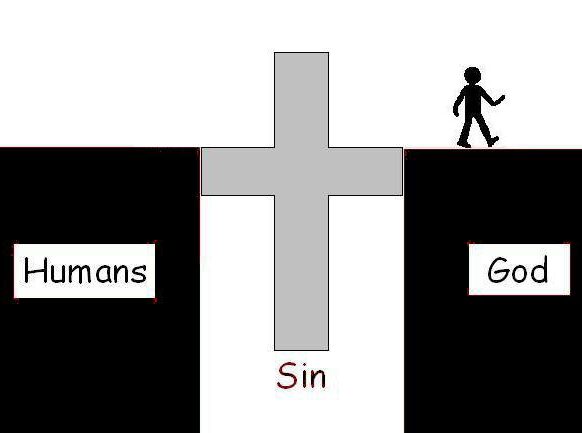

To venerate is to have great respect for someone. Scripture and history are full of characters that we can revere. We can admire Mary and follow her example. But we can’t communicate with humans or angels who are in Heaven. God is all powerful and all knowing. A million people could pray to him at the same time, and He could give them his full attention. But there’s no reason to believe that we have any means of speaking to people in heaven. In the New Testament, there are some examples of people edging into giving the wrong type of reverence to humans and angels.
Acts 10:24-25
When Peter entered, Cornelius met him, fell down at his feet, and worshiped him. But Peter raised him up, saying, “Stand up! I myself am also a man.”
Rev 22:8-9
I, John, am the one who heard and saw these things. And when I had heard and seen them, I fell down to worship at the feet of the angel who had been showing them to me. But he said to me, “Don’t do that! I am a fellow servant with you and with your fellow prophets and with all who keep the words of this scroll. Worship God!”
The point is often made that the Catholic church doesn’t teach that people should worship Mary. She is venerated rather than worshipped. But to the outsider, it looks very like worship. It’s a bit like a man telling his wife that he’s going to Paris for a weekend with an old girlfriend, but they’re just good friends. Well… Whatever spin you put on it, it doesn’t sound like something that you should be doing.
You can admire and revere other believers, but worship and anything like worship, should be directed to God alone. Consider the Roman Catholic prayer, Jesus, Mary and Joseph, I give you my heart and my soul; The church teaches that the adoration of God is latria, Mary hyperdulia, and saints (such as Joseph) dulia. So, you have all three types of adoration in a single line. Wouldn’t it be much better to simply say “Jesus, I give you my heart and my soul.” Likewise, consider the hymn “Hail Glorious Saint Patrick”.
Hail, glorious St. Patrick, dear saint of our isle,
On us thy poor children bestow a sweet smile;
And now that you’re high in your mansions above,
On Erin's green valleys look down with your love
Evangelicals consider Patrick one of our own. But doesn’t that hymn sound like worship? Surely if Patrick heard it (and there’s no reason to believe that he could), he would say what Peter and the Angel said in the verses quoted above.
Whatever about the details of Catholic doctrine, do people really distinguish between worship and veneration in practice? Even the words have similar meanings:
Collins dictionary:
Worship: to show profound religious devotion and respect to; adore or venerate (God or any person or thing considered divine)
Many people pray to Mary in the hope that she’ll pray for us. I’ve often heard it said that you might approach your mother if you want something from your father because her word might carry more weight. But many verses in the New Testament stress that we can approach the Father with confidence in the name of Jesus, and if it’s God’s will, our prayer will be answered.
God does want us praying for each other too. But we have no reason to believe that such praying extends to the saints in heaven. Take a look at these verses.
Matthew 6:7-9
And when you pray, do not keep on babbling like pagans, for they think they will be heard because of their many words. Do not be like them, for your Father knows what you need before you ask him.
This, then, is how you should pray:
“‘Our Father in heaven,
hallowed be your name…
It’s not the number or length of prayers that matters. God already knows what you need. At this point, Jesus gives the Lord’s prayer as an example. In fact, almost all New Testament prayers are directed to the Father, with a few directed to Jesus and the Holy Spirit. None are directed to humans or angels.
We do get disappointed when God doesn’t give us what we feel we need. This can happen if we are going with the wrong attitude. We solve that problem by approaching him correctly, in a spirit of repentance, adoration and thanksgiving. Even then, it might not be his will to give us what we feel we need. But in such cases, going to Mary or a saint in heaven isn’t going to help. They can’t hear you for a start. Even if they could hear and pray, God has already said no for a good reason. Ultimately, He wants what’s best for you.
Matthew 7:7-11
Ask and it will be given to you; seek and you will find; knock and the door will be opened to you. For everyone who asks receives; the one who seeks finds; and to the one who knocks, the door will be opened. Which of you, if your son asks for bread, will give him a stone? Or if he asks for a fish, will give him a snake? If you, then, though you are evil, know how to give good gifts to your children, how much more will your Father in heaven give good gifts to those who ask him!
John 14:13
And I will do whatever you ask in my name, so that the Father may be glorified in the Son.
John 16:26-27
In that day you will ask in my name. I am not saying that I will ask the Father on your behalf. No, the Father himself loves you because you have loved me and have believed that I came from God.
Rom 8:34
Who then is the one who condemns? No one. Christ Jesus who died—more than that, who was raised to life—is at the right hand of God and is also interceding for us.
Here we are reminded that Jesus himself is praying for us!
1 Timothy 2:5
For there is one God and one mediator between God and mankind, the man Christ Jesus,
This doesn’t mean that we can’t pray for one another, but when we think in terms of someone approaching the Father directly on our behalf, we focus on Jesus rather than Mary and the saints.
1 John 5:14-15
This is the confidence we have in approaching God: that if we ask anything according to his will, he hears us. And if we know that he hears us—whatever we ask—we know that we have what we asked of him.
 Hibernia Gospel