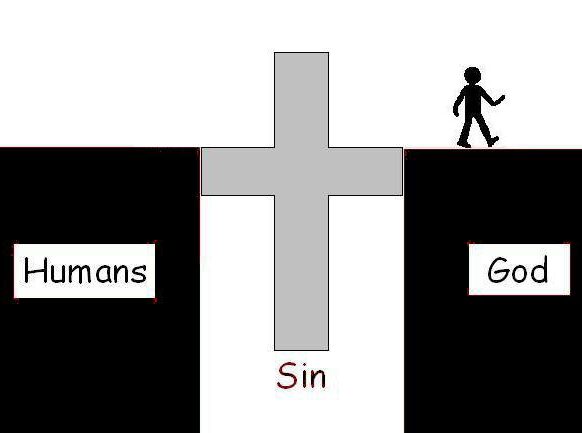
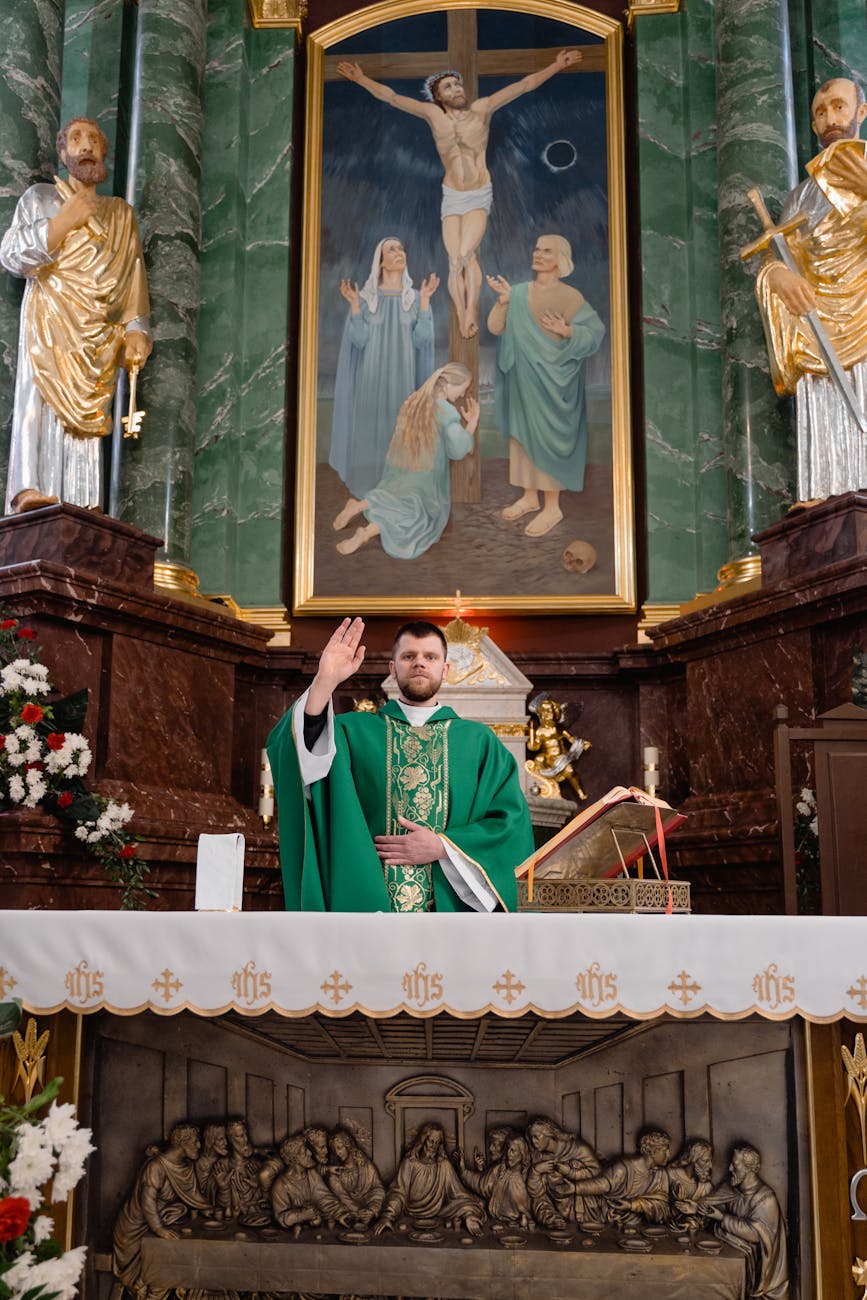
In the New Testament, the only mention of priests is in the context of Judaism and various practices associated with the temple. All this ended in AD 70 when the temple was destroyed. The Book of Hebrews deals extensively with how we no longer need priests or sacrifices. Jesus made a once for all sacrifice at the cross. Some centuries before, the synagogue system developed, which was a much more informal meeting place for Jewish people. The New Testament churches were quite similar to these. They were led by elders, who dealt with spiritual matters, and deacons, who assisted and often dealt with more practical matters.
Evangelicals span various denomination. Some, such as the Anglican church, have similar offices to the Roman Catholic church. There, a leader might be called a priest but more often, a rector, vicar, or curate. Other denominations might use the term, minister or pastor. The more historical leaders might use formal dress. The role of a leader in an evangelical church is to direct the affairs of the church and to teach, whether through sermons or on a one-to-one basis. We differ from Catholic churches in that we don’t have a sacramental system. When I was a Catholic, the sacramental system almost felt like a set of channels through which grace was dispensed; I saw grace as being like a spiritual liquid that you took to cleanse your sin. But in the biblical context, grace generally refers to the unmerited favor and love of God toward humanity. It is a foundational concept in Christianity, emphasizing that salvation and blessings are not earned through human effort but are freely given by God as a gift of His mercy and kindness. It might involve the church, but you aren’t solely dependent on the church to receive God’s grace.
Let’s briefly consider the seven sacraments of Catholicism:
Baptism
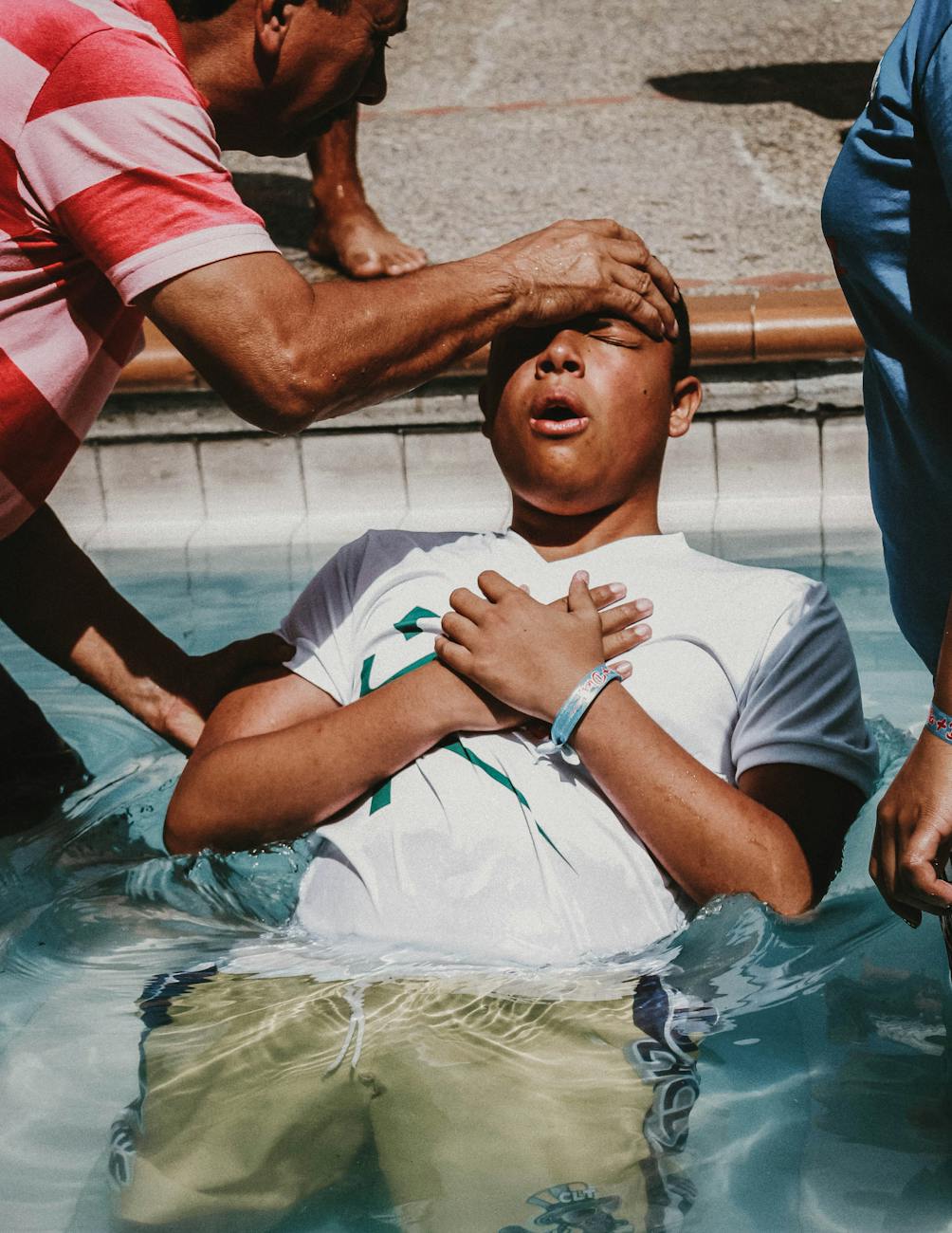
We are commanded by Christ to baptise, so we do this. In most evangelical churches, this happens when a believer requests it. Although church leaders are generally involved in baptisms, baptisms don’t necessarily need to be performed by church leaders. And baptism itself doesn’t make the person a believer. We often compare it to getting engaged. The crucial decision is made before the public celebration occurs. It’s a picture of what happens to the person when they believe. The old self is buried, and the new person emerges. We also think in terms of washing our sins away, and the death and resurrection of Jesus. All those who are in Christ will share in his resurrection. Rising out of the water is a picture of the resurrection. Some evangelical churches do baptise infants. But this isn’t seen as making them Christians. It’s more a case of initiating them into the Christian community and committing to praying and encouraging them to give their lives to Christ. Baptist churches don’t baptise infants, but some have a dedication service, which in some respects is similar to baptism. But the actual baptism only occurs after the child comes to believe in their own right.
Confirmation
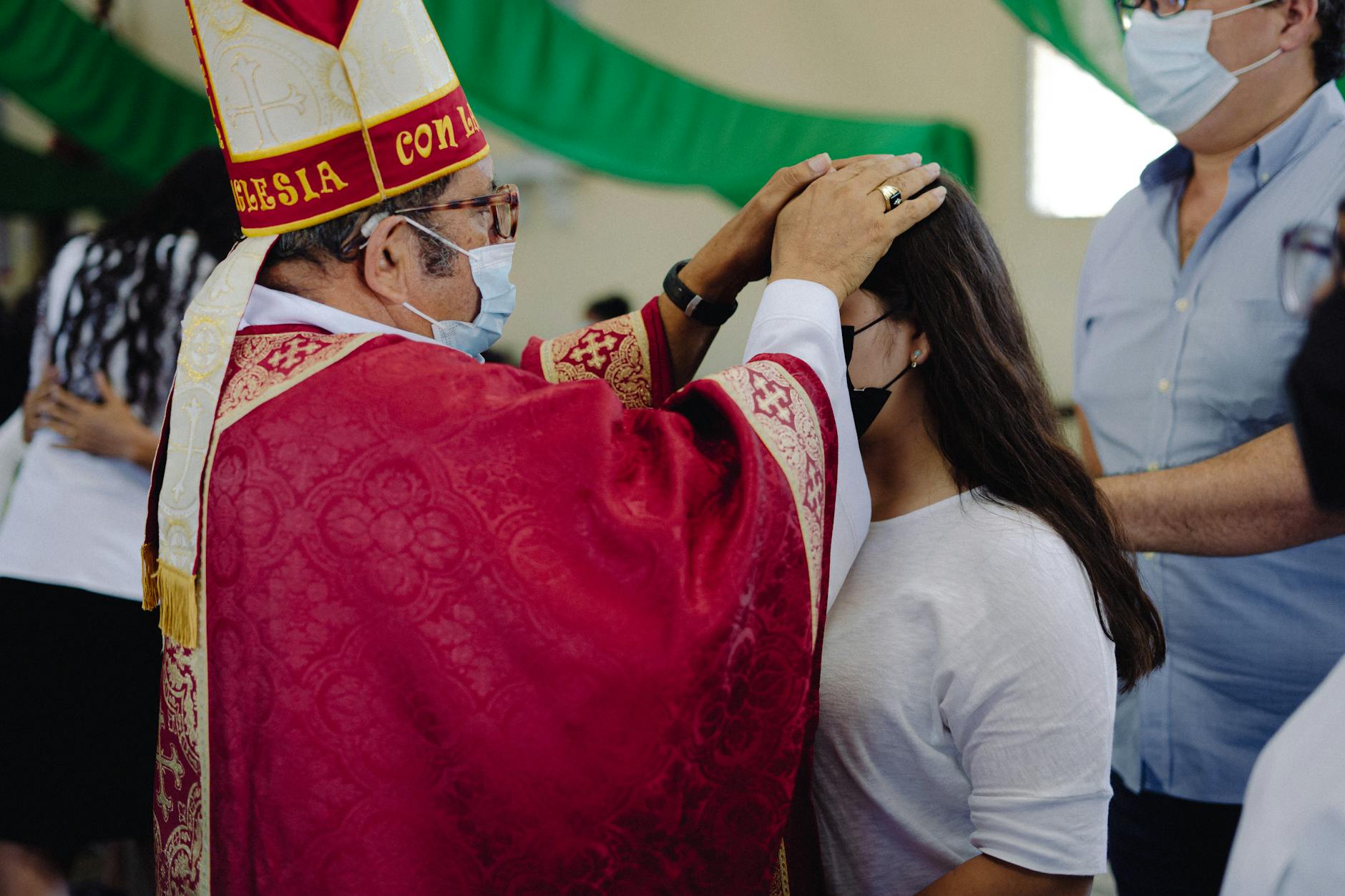
In the Catholic church, confirmation is said to strengthen the grace received at baptism. Christ didn’t command this, so evangelicals don’t generally practice it, apart from some evangelicals in mainstream denominations, such as Anglicans. When confirmation is discussed, reference is sometimes made to the Holy Spirit coming down and empowering people, as happened on the day of Pentecost and on other occasions in the New Testament. Evangelicals do cherish this, but it’s something that the Holy Spirit does spontaneously at times. It’s not something that can be controlled by us.
Another related issue is how we view children brought up in Christian homes. We don’t believe that we can make them true believers, though in practice, we treat them as believers. But at some point, we hope that they will repent and believe in their own right. In Baptist churches, this is the point at which they’ll be baptised. So, in some ways, this is similar to confirmation. What we must avoid is creating a ritual that everyone feels compelled to go through, whether or not they believe. I have heard of cases in some countries where, even in Baptist churches, people with no interest in Christ get baptised because they feel it’s expected of them. People should be scrutinised carefully before the church baptises them.
Communion

Jesus did command us to do this. It’s understood differently in different denominations. Catholics think of the mass as a sacrifice, and they see the bread and wine as being transformed into the body and blood of Christ. Lutherans believe that the bread and wine remain bread and wine, but the physical body and blood is present in the elements. Evangelicals generally believe that the bread and wine represent the body and blood of Christ. Jesus is present spiritually, as he always is when believers gather together. It’s not like a commemoration of a dead person. We do consider it a very special time together. To the outsider, it might seem a lot more casual in evangelical churches than in the Catholic church, but our inner attitude shouldn’t be casual.
Penance (Reconciliation or Confession)
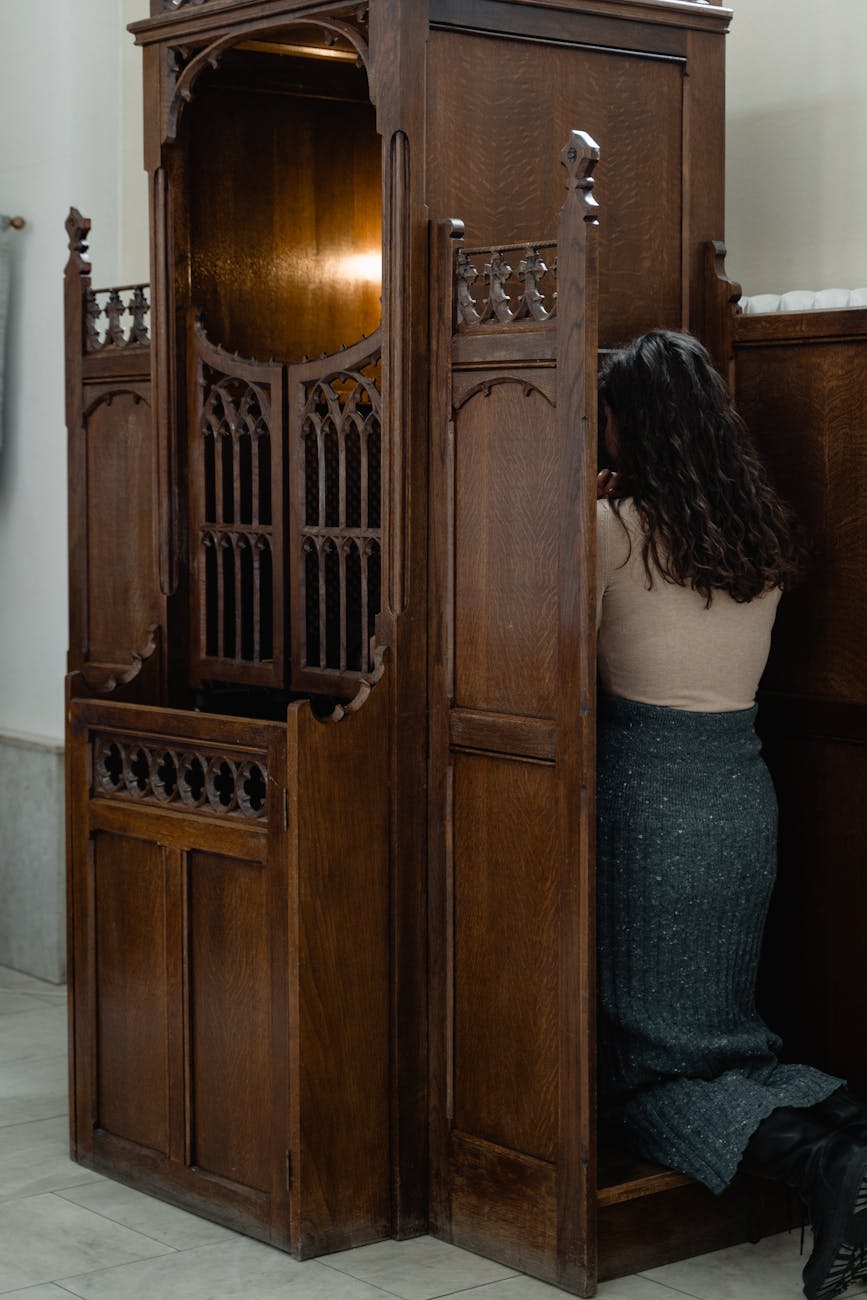
This wasn’t instituted by Christ as a sacrament but as Christians, we should confess our sins to God and to one another. When penance is mentioned, evangelicals will often insist that Christ paid for all our sins on the cross. At the same time, if we are disappointed with ourselves, it’s perfectly natural to commit to improving and putting things right. We shouldn’t see this as making atonement for our sin, but we should commit ourselves to living holy lives, even knowing that Jesus has taken all our sins.
Anointing of the Sick

Again, this wasn’t instituted by Christ as a sacrament, but we should visit the sick, and we should pray for help and healing. Evangelical ministers will often visit those seriously ill or near death, just as priests will. But evangelicals don’t believe that ministers have special powers here. There is a verse in the Book of James that might be used in this context.
James 5:13-16
Is anyone among you in trouble? Let them pray. Is anyone happy? Let them sing songs of praise. Is anyone among you sick? Let them call the elders of the church to pray over them and anoint them with oil in the name of the Lord. And the prayer offered in faith will make the sick person well; the Lord will raise them up. If they have sinned, they will be forgiven. Therefore confess your sins to each other and pray for each other so that you may be healed. The prayer of a righteous person is powerful and effective.
It would be wonderful if you could call the elders and know that their prayer would make you well. But in practice, we don’t see this as in any way guaranteed. Generally, we are encouraged to pray in the New Testament, but God often has higher considerations in mind when responding to prayer. Some might believe that in New Testament times, such prayers did heal. After all, we do see clear miracles performed by the apostles and those close to them. But here I think, James is speaking in broad terms about how to behave as a Christian. In verse 13, he isn’t commanding everyone who is happy to sing songs of praise. But it is a good thing to do. Back then, just as now, there would have been all sorts of fake healers around. Christians might have been tempted to call them when they were ill. Then, some might have been in the habit of calling Jewish leaders from the synagogue, who might have advised them to give up the Christian faith.
I think James is encouraging people not to go to these. If they feel they need help, let them call the church elders. All other things being equal, they can expect to be helped or healed by their prayers. Oil was commonly used in Judaism, partly because it sometimes has healing properties. But it also symbolized the power of the Holy Spirit. Some evangelical churches actually use oil in this context. Others see it more of a common tradition of the time, like greeting one another with a holy kiss. There’s no magic in the oil as such.
Holy Orders
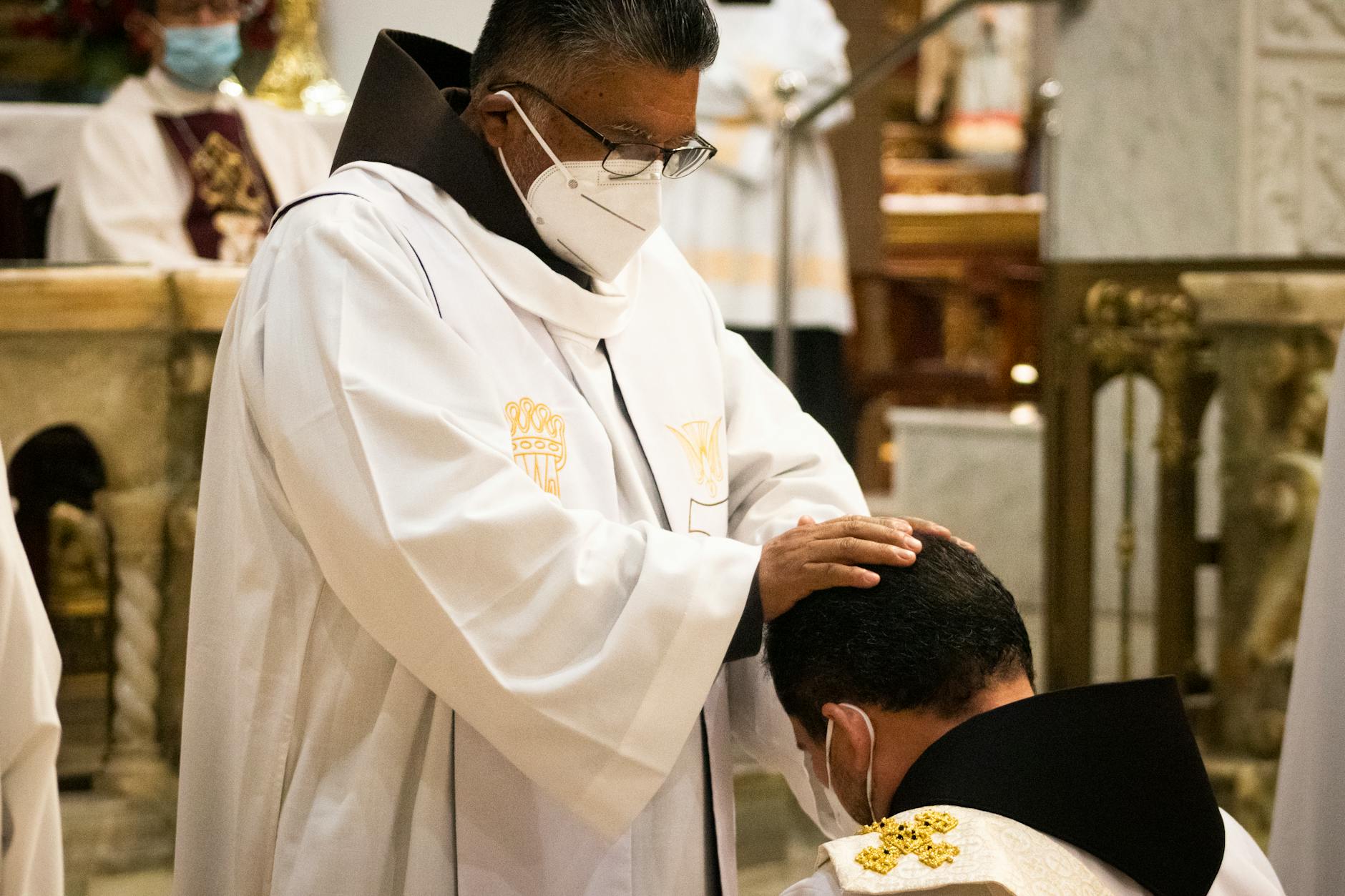
Again, this wasn’t instituted by Christ as a sacrament. But in evangelical churches, when someone is appointed to an office, or as a missionary, the church will often get together to formally recognize them and pray for them. This occurs in the New Testament. One example, is when the first deacons were appointed in Acts 6 “They presented these men to the apostles, who prayed and laid their hands on them.” (Acts 6:6).
Matrimony (Marriage)

This can be considered a creation ordinance, rather than a church ordinance or sacrament. Marriage has been practiced throughout history in all sorts of societies. It doesn’t need to occur in a church, and it doesn’t need a priest.
Matt 19:3-6
Some Pharisees came to him to test him. They asked, “Is it lawful for a man to divorce his wife for any and every reason?” “Haven’t you read,” he replied, “that at the beginning the Creator ‘made them male and female,’ and said, ‘For this reason a man will leave his father and mother and be united to his wife, and the two will become one flesh’? So they are no longer two, but one flesh. Therefore what God has joined together, let no one separate.”
Let’s conclude by avoiding two extremes. In the past people tended to think of grace as some sort of a spiritual liquid that the church dispensed through the seven sacraments. We were completely dependent on priests for these, and for our salvation. People should go to church to encourage each other, but churches, whether Catholic or evangelical shouldn’t attempt to take the place of the personal relationship that a person has with Christ.
In modern times, many have deserted churches, and those who aren’t atheist or agnostic, practice a make it up as you go along spirituality. It’s clear that Jesus is building his church, and he wants us as co-labourers. So, church should have a place in our lives, however involved or uninvolved we are.
The only two sacraments that Jesus instituted are baptism and communion. Evangelicals see these in symbolic terms. There’s nothing magical about them, and although they generally involve church leaders, church leaders don’t have special powers. All the other sacraments are based on New Testament principles. Evangelicals implement these principles but not as seven sacraments, and don’t have the dependence on clergy that Catholics have. Christ is our priest, and in a secondary sense, all believers are priests.
Hebrews 4:14-16
“Therefore, since we have a great high priest who has ascended into heaven, Jesus the Son of God, let us hold firmly to the faith we profess. For we do not have a high priest who is unable to empathize with our weaknesses, but we have one who has been tempted in every way, just as we are—yet he did not sin. Let us then approach God’s throne of grace with confidence, so that we may receive mercy and find grace to help us in our time of need.”
1 Peter 2:9
“But you are a chosen people, a royal priesthood, a holy nation, God’s special possession, that you may declare the praises of him who called you out of darkness into his wonderful light.”
Hans Kung pointed out that historically, that the idea of a mediating priesthood was the product of the Middle Ages. It emerged in the 5th and 6th centuries as the ministry of the word receded and cultic and ritual activity became what was proper to the priesthood. It reached its climax in the late Middle Ages with the theory of the seven sacraments. Kung dates these in the 12th and 13th century.
 Hibernia Gospel