
Isaiah 40: 30-31
“He gives strength to the weary and increases the power of the weak. Even youths grow tired and weary, and young men stumble and fall; but those who hope in the LORD will renew their strength. They will soar on wings like eagles; they will run and not grow weary, they will walk and not be faint.”
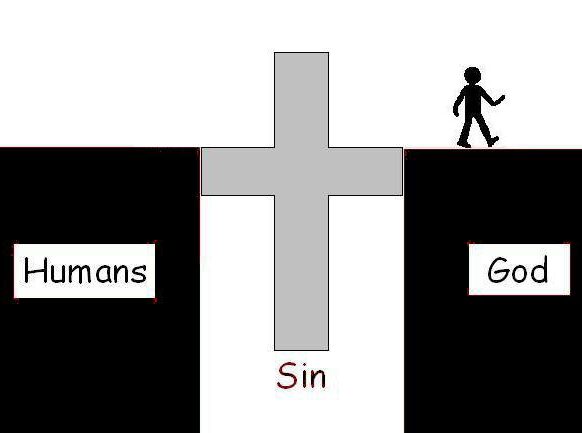
Heaven is a gift that has been purchased by the Lord Jesus Christ through his death on the cross. We do not need to earn a place in heaven. There would be no way of doing this in any case. We sin all the time. Our good deeds cannot make up for our sin. Your good driving in a driving test does not cancel out your mistakes! Nor do we pay for a place in heaven by hire purchase. A Christian who knows that he or she has been forgiven does want to thank God by living a good life, but that good life doesn’t pay our debt to God. Salvation is by grace alone through faith alone.
Yet at the same time, the Christian wants to grow. In fact, most people of all persuasions aspire to live a good life and become better people. You can see this in the world of fiction. In everything from Star Wars, to Lord of the Rings and Harry Potter, you have the heroes going from being very ordinary to extraordinary through a series of trials. The problem is that many do not incorporate God into their thinking. All too often, it’s what I consider a good life and not what God says that matters. By contrast, the Christian wants to know what God wants, to submit to him and to learn from him. We can see this in the conversion of the apostle Paul.
Acts 22:6-10
“About noon as I came near Damascus, suddenly a bright light from heaven flashed around me. I fell to the ground and heard a voice say to me, `Saul! Saul! Why do you persecute me?’ “`Who are you, Lord?’ I asked. “`I am Jesus of Nazareth, whom you are persecuting,’ he replied. My companions saw the light, but they did not understand the voice of him who was speaking to me. “`What shall I do, Lord?’ I asked. “`Get up,’ the Lord said, `and go into Damascus. There you will be told all that you have been assigned to do.‘
Clearly it wasn’t a matter of Paul dusting himself down and going off on his merry way. Now he belonged to Jesus. Although every Christian might not be as famous as Paul, all are chosen by God. Assuming that you have committed your life to Christ, the world might not know much about you, but heaven does. The angels in heaven rejoiced when you came to repentance (Luke 15:7). Furthermore, your conversion was no surprise to God, your Father in heaven. He knew you before the world was even created and he had plans for you—just as he had plans for Paul.
Ephesians 2:7-10
“For it is by grace you have been saved, through faith–and this not from yourselves, it is the gift of God — not by works, so that no-one can boast. For we are God’s workmanship, created in Christ Jesus to do good works, which God prepared in advance for us to do.”
Notice that we are not just chosen to be saved. God has further plans for us in this world. Life would be a bit pointless if we were told that we will go to heaven when we die but we just have to hang around and do nothing until then! It is a privilege to be chosen for a mission.
Yet, although this can sound very exciting in theory, in practice, life can be dull and difficult. We don’t always have the vision, the energy and the power to live as we would like to live. I remember attempting to run up a huge sand dune once with my family. While everyone else seemed to be making progress, I seemed to be getting nowhere at all—running to stand still—as the sand collapsed under me! But I got there eventually! Sometimes we wish that God would make living the Christian life easier. In fact, the apostle Paul wanted things to be easier:
2 Corinthians 12:7-9
“To keep me from becoming conceited because of these surpassingly great revelations, there was given me a thorn in my flesh, a messenger of Satan, to torment me. Three times I pleaded with the Lord to take it away from me. But he said to me, “My grace is sufficient for you, for my power is made perfect in weakness.” Therefore I will boast all the more gladly about my weaknesses, so that Christ’s power may rest on me.”
No-one is sure what this ‘thorn in the flesh’ was. Perhaps it was some chronic physical illness. Paul clearly thought that it would be useful to be rid of it. Yet God allowed it to continue. It might be hard to understand why God himself would allow Paul’s work (which seemed so essential) to be hindered. But God knows what he is doing. The process of growing as a Christian is known in theology as sanctification. Here is a good definition:
“Sanctification is a progressive work of God and man that makes us more and more free from sin and like Christ in our actual lives” (from Wayne Grudem’s Systematic Theology)
The Christian becomes progressively more and more free of sin and more like Christ. But is it as simple as that? Do Christians just get better and better until finally they become perfect, drop dead and go to heaven? There are many ways of looking at holiness. For example, it might be compared to washing or having a bath. Our sinful nature, bad influences and the difficulties of life push us in a sinful direction. We get dirty. We then clean ourselves up by prayer – confessing our sin to God, reading the Bible, having fellowship and serving Christ in some way. Sometimes we feel that we are winning, sometimes we are losing. Someone compared it to a good dog and a bad dog fighting within us. “Which one wins?” someone asked. “The one I feed” was the reply! Of course it’s not just us doing the feeding. God himself is at work in the background. So we should think positively Sanctification is a progressive work of God—we are not locked in a hopeless stalemate.
There is no instrument to measure holiness, but I wonder what you would find if you had one. Would the older Christians have a higher reading? Or does it depend on our state at any particular time? An experienced driver is a better driver, but he can still become sloppy and careless at any given moment. Or he can get annoyed and do something he would not normally do. Even the best of Christians can fall into scandalous sin. The older we get, the slower we are (or should be) to judge others. And how holy are we by the time we die? Is it 30%? 50%? 80%? Does it become more difficult as time goes on or easier? Does God give us greater challenges? If you play computer games, you’ll know that the levels tend to get progressively more difficult. Is life like that?
There doesn’t seem to me to be any point in analyzing it all too much. It’s hard to see how we could ever congratulate ourselves on our progress. It’s so difficult to know how much we have progressed. Likewise, it is foolish to be too hard on ourselves (or anyone else) because of our lack of progress. You never know what inner challenges the person is facing. On the other hand, you could have someone who seems to be full of love for everyone and you attribute that to sanctification, but the person might be an extravert by nature and might have been like that if they had never become a Christian. Perhaps there is another area where they are falling down—such as in sitting in their room alone and praying. So there are many cross-currents – swings and roundabouts.
The Christian life is certainly a battle. We are not just speaking of the things we see. Just as there are good angels who rejoice and help you behind the scenes, there are evil angels who want to hinder you. Don’t take your picture of demons from Hollywood or from medieval paintings. They are more subtle than that.
Ephesians 6:10-17
“Finally, be strong in the Lord and in his mighty power. Put on the full armour of God so that you can take your stand against the devil’s schemes. For our struggle is not against flesh and blood, but against the rulers, against the authorities, against the powers of this dark world and against the spiritual forces of evil in the heavenly realms. Therefore put on the full armour of God, so that when the day of evil comes, you may be able to stand your ground, and after you have done everything, to stand. Stand firm then, with the belt of truth buckled round your waist, with the breastplate of righteousness in place, and with your feet fitted with the readiness that comes from the gospel of peace. In addition to all this, take up the shield of faith, with which you can extinguish all the flaming arrows of the evil one. Take the helmet of salvation and the sword of the Spirit, which is the word of God. And pray in the Spirit on all occasions with all kinds of prayers and requests. With this in mind, be alert and always keep on praying for all the saints.”
But how do we fight the battle on a day-to-day basis? What do I do to make myself strong? What Paul is saying here is that we should make use of all the resources, all the weapons that God has made available to us. Some of these weapons include the following:
Prayer
Sanctification is more a work of God than a work of man. This should not be an excuse for laziness on our part. We shouldn’t sit back and expect God to make us holy apart from effort on our part. But it’s important that we draw on the strength that God supplies, and prayer is an essential part of this. We need to stay in close communion with our Lord Jesus Christ and with the Holy Spirit, who mediates the presence of the Father and Jesus. John 15 reminds us of how important it is to have fellowship with God:
John 15:4-7
“Remain in me, and I will remain in you. No branch can bear fruit by itself; it must remain in the vine. Neither can you bear fruit unless you remain in me. “I am the vine; you are the branches. If a man remains in me and I in him, he will bear much fruit; apart from me you can do nothing … If you remain in me and my words remain in you, ask whatever you wish, and it will be given you.”
Galatians 5:19-25
“The acts of the sinful nature are obvious: sexual immorality, impurity and debauchery; idolatry and witchcraft; hatred, discord, jealousy, fits of rage, selfish ambition, dissensions, factions and envy; drunkenness, orgies, and the like. I warn you, as I did before, that those who live like this will not inherit the kingdom of God.
But the fruit of the Spirit is love, joy, peace, patience, kindness, goodness, faithfulness, gentleness and self-control. Against such things there is no law. Those who belong to Christ Jesus have crucified the sinful nature with its passions and desires. Since we live by the Spirit, let us keep in step with the Spirit.
The Word of God
We are constantly subjected to the world’s outlook—an outlook that puts God out of the picture. By contrast, God is the biggest thing in the life of the Christian—or should be.
Before Jesus left his disciples, he prayed for them – “Sanctify them by the truth; your word is truth.” (John 17:17) The apostle Peter spoke of the Christians having purified themselves by obeying the truth. (1 Peter 1:22) And Paul wrote to Timothy:
2 Timothy 3:16
“All Scripture is God-breathed and is useful for teaching, rebuking, correcting and training in righteousness, so that the man of God may be thoroughly equipped for every good work.”
God’s Word, the Bible not only teaches us the right attitude and actions towards God and others. It also reminds us of what we already know, but have lost sight of. We become a lot more effective if we read and meditate on God’s word every day. It spurs us on to pray and to want to live for Christ rather than for ourselves.
Fellowship

The people around you probably have a much bigger influence on you than you realise. So much of your attitude and behaviour has been learned from others, who might not be believers. This is not necessarily bad. There is a lot to be learned from other people, whatever their religion. Even atheists can sometimes teach us a thing or two about morality. This should not surprise us. Christians believe that God made all humans in his image. We have an in-built capacity to be useful and helpful to the world.
Although this has been marred through sin, people are not as bad as they can possibly be. But a missing element from the unbeliever is a love for God and a desire to consciously do what he tells us to do in the Bible. This is one of the reasons why it is important to spend time with other Christians.
Of course, other Christians do not always provide you with good teaching and good example. They are no more perfect than you are! There is the story of a church that put a sign outside saying “This church is full of sinners, but there is always room for one more“! But throughout the New Testament it is clear that Jesus wants his people to be together here on earth as well as in heaven. And Christians will generally “spur one another on to love and good works” (Hebrews 10:24).
Sometimes Christians might be surprised at their own reluctance to mix with other Christians. Some of us are introverts and we are happy with our own company or maybe the company of a few friends who we get on well with. But, while friends will generally choose the kind of people they want to be with (and subtly edge out those they don’t like), in churches you are thrown together with people who you might have little in common with apart from being Christians. Churches sometimes attract lonely people, odd people and social misfits. Like any organization, at times there are difficulties and disagreements. But facing such struggles is part of life. I remember, when I was learning to drive, for an early lesson, I was brought into a nice quiet industrial estate, and I did very well. The next week, I was brought into normal traffic and well…!! I asked if I could go back to the industrial estate!
In early church history, some of the Christians started going off on their own into caves etc. It might have seemed saintly, but we really grow as we interact with other people. That is often more of a test than sitting on top of a pole for ten years or living on bread and water. The apostle Paul wrote:
Col 3:16
“Let the word of Christ dwell in you richly as you teach and admonish one another with all wisdom, and as you sing psalms, hymns and spiritual songs with gratitude in your hearts to God.”
The sort of picture that we see in the early church is very different from what the average churchgoer in Ireland experiences. We grew up barely looking at the person next to us. We could never assume that he or she was the slightest bit interested in spiritual things. The advantage of going to an evangelical church is that, although it is smaller, at least you know that you can interact with people and speak about spiritual things without people looking at you as if you have two heads. Of course, there is the danger of putting on a ‘holy act’ and giving people the impression that you are more spiritual than you are. Perhaps that is why some people are reluctant to talk about spiritual things—the fear of appearing pompous and over-the-top. But ultimately, we need to be the way God wants us to be. We need to find ways to be ourselves, be honest, but at the same time, not afraid to speak about spiritual things.
Evangelism

It is always nice to bring someone good news. The gospel is the greatest news you could ever bring someone.
“If you are eager for real joy, such as you may think over and sleep upon, I am persuaded that no joy of growing wealthy, no joy of increasing knowledge, no joy of influence over your fellow creatures, no joy of any other sort, can ever compare with the rapture of saving a soul from death….” C. H. Spurgeon
Yet your efforts will rarely be appreciated. People don’t want to be annoyed or embarrassed. And the Bible says that “the sinful mind is hostile to God. It does not submit to God’s law, nor can it do so. ” (Romans 8:7) Yet, it is important to find ways to spread the message of salvation. It is estimated that there are 660 million evangelicals in the world and of course, many others, who are believers, but might not identify as evangelicals, so clearly God is capable of changing hearts. If we avoid evangelism, again, we are like the learner driver who avoids traffic. We are not really doing what God has left us in the world to do. It’s hard to see how we can grow as Christians if we don’t grasp the nettle. Someone said, “the church is not a yachting club but a fleet of fishing boats” Think of how many thousands died so that we could have the gospel!
Everyone is different, and there are many different ways to further the cause of the gospel on a local and worldwide basis. But it is important to find what God wants you to do. You don’t have to be pushy, sneaky, or silly. It’s important to empathize with people. Try to think of how you would feel if someone from another religion wanted to reach you. To them, they are doing you a favour but to you, they might be catching you at a bad moment. How do you feel when you run down the stairs to answer the door and it’s religious people, pulling out some obscure verse from the book of Revelation? Or how do you feel if someone is being really nice, and you discover that they are merely doing it in the hope of converting you? Should we leave it to the seeker to dig up information? – as in browsing the Web to find out what Christians believe? Should we put leaflets through doors? run special events? It’s good to think it through for yourself.
In many cases in the New Testament, the people spoken to were those who were already interested and wanting to know more. But even if someone isn’t interested, it is important that they at least know the issues involved. It only takes a few minutes to explain the basics of the gospel. Even if they have no interest whatsoever, it is surely useful for them to know what you believe.
1 Peter 3:15
“Always be prepared to give an answer to everyone who asks you to give the reason for the hope that you have. But do this with gentleness and respect“
Notice that Paul uses the terms ‘gentleness’ and ‘respect’. Whichever methods you choose, this should be foremost in your mind. And don’t leave it all to others. It would be a shame if the only evangelical voices people ever heard were from those that were extravert, pushy and even eccentric. More than once, I have overheard people speak of how annoying ‘born-again’ Christians are. If you are shy and quiet by nature, you could be the best person to reach an individual.
Faith
It is essential for us to realise that we need to trust and depend on God on a daily basis if we are to overcome sin. We must constantly be aware that we are living under the eye of our Father and that we have been chosen and called to a life of holiness. It is all too easy for us to slip back into the world’s way of thinking, where what is seen is all that matters. In 1 John 5:4, the victory that overcomes the world is our faith. In Romans 8:18 Paul urges the believers on by reminding them that the sufferings of this present time (which will often be brought about by consciously saying no to sin) are not worth comparing with the glory that will be revealed.
Love
While love is a product of holiness, it is also a path to holiness. The more we appreciate the love of God, the more we will love God and others. It will hurt us to hurt them in any way. While God’s love poured out in our hearts will not in itself sanctify us automatically, it should lead us to a determination to be holy. 1 Corinthians 13 emphasizes what love will enable us to do and not to do:
“If I speak in the tongues of men and of angels, but have not love, I am only a resounding gong or a clanging cymbal. If I have the gift of prophecy and can fathom all mysteries and all knowledge, and if I have a faith that can move mountains, but have not love, I am nothing. If I give all I possess to the poor and surrender my body to the flames, but have not love, I gain nothing. Love is patient, love is kind. It does not envy, it does not boast, it is not proud. It is not rude, it is not self-seeking, it is not easily angered, it keeps no record of wrongs. Love does not delight in evil but rejoices with the truth. It always protects, always trusts, always hopes, always perseveres. Love never fails. But where there are prophecies, they will cease; where there are tongues, they will be stilled; where there is knowledge, it will pass away. For we know in part and we prophesy in part, but when perfection comes, the imperfect disappears. When I was a child, I talked like a child, I thought like a child, I reasoned like a child. When I became a man, I put childish ways behind me. Now we see but a poor reflection as in a mirror; then we shall see face to face. Now I know in part; then I shall know fully, even as I am fully known. And now these three remain: faith, hope and love. But the greatest of these is love.“
It is clear that such love often involves a degree of sacrifice. Sometimes it is easy to love. In fact, you don’t have to be a Christian at all to feel a natural bond or attraction to others. Jesus himself made that clear in the Sermon on the Mount:
Luke 6:32
“If you love those who love you, what credit is that to you? Even ‘sinners’ love those who love them.“
I remember Celine Dion being interviewed behind the scenes at the 1988 Dublin Eurovision song contest. She said that she didn’t care whether she won or lost. She was just so happy with the love between the contestants. This is the sort of bond that often forms at young peoples’ weekends or among a group of people that get on well. Christians often make the mistake of thinking that this is something unique to their churches. It’s not. It’s the way humans are in certain circumstances. There is nothing wrong with this. It is part of God’s common grace. It’s the way that we would be all the time if it weren’t for sin.
The test comes when such circumstances change. If you’ve ever read the biography of a pop group such as the Beatles or Pink Floyd, you’ll know that it is very common for relations to break down at some point and then ……..!!! You can often get such coldness or even venom when Christians fall out. I’m always a bit nervous when I hear someone saying that the love of Christians was a big factor in their conversion. I hope that this ‘love’ is the love that’s found in 1 Corinthians. Even if it is, sooner or later they will be disappointed in Christians. We aspire to love each other, but we often fall far short. You sometimes even hear Christians talking about using love or friendship as an evangelistic strategy. We should be loving and friendly in any case but I’m always uneasy when people start talking about it as a ‘method’. Irish people hate artificiality. Everyone apart perhaps from the vulnerable and lonely will see through that sort of thing. (See this article on Synthetic Evangelism.) It’s much better to focus on Jesus. He won’t let you down. If you truly want to be a friend to someone, be yourself, be sincere, be honest, be humble and try not to make silly claims or create over-optimistic impressions about yourself or your church. Furthermore, the person should be no less a friend if they never intend to become a Christian. True love doesn’t have conditions or strings attached.
A good test of your progress is to substitute your own name for the word ‘love’ in 1 Corinthians 13. If you’re honest, you’ll soon see your shortcomings and realize that we all have a long way to go. Love can be hard work, but this is what we are called to do. It’s a bit like a marriage. The ‘magical’ love will generally diminish after a few years. You can start off with someone else every time that happens until you are the ‘oldest swinger in town’ —or you can get to work in building a wonderful friendship.
Discipline

There is self-discipline, discipline from a church or another organization and discipline from God himself. Any kind of discipline is painful but the aim is to make us better people.
Hebrews 12:10-11
“Our fathers disciplined us for a little while as they thought best; but God disciplines us for our good, that we may share in his holiness. No discipline seems pleasant at the time, but painful. Later on, however, it produces a harvest of righteousness and peace for those who have been trained by it.”
Psalm 119:71
“It was good for me to be afflicted so that I might learn your decrees“
It isn’t always easy to know what God is doing in our lives. If something goes wrong, should we assume that God did this in response to some sin? It’s possible, but it’s also possible that it’s just part of life in this world. People face all kinds of difficulties, and the Christian isn’t spared the normal trials of life. In fact, there are cases where particularly spiritual people undergo trials that they would not have faced if they had not been obedient (e.g. Job, Jesus, Paul). One thing that is clear is that whatever the trial is, God can use it for our good. You’ll even get atheists who go through a rough time and say that it helped them to grow as people.
Rom 8:28
And we know that all things work together for good to those who love God have been called according to his purpose.
Many of the greatest hymns have been written by Christians who have suffered greatly. Here are two. The first was written by William Cowper—someone who was frequently depressed and tempted to suicide. The second was written by Horatio Spafford. After financial ruin in the Chicago fire of 1871, all four of his daughters died in an accident at sea.
God Moves in a Mysterious Way
It is Well with my Soul
Conscious Acts
Finally, there is also a place in the Christian life for consciously assessing our spiritual state and dedicating our lives afresh to God, with a new determination to eradicate sin in our lives. Sometimes such actions or experiences completely transform a person. People often debate about an experience John Wesley had in Aldersgate, London on May 24th, 1738.
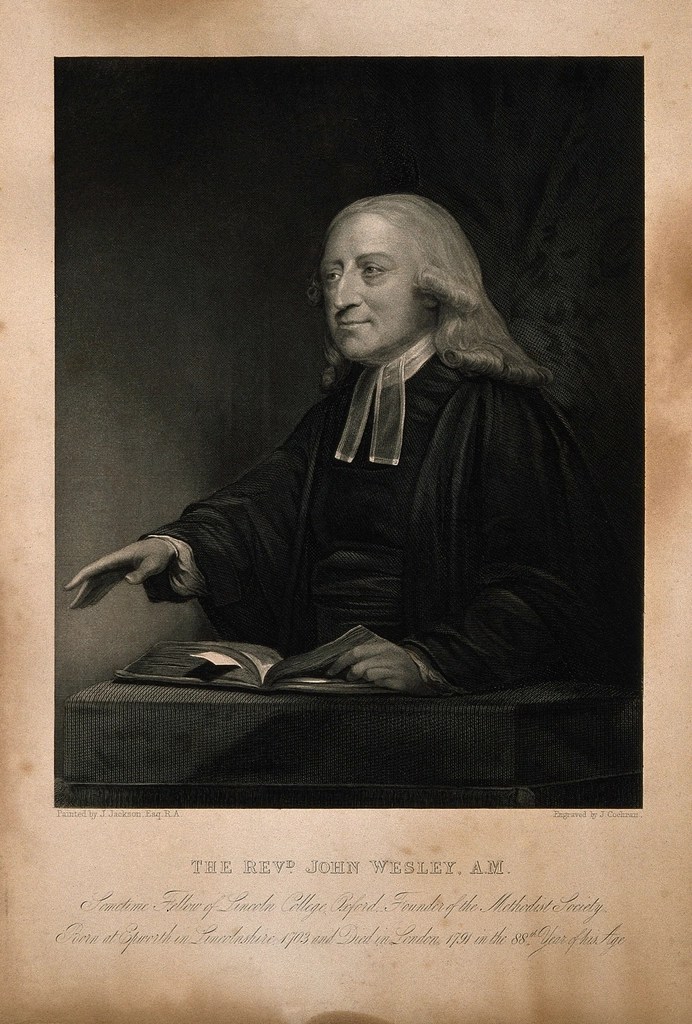
"About a quarter before nine, while he was describing the change which God works in the heart through faith in Christ, I felt my heart strangely warmed. I felt I did trust in Christ, Christ alone for salvation, and an assurance was given me that he had taken away my sin, even mine, and had saved me from the law of sin and death."
You can see a monument on the very spot near the Museum of London. Some say that this was Wesley’s conversion. Others say that he had already been converted for many years, but on that day, he was completely transformed. There are many other similar examples in the history of the church. Some churches even turn this into a kind of a ritual or insist that all Christians should expect it at some point in time. This seems to me to be unscriptural but at the same time, who knows what God will do with us if we are prepared to serve him?
Romans 12:1-2
“Therefore, I urge you, brothers, in view of God’s mercy, to offer your bodies as living sacrifices, holy and pleasing to God–this is your spiritual act of worship. Do not conform any longer to the pattern of this world, but be transformed by the renewing of your mind. Then you will be able to test and approve what God’s will is– his good, pleasing and perfect will.”
 Hibernia Gospel